
- Home
- Finance History | From Trade to Finance | Amsterdam — Where the Share Trade Actually Met, 1586–1913
- Finance History | Sint Olofskapel, Amsterdam, 1586 — Where the Merchants Went When It Rained
Finance History | Sint Olofskapel, Amsterdam, 1586 — Where the Merchants Went When It Rained
· 1586
Personal memoryBy kevin · · updated · Report an issue
Find memories left by people near you.

Distribute Bounty
This will distribute the bounty equally among all qualifying memories. This action cannot be undone.
Cancel Bounty
Are you sure you want to cancel this bounty? The remaining amount will be refunded to your account.
Success!
Operation completed successfully.
Error
Something went wrong.
Finance History | Sint Olofskapel, Amsterdam, 1586 — Where the Merchants Went When It Rained
kevin
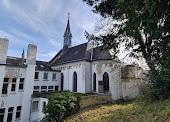
In 1586 the Amsterdam authorities gave the city's merchants permission to do business inside a chapel on days when the weather made the harbour front unusable.
Sixteen years later that concession turned the building into one of the two addresses where Dutch East India Company shares changed hands.
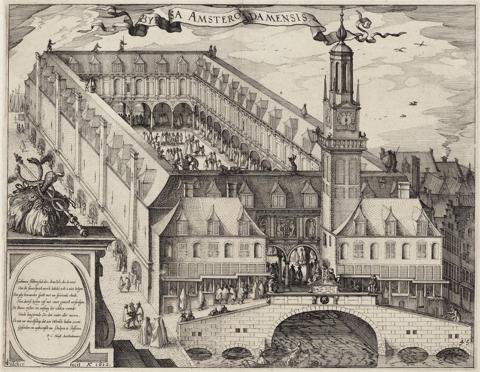
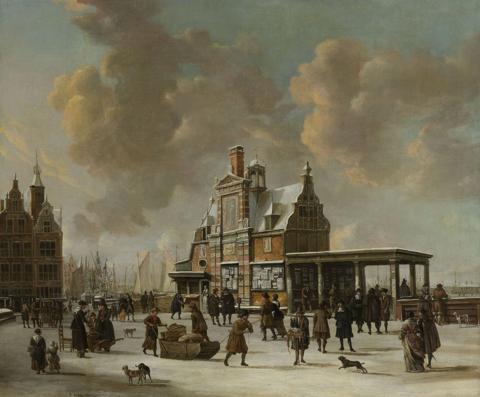
The merchants' pitch was the Nieuwe Brug, the northernmost bridge over the Damrak, standing out on the open water of the IJ. Wind and rain made it impossible, and traders had previously sheltered under the eaves of the Warmoesstraat houses, to the irritation of the people who lived there.
The Sint Olofskapel sat a short walk away on the Zeedijk, close enough that a wet morning cost a trader almost nothing in lost time.
When the VOC opened its subscription in 1602 and the share trade began, it simply inherited the merchants' existing habits.
Nobody had designated either the bridge or the chapel for dealing in shares. The market took the addresses that were already there, which is worth remembering whenever an exchange is described as having been founded.
Which building sheltered the trade is genuinely disputed, and this pin takes the better-documented answer.
Lodewijk Petram, who worked through the notarial records for his study of the early share market, names the Sint Olofskapel and does not mention the Oude Kerk at all.
J.G. van Dillen, writing in 1935 from the judicial archives, wrote instead that traders gathered at the Nieuwe Brug or, in bad weather, in the Oude Kerk.
The Dutch exchange-history platform lists both buildings and concedes that there is no hard evidence for the Oude Kerk, calling it only plausible that early VOC shares passed through it.
So the chapel has the documented municipal permission and the scholarly citation, and the Oude Kerk has a tradition. One is a record and the other is a likelihood.
There is a smaller wrinkle in the date. The same exchange-history source gives 1586 in its main account and 1568 elsewhere on the page, and 1586 is the figure Petram uses.
The arrangement ended in 1611, when Amsterdam finally built the merchants a covered exchange on the Rokin and the share dealers took a corner at the back of it.
Trading inside a consecrated building had made people uncomfortable for years, which is part of why the city built at all.
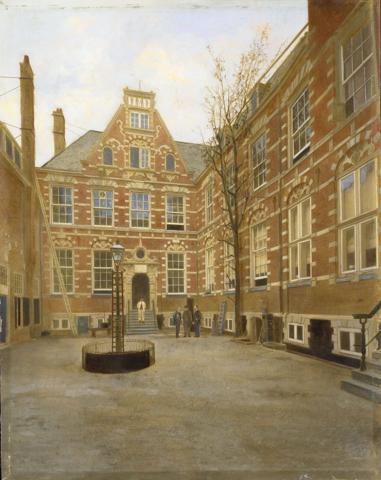
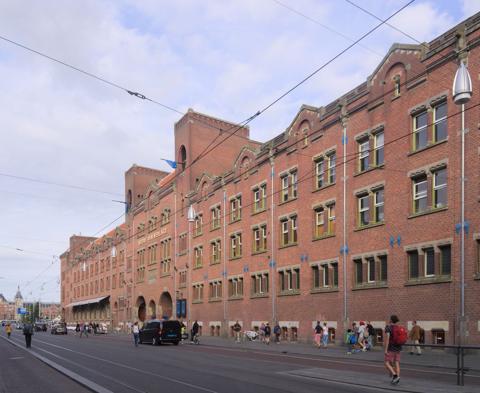
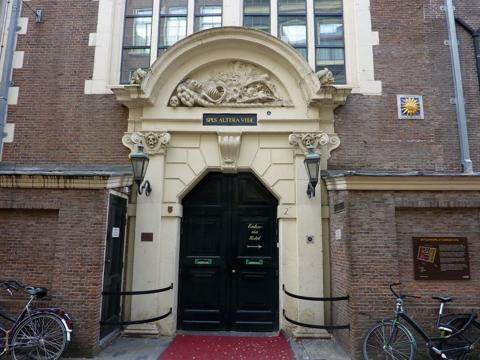
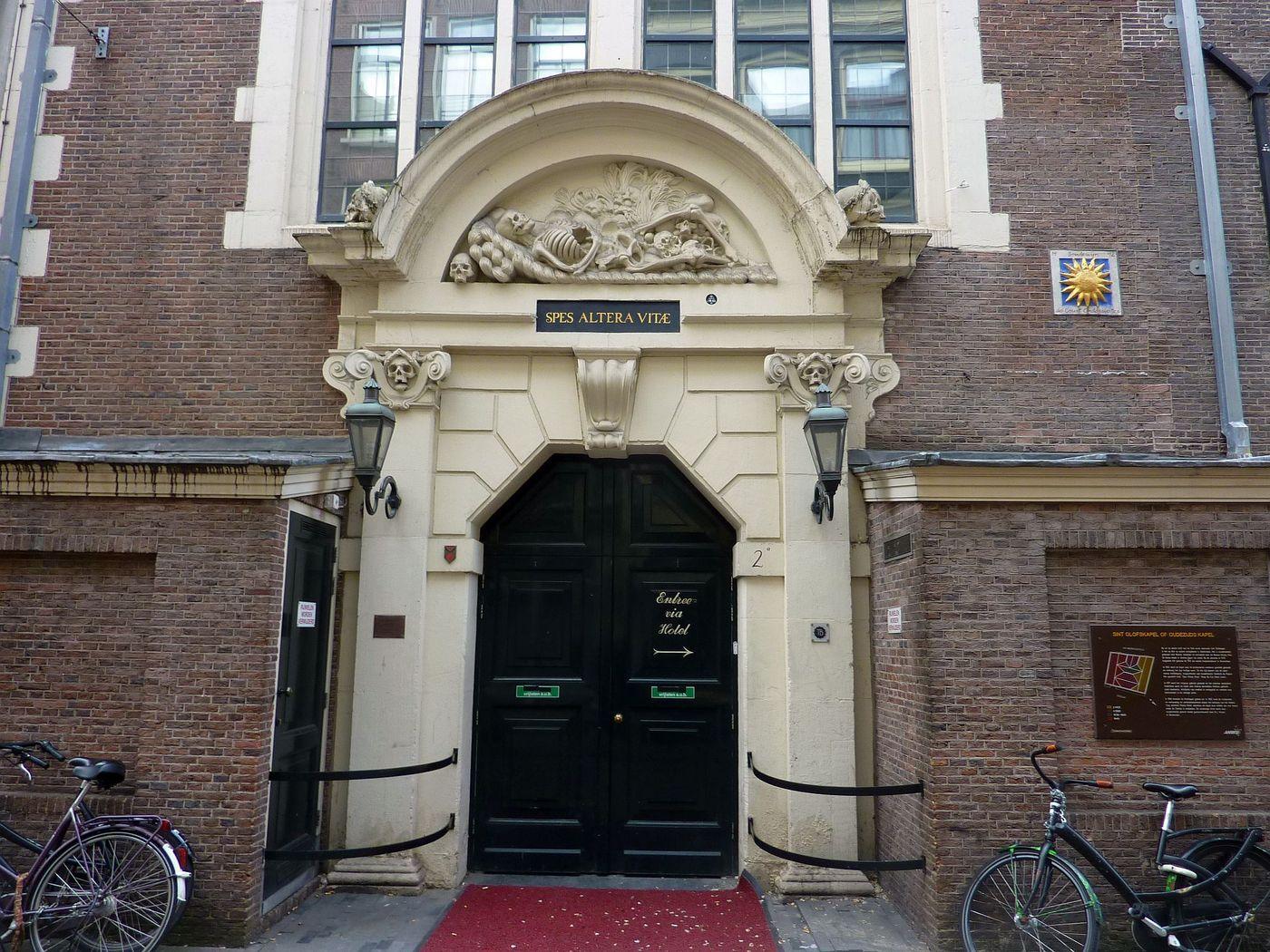
The chapel is still standing on the Nieuwebrugsteeg. Its doorway carries a carved tympanum of bones and fruit above the motto Spes altera vitae, and a small sign underneath now directs visitors to enter through the hotel that absorbed it.
Photo: Chris06, CC BY-SA 4.0, via Wikimedia Commons.
changes?
delete this memory?
We detected that you have a Blox in your crypto wallet! We will import the Blox into your account.
Click on done below to complete the import.
Welcome Back!
Sign in to preserve cherished moments
Don't have an account?
Welcome!!
Sign up and start preserving cherished moments
?
?
Choose your payment method
Buy with Metablox Credit
Do you want to mint Blox with Metablox Credit?
Which Crypto would you like to use?
Purchase Confirmed!
Your Blox is being minted on-chain and will appear in your profile shortly.
Log in or sign up to claim your Blox.
How many credits do you want to buy?
$100 USD = 1 Metablox Credit = 1 Blox.
Use Metablox Credit to mint any Blox you want on the map.
expand_more