Finance History | Beurs van Hendrick de Keyser, Rokin, Amsterdam, 1611 — The Share Trade Had One Corner of a Grain Market
volume_up
Listen
directions
Directions
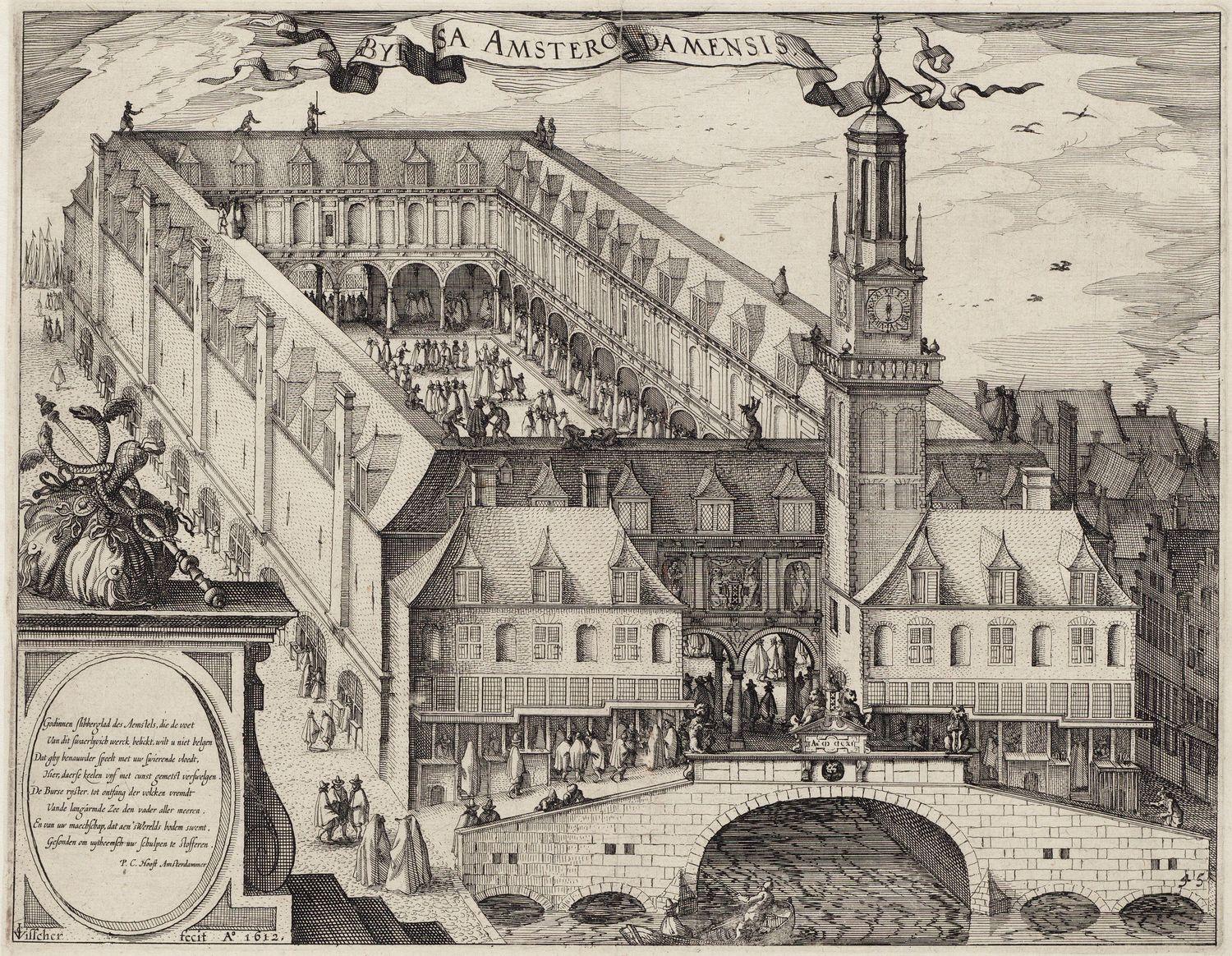
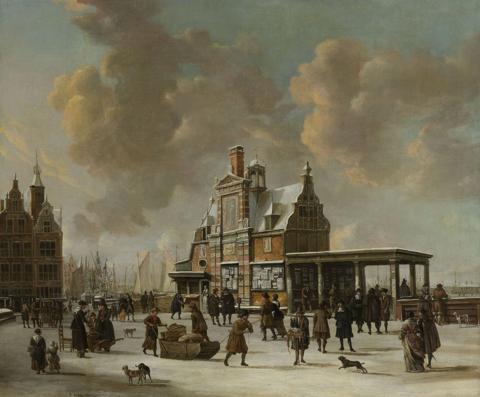
Amsterdam's first exchange was built as a bridge. Boats passed underneath it with their masts down, until the Spanish tried to blow it up in 1622 with a boat full of gunpowder and the city sealed the channel off.
The council decided in April 1607 that Amsterdam needed an exchange building, as many trading towns already had. Hendrick de Keyser, the city's architect, mason and sculptor since 1594, was sent to London to study the Royal Exchange.
Masonry began in the spring of 1608. Hendrick Hooft laid the first stone on 28 May, his father Cornelis being burgomaster at the time and his brother the poet P.C. Hooft later supplying verses for the engraving of the finished building.
It was ready in 1611, about sixty metres long and over thirty-five wide, spanning the stretch of the Amstel that is now the Rokin, immediately south of the Dam.
Forty-two numbered columns ran around an open, unroofed central court.
That numbering is the mechanism, and it outlived the building by three centuries. A merchant with a permanent place could be found by anyone who knew his number, so each branch of trade collected at its own pillar, in its own corner, hoek in Dutch. The dealer who stood in a fixed spot and made prices in one set of names was still called a hoekman on Dutch trading floors at the end of the twentieth century.
Most of what was agreed here was goods: grain, salt, timber, beer, herring. Trading in VOC stock sat just behind the main entrance on the Rokin side, and was given more room in 1668 when a bridge was added to the building. West India Company shares joined it from 1621.
So the world's first regular stock market was one corner of a commodity market, and it stayed that way for decades.
A bylaw set the hours — every morning except Sunday, between eleven and noon — and declared deals struck outside the building void in court. Traders ignored the geography with enthusiasm, and by the later seventeenth century they were dealing early in the Jodenbreestraat, on the Dam when the exchange shut, and at night in the inns of the Kalverstraat.
Building over a river was the mistake. The exchange subsided steadily, traders decamped to Dam Square and the Nieuwe Kerk when it became unsafe, and after the council condemned it a competition for a replacement was announced on 3 March 1836.
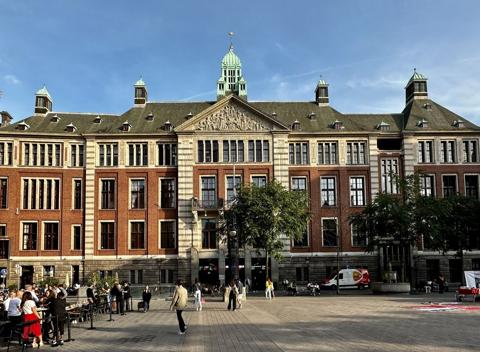
It came down in 1837, though some accounts give 1835. Zocher's exchange replaced it on the other side of the Dam, where De Bijenkorf now stands, and Berlage's replaced Zocher's in 1903.
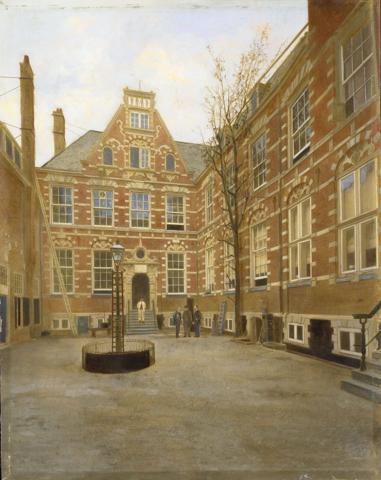
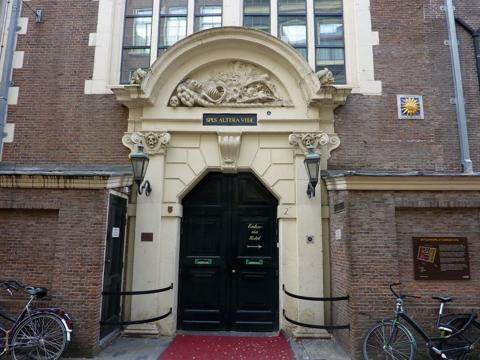
Nothing survives above ground on the Rokin. The Beurspoortje, the passage that linked Dam Square to the exchange's service entrance, stands a few steps away in a rebuilding of about 1912, and the keystone of the original is kept at Beursplein 5.
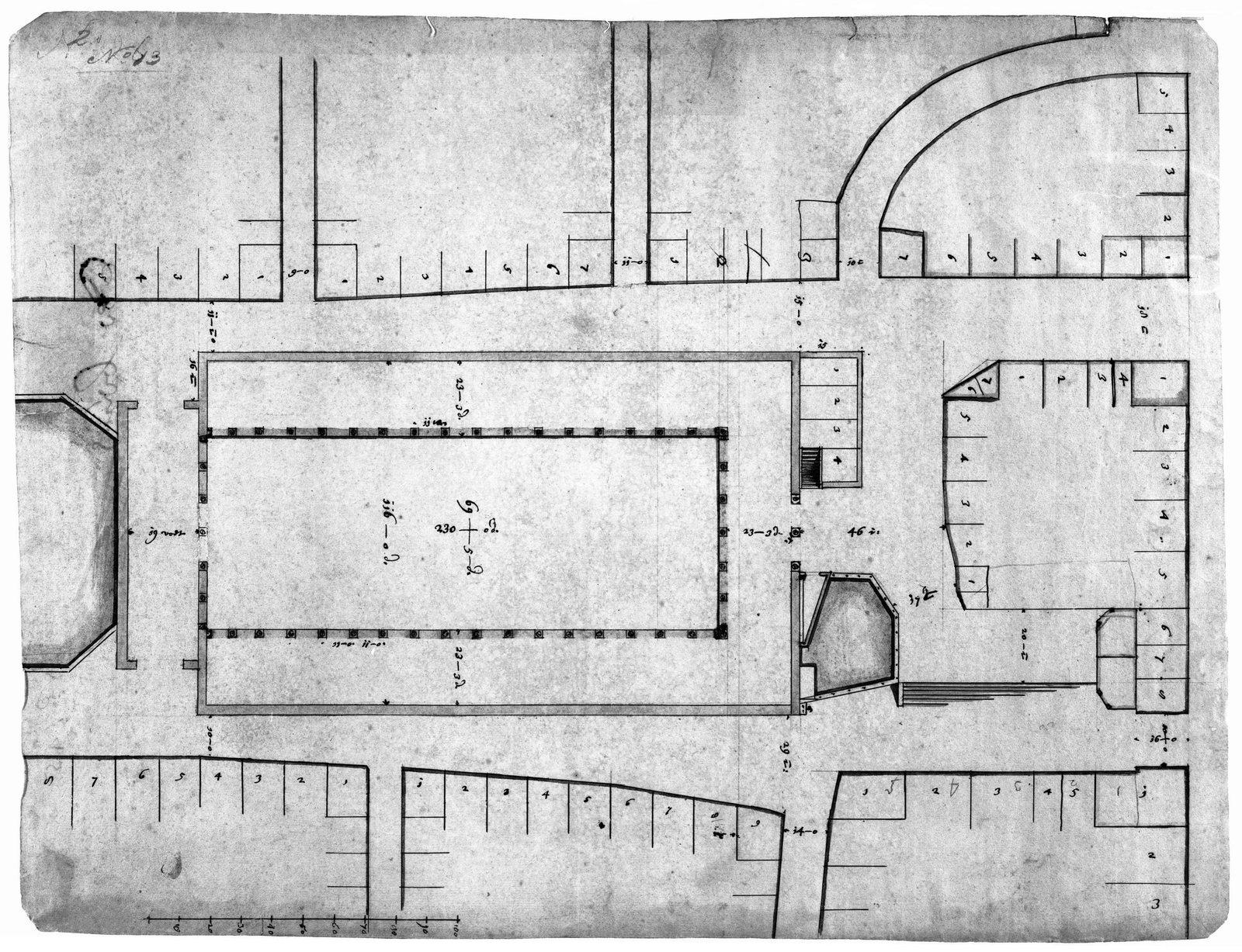
Cover image: bird's-eye view of the exchange by Claes Jansz. Visscher, dated 1612, one year after opening. Stadsarchief Amsterdam, public domain. It is cut away to show the open court, and a boat is visible passing under the arches. Second image: an eighteenth-century survey plan of the building and its surrounding plots by Abraham van der Hart, public domain.
Coordinates 52.372350, 4.893100 — the middle of the vanished footprint over the Rokin directly south of the Dam, accurate to about 40 m. For a place you can actually stand, the Beurspoortje is at 52.372376, 4.893440.





















































 expand_more