


Dynastic History | Archaeological Museum, Split — Salona's Inscriptions Under One Roof
· 1820-8
Personal memoryBy kevin · · Report an issue















































Find memories left by people near you.
Distribute Bounty
This will distribute the bounty equally among all qualifying memories. This action cannot be undone.
Cancel Bounty
Are you sure you want to cancel this bounty? The remaining amount will be refunded to your account.
Success!
Operation completed successfully.
Error
Something went wrong.
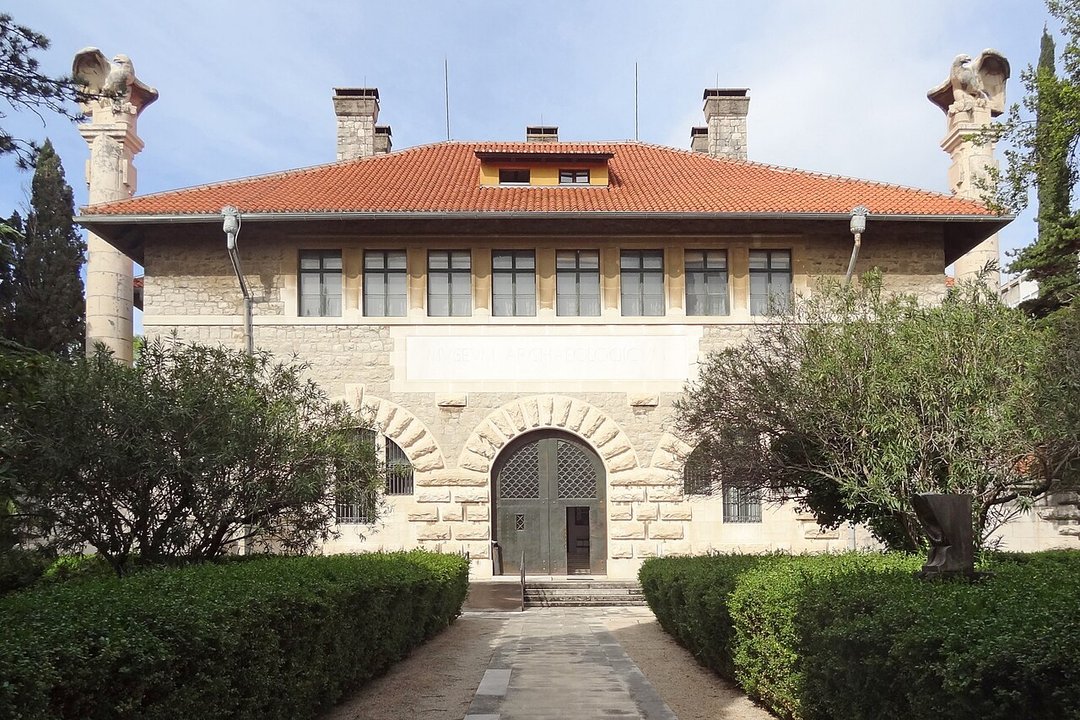
Dynastic History | Archaeological Museum, Split — Salona's Inscriptions Under One Roof
kevin
The museum dates its own founding to 22 August 1820 and traces it to a visit. Francis I of Austria came to Split in May 1818, looked at the palace and at the private antiquities collections in the town, and his antiquarian adviser Anton Steinbüchel argued afterwards for preserving Salona's remains, calling the idea an Austrian Pompeii. The Croatian Encyclopedia records the founding as an act of the provincial government at Zadar. Excavation at Salona began in October 1821, and it was a state undertaking from the start: the ruins of the province's Roman capital, dug and catalogued by the empire that governed Dalmatia in the nineteenth century.
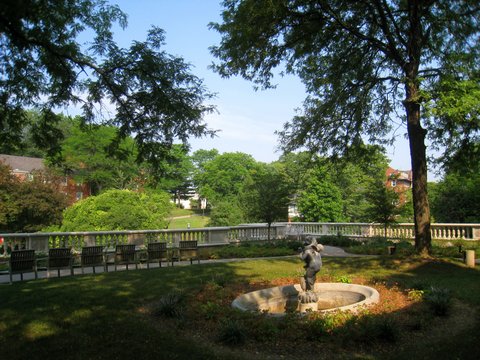
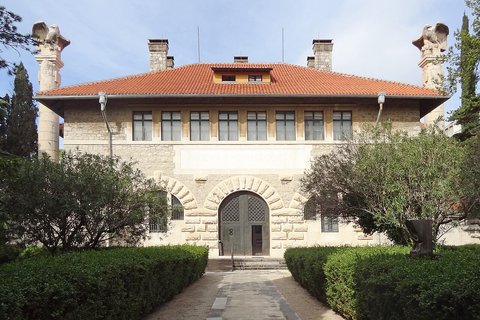
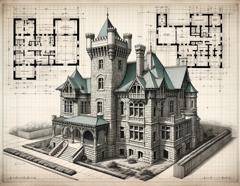
Housing the result took a century. By the museum's own account the collection sat in rented warehouses and then, from 1836, in a building outside the palace's eastern wall; the Croatian Encyclopedia instead dates a first purpose-built structure to 1821 and credits it to the Split conservator Vicko Andrić. The present building on Zrinsko-Frankopanska went up between March 1912 and June 1914 to designs by the Vienna architects August Kirstein and Friedrich Ohmann, with a hall for small objects and a garden lapidarium for the stone. The museum moved in in 1922.
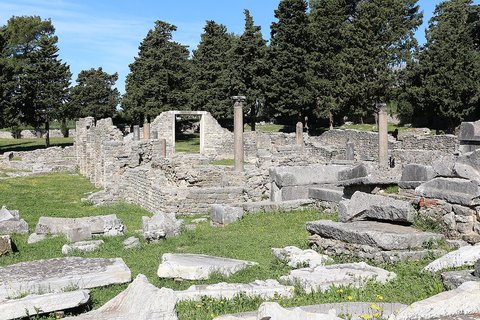
What it holds from Salona is chiefly writing. The Croatian Encyclopedia counts roughly six thousand stone inscriptions from the city, and the collection also takes in sarcophagi from the cemeteries outside its walls and material from the amphitheatre, theatre, forum and episcopal complex. Frane Bulić directed the museum from 1883 to 1923, and its Salona branch collection now runs the site itself. The stones stand in rows along the garden walks, tombstones and dedications and career notices of the officials of a province whose capital is a field of foundations six kilometres up the road.
📸 Cover: the museum's 1912–14 building and garden on Zrinsko-Frankopanska, Bernard Gagnon, CC BY-SA 4.0 via Wikimedia Commons
changes?
delete this memory?
We detected that you have a Blox in your crypto wallet! We will import the Blox into your account.
Click on done below to complete the import.
Welcome Back!
Sign in to preserve cherished moments
Don't have an account?
Welcome!!
Sign up and start preserving cherished moments
?
?
Choose your payment method
Buy with Metablox Credit
Do you want to mint Blox with Metablox Credit?
Which Crypto would you like to use?
Purchase Confirmed!
Your Blox is being minted on-chain and will appear in your profile shortly.
Log in or sign up to claim your Blox.
How many credits do you want to buy?
$100 USD = 1 Metablox Credit = 1 Blox.
Use Metablox Credit to mint any Blox you want on the map.
 expand_more