- Home
- Technology History | War Machines, Wired Programs and the Demo | Philadelphia, London, Menlo Park and San Francisco
- Technology History | Civic Auditorium, San Francisco — Ninety Minutes in 1968 That Showed the Next Fifty Years
Technology History | Civic Auditorium, San Francisco — Ninety Minutes in 1968 That Showed the Next Fifty Years
· 1968-12
Personal memoryBy kevin · · Report an issue
Find memories left by people near you.
Distribute Bounty
This will distribute the bounty equally among all qualifying memories. This action cannot be undone.
Cancel Bounty
Are you sure you want to cancel this bounty? The remaining amount will be refunded to your account.
Success!
Operation completed successfully.
Error
Something went wrong.
Technology History | Civic Auditorium, San Francisco — Ninety Minutes in 1968 That Showed the Next Fifty Years
kevin
For ninety minutes on 9 December 1968, about a thousand people in this hall watched a man use a computer the way you use one now.
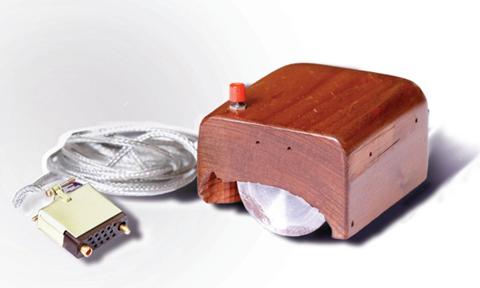
Douglas Engelbart sat on stage at the Fall Joint Computer Conference with a keyboard, a five-key chord set and a wooden box with two wheels underneath it, and demonstrated the mouse, windows, hypertext links, version control, outline editing and a live video call with a colleague thirty miles away.

Almost none of it was mocked up. The screen sharing worked, the collaborative editing worked, and the video link ran over microwave relays rigged for the occasion between here and Menlo Park.
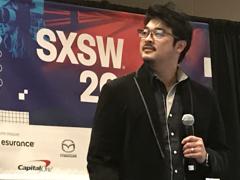
The system was called NLS, the oN-Line System, built by Engelbart's Augmentation Research Center at Stanford Research Institute. The following October that same lab became the second node on the ARPANET, on the receiving end of the message from UCLA.
The famous name came later. Steven Levy called it the mother of all demos in 1994, and the label stuck so thoroughly that it now sounds like something the audience said on the night.
What did not follow was support. Engelbart's ideas were absorbed piecemeal over the next two decades, largely by way of Xerox PARC and then Apple, while his own lab was eventually sold off and he spent much of his career with far less backing than the demonstration would suggest.
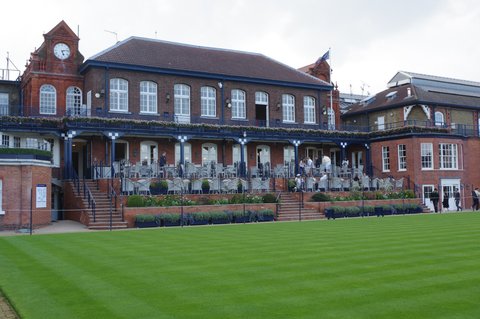
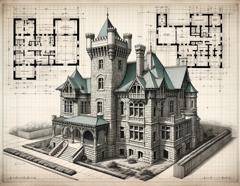
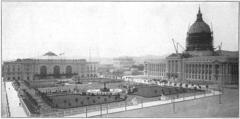
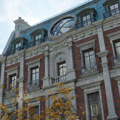
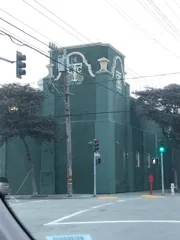
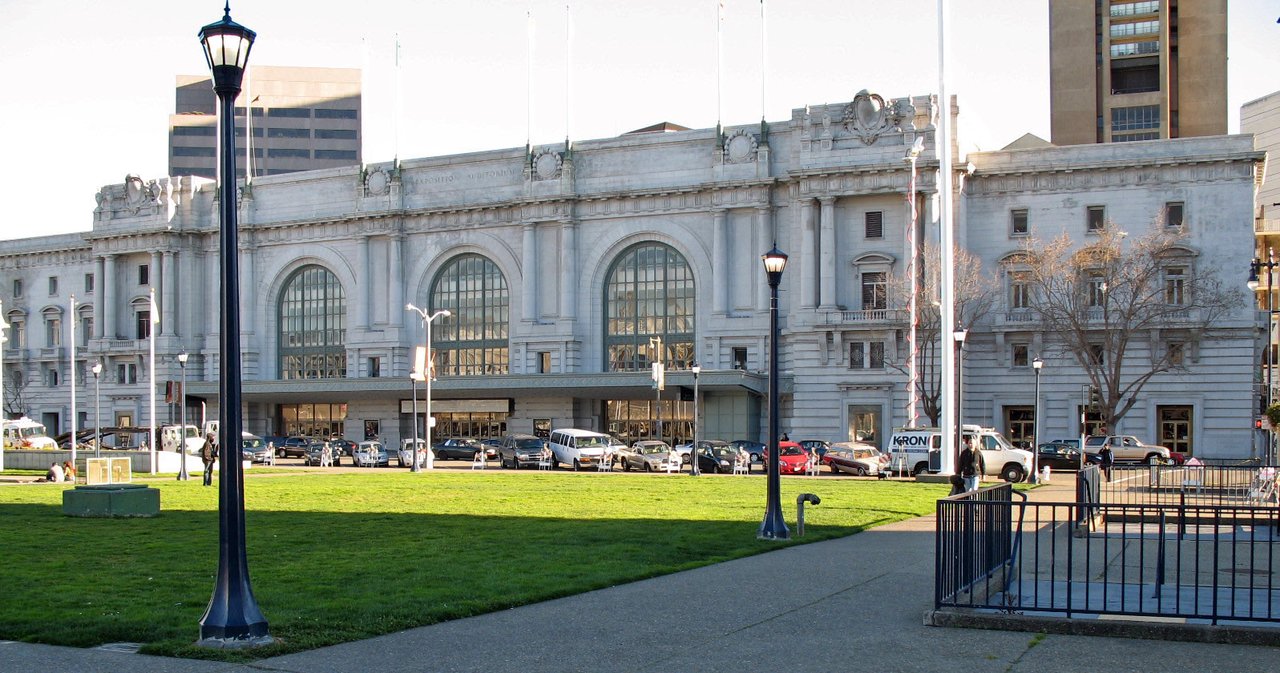
The building was not built for any of this. It went up as the Exposition Auditorium for the 1915 Panama-Pacific International Exposition, and EXPOSITION AUDITORIUM is still carved across the frieze above the arched windows.
It was renamed for the concert promoter Bill Graham after his death in 1991. It remains a working venue on Grove Street, mostly booked for concerts, with nothing outside to tell you what happened on the stage in 1968.
One other thing in this history happened in this room. The first West Coast Computer Faire filled the building on 16 and 17 April 1977, and the Apple II was introduced there.
Cover: photo by Sanfranman59, CC BY-SA 4.0, via Wikimedia Commons.
changes?
delete this memory?
We detected that you have a Blox in your crypto wallet! We will import the Blox into your account.
Click on done below to complete the import.
Welcome Back!
Sign in to preserve cherished moments
Don't have an account?
Welcome!!
Sign up and start preserving cherished moments
?
?
Choose your payment method
Buy with Metablox Credit
Do you want to mint Blox with Metablox Credit?
Which Crypto would you like to use?
Purchase Confirmed!
Your Blox is being minted on-chain and will appear in your profile shortly.
Log in or sign up to claim your Blox.
How many credits do you want to buy?
$100 USD = 1 Metablox Credit = 1 Blox.
Use Metablox Credit to mint any Blox you want on the map.
expand_more