MLB | The Spite Fence and the Rooftops That Caused It (Shibe Park site, Philadelphia)
volume_up
Listen
directions
Directions
Ben Shibe made his money manufacturing baseballs. His company held the patents on automated stitching and supplied most of the balls used in professional play, which is a useful thing to remember about the man who built the first steel-and-concrete ballpark in the major leagues: he came to the game from the factory side.
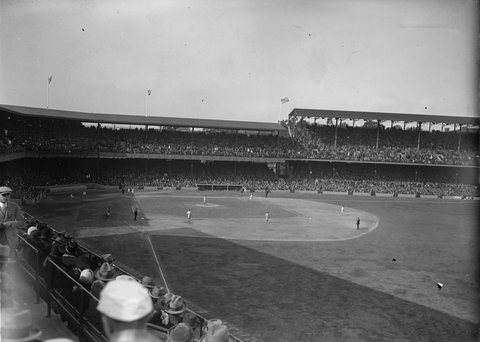
By 1907 the Athletics were turning away crowds of 28,000 from a wooden park with 9,500 seats. Shibe bought six acres at 21st and Lehigh in North Philadelphia, in a district called Swampoodle that was then clay bluffs, gullies and open lots. William Steele & Sons built it for about $301,000, and it opened on 12 April 1909. Everything after it, Forbes Field that June, League Park, Comiskey, Fenway, followed the same idea: stop building ballparks out of wood, because wood burns.
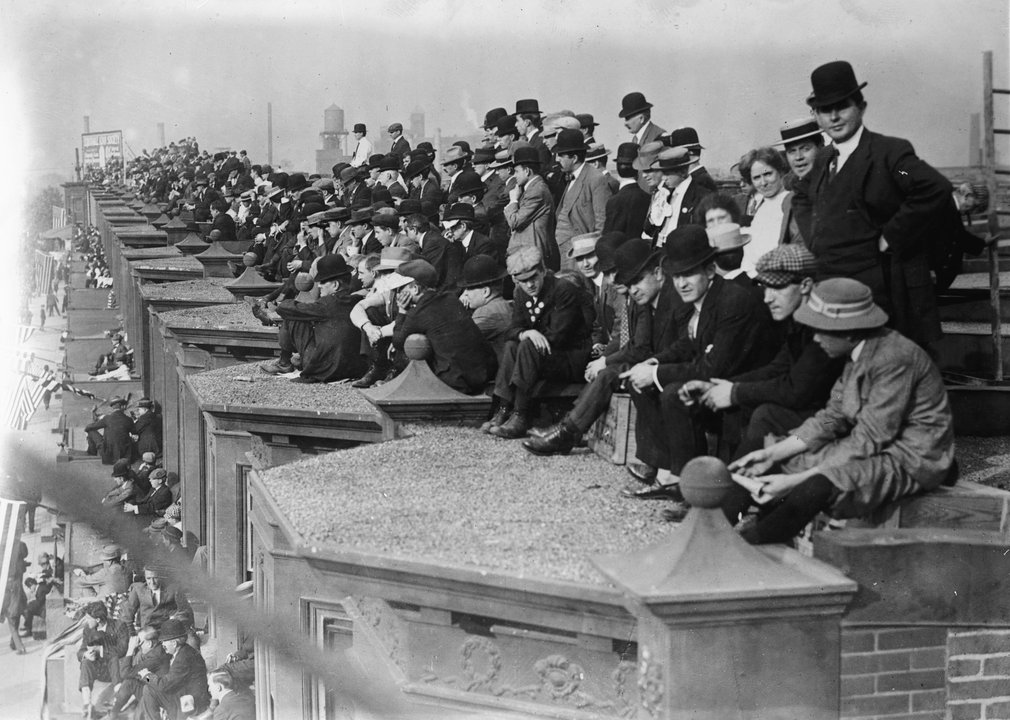
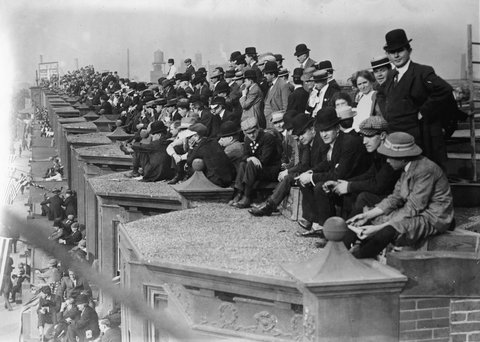
The best story here is about the neighbours. The rowhouses on 20th Street looked straight over the right-field wall, and their owners built bleachers on their roofs and sold seats. During the 1929 World Series roughly 3,000 people watched from those roofs. While the Athletics were drawing well, the club put up with it.
Then Connie Mack sold off his second dynasty, attendance collapsed, and the club found that homeowners who could no longer fill their own bleachers were pulling customers out of the Shibe Park ticket queue. In the winter of 1934-35 the right-field wall went up to nearly fifty feet. Writers called it Connie Mack's spite fence, and the name stuck, but the decision was Jack Shibe's.
The Philadelphia Stars of the Negro National League played here in 1943, and the park hosted three Negro Leagues World Series. The Phillies moved in from the Baker Bowl in 1938 and stayed to the end; the Athletics left for Kansas City after 1954. It became Connie Mack Stadium in 1953.
The last game was on 1 October 1970, and the crowd dismantled the place for souvenirs. A five-alarm fire took the left-field stands in August 1971. A judge ordered the rest razed in 1975, and the corner tower with its domed cupola, which had held Mack's office, came down on 13 July 1976, the same day the All-Star Game was played at Veterans Stadium a few miles south.
Deliverance Evangelistic Church bought the lot around 1980 and finished a sanctuary in the early 1990s over the spot where home plate had been. A Pennsylvania state historical marker went up in November 1997.
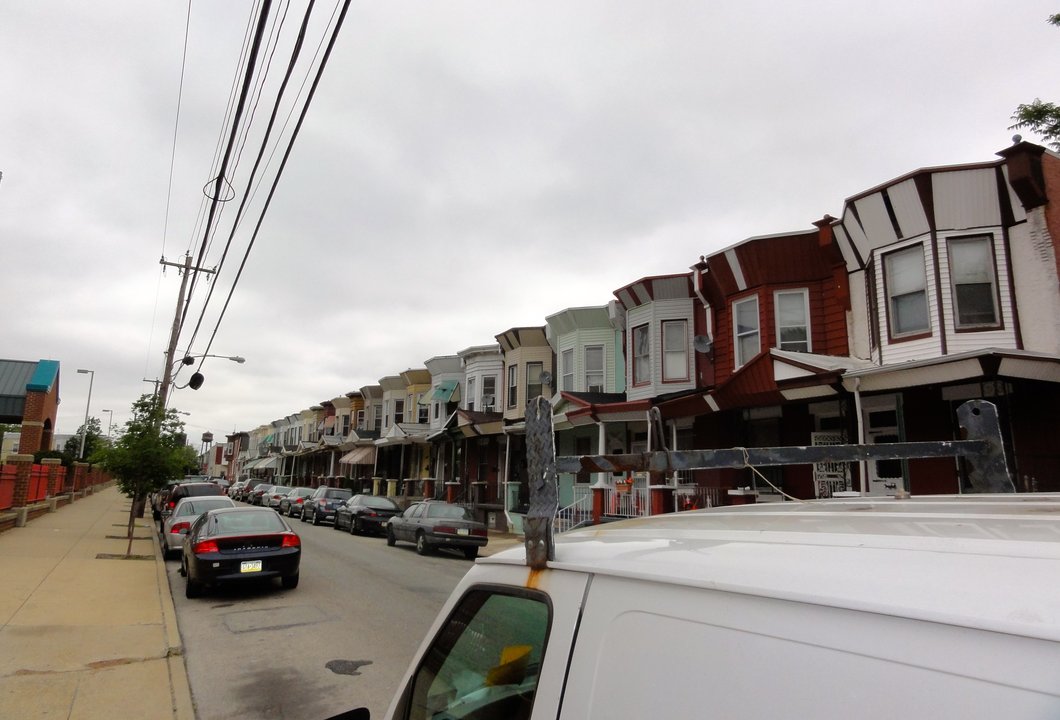
The rowhouses on 20th Street are still there. That is the thing to go and look at.
Coordinates are the church on the ballpark site, from OpenStreetMap.
Cover: spectators watching Shibe Park from the 20th Street rooftops, 1910. Library of Congress. Public domain. Second image: the surviving 20th Street rowhouses in 2011, photographed by Delaywaves, CC BY 3.0, via Wikimedia Commons.





























 expand_more