MLB | The Ban That Came Before the Verdict (Tsao Chin-hui, Tianmu Baseball Stadium)
volume_up
Listen
directions
Directions
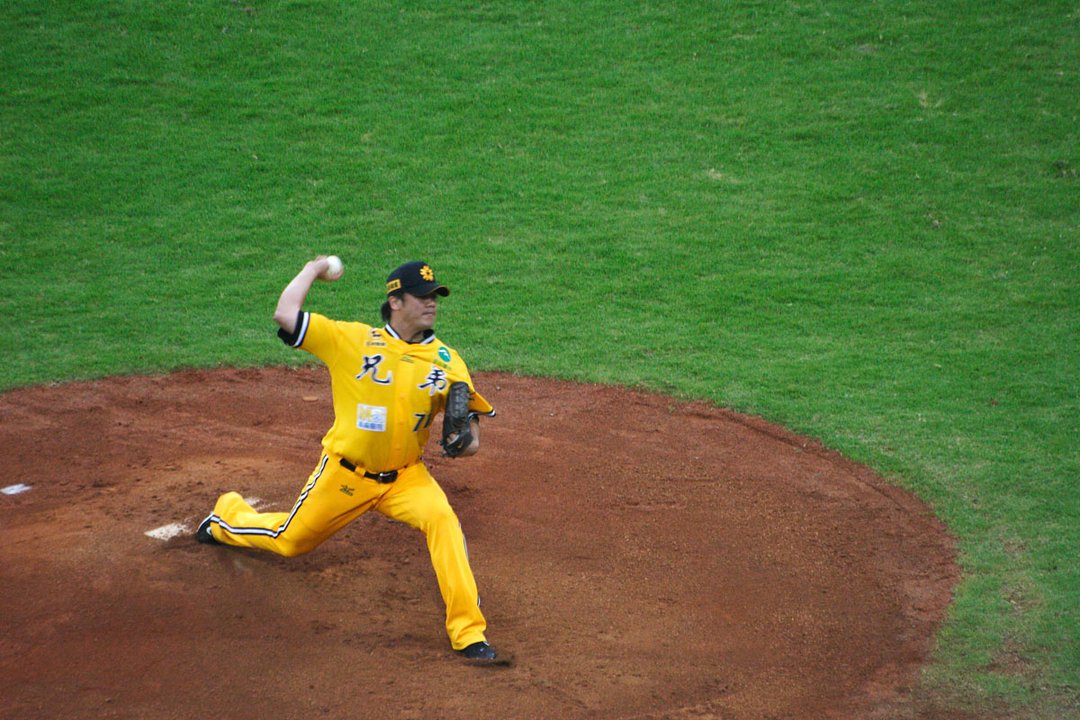
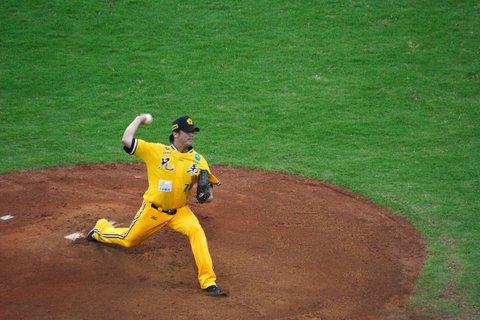
Tianmu was full on 25 April 2009 for a twenty-seven-year-old making his Chinese Professional Baseball League debut. Tsao Chin-hui (曹錦輝) gave the Brother Elephants six innings, struck out four, allowed three runs of which two were earned, ended a nine-game losing run and delivered the franchise's 900th win. At the end of one inning he turned to the stands and shouted Come On, and that became his nickname.
He had six months left in Taiwanese baseball.
Before it he had been the first of them. Tsao reached the major leagues with Colorado on 25 July 2003, the first Taiwan-born pitcher to do it, eleven months after Chen Chin-feng became the first Taiwanese player of any kind and nearly two years ahead of Chien-Ming Wang. On 18 August 2003 he broke up Steve Trachsel's no-hit bid with what stayed the only Colorado hit of the game, which made him the first Taiwanese player to record a major league hit as well. At nineteen he had struck out 187 in 145 innings and been rated among the top twenty-five prospects in American baseball. In 2005 he threw 100 miles an hour, still the fastest pitch on record by a Taiwanese pitcher. Shoulder and elbow trouble took most of the rest.
Then October 2009. Prosecutors investigating an island-wide match-fixing operation searched his home and named him as a defendant. What followed is worth setting out carefully, because it is routinely set out wrongly.
Tsao denied throwing games. He admitted meeting the bookmakers repeatedly. On 23 December 2009 the Brother Elephants dismissed him and the CPBL clubs agreed never to employ him again, which happened before any legal outcome and on grounds the club stated were independent of one: its general manager's position was that meeting a bookmaker and accepting his hospitality was intolerable whether or not a game had been thrown. On 10 February 2010 the Banqiao prosecutors decided not to indict. He was never charged and never tried. Their written decision nevertheless recorded a finding that he had intended to fix a game and had not carried it through.
Both of those are true, neither cancels the other, and Taiwan has been arguing about him ever since.
The rest is what a lifetime ban looks like in practice. Six years outside organised baseball, part of them spent running a restaurant. In December 2014 he signed with the Adelaide Bite; the CPBL wrote to the Australian league, which suspended his registration. In January 2015 the Dodgers gave him a minor league contract, and the CPBL published a statement of regret and bafflement citing MLB's own rule that intent alone can support a permanent ban. On 8 July 2015 he pitched in a major league game for the first time since 2007. Five appearances that season, two the next, and the last of them on 21 May 2016 in San Diego. He retired in June 2017 and reappeared as a player in January 2026 with the Fuzhou Sea Knights.
The CPBL's own statement gets this wrong. It said Tsao had been acquitted, and that the indictment set out his intent. There was no acquittal and no indictment; there was a decision not to prosecute. The distinction does not make the finding kinder. It does make it a different kind of finding.
Visiting. Tianmu Baseball Stadium opened in 1999 in a residential part of Shilin, holds around ten thousand, and is the home ground of the revived Wei Chuan Dragons. Zhishan on the Taipei Metro red line is the nearest station, with a walk at the other end.
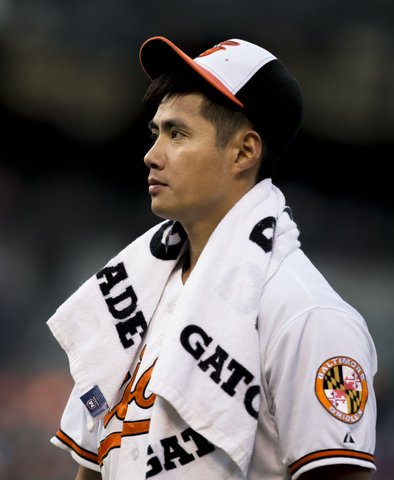
Cover: Tsao Chin-hui pitching for the Brother Elephants at Tianmu, 25 April 2009, his CPBL debut. Photo: Meng-Hsi Chuang, CC0, via Wikimedia Commons. Second image: Tsao pitching for the Dodgers, 11 July 2015, three days after his return to the major leagues. Photo: Derral Chen, CC BY-SA 2.0, via Wikimedia Commons.

















































 expand_more