Finance History | Tokyo Stock Exchange, 30 April 1999 — The Trading Floor Closed but the Market Stayed Open
volume_up
Listen
directions
Directions
On 30 April 1999, the Tokyo Stock Exchange closed its physical stock-trading floor in Kabutocho. The exchange remained open, but regular share trading moved completely into computerized systems.
The floor carried a lineage of more than 120 years from the start of trading at the former Tokyo Stock Exchange on 1 June 1878. Generations of clerks had translated customer instructions into bids, offers, gestures, and completed bargains inside a shared room.
Computerization arrived gradually rather than through a single overnight replacement. The exchange introduced electronic trading for some Second Section issues in January 1982, then expanded system coverage as telecommunications and processing capacity improved.
By the final stage, the floor handled 150 of the most actively traded stocks through the Floor Order Routing and Execution System. Closing it meant that orders for those remaining issues would also enter from terminals in member firms' offices or directly from their computer systems.
The official reasons were speed, lower execution costs, and greater market efficiency. Electronic routing could distribute orders without requiring every participant to maintain people at one address, while software could apply matching rules consistently across a much larger flow of messages.
The transition also changed where operational risk lived. Crowds, paper, and verbal misunderstandings became less important, while system capacity, network connections, timestamps, software controls, and recovery procedures became essential market infrastructure.
Closing the room did not remove intermediaries or human judgment. Brokers still represented clients, dealers still managed inventories and risk, and regulators still enforced market rules; their instructions now met in an electronic order book rather than through physical proximity.
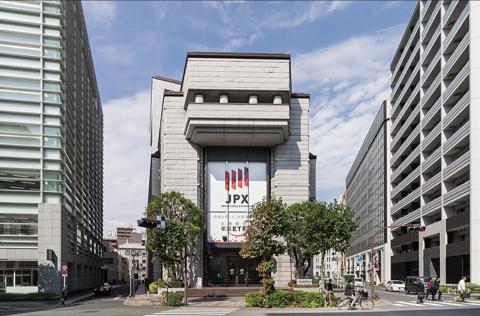
The former floor was converted into TSE Arrows, which opened on 9 May 2000 as a market-information and public-relations space. Visitors can therefore stand near the place where visible trading ended and see the screens that came to symbolize its successor.
The Kabutocho building marks a precise institutional change often hidden by the word digitization. Tokyo's securities market ceased to depend on a room full of traders without ceasing to be a place governed by common access rules, price priorities, and shared technology.
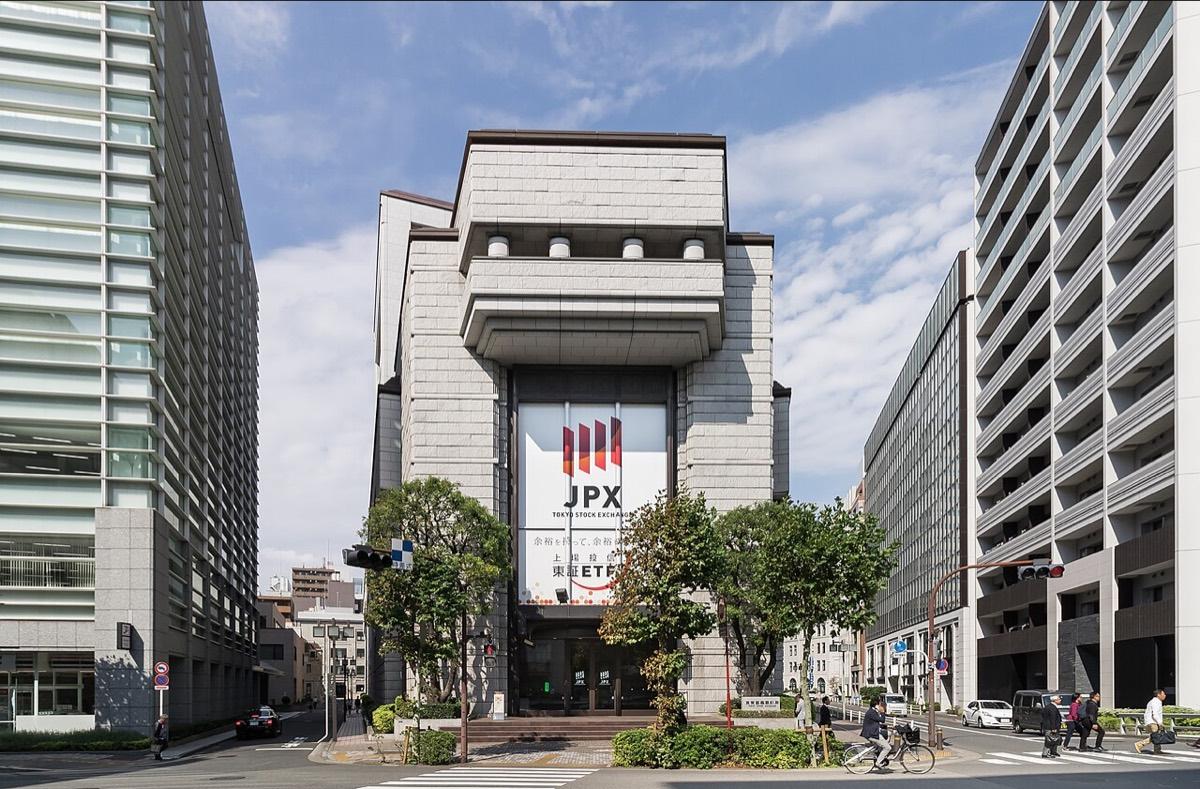
The accompanying photograph of the Tokyo Stock Exchange Main Building is by Kakidai, licensed CC BY-SA 4.0 via Wikimedia Commons.
**Sources:**
- Japan Exchange Group, official history of the stock-trading floor: https://www.jpx.co.jp/english/corporate/about-jpx/history/01-02.html
- Japan Exchange Group, timeline before JPX launched: https://www.jpx.co.jp/english/corporate/about-jpx/history/01-01.html
- Tokyo Stock Exchange, 1999 annual report describing the floor closure and remaining 150 issues: https://www.jpx.co.jp/english/corporate/investor-relations/ir-library/integrated-report/tvdivq0000008tvr-att/annual_1999.pdf
- Japan Exchange Group, overview of computerized domestic-stock trading: https://www.jpx.co.jp/english/equities/trading/domestic/
**Image:** Tokyo Stock Exchange Main Building by Kakidai; CC BY-SA 4.0. https://commons.wikimedia.org/wiki/File:Tokyo_Stock_Exchange_Main_Building_(1988).jpg





_thumbnail.jpg)


 expand_more