Finance History | American Stock Exchange, 29 January 1993 — SPY Put an Index into One Trade
volume_up
Listen
directions
Directions
On 29 January 1993, Standard & Poor's Depositary Receipts began trading at the American Stock Exchange at 86 Trinity Place. Known by the ticker SPY, the security became the first exchange-traded fund listed in the United States.
The trust had been seeded one week earlier, on 22 January, with a portfolio designed to mirror the S&P 500. The later trading launch was the public-market step: investors could now buy or sell an interest in that diversified basket through one quoted security during the trading day.
An index mutual fund already allowed investors to hold a broad portfolio. SPY joined that idea to exchange mechanics, adding intraday prices, ordinary brokerage orders, and the ability to transfer shares between investors without the fund processing every retail purchase or redemption individually.
The underlying structure separated small trades from large portfolio transactions. Authorized institutions could create or redeem large blocks of ETF shares against baskets of securities, while most investors traded existing shares with one another on the exchange.
That creation-and-redemption channel gave arbitrageurs a way to respond when the ETF price diverged from the value of its holdings. It did not guarantee an exact match at every moment, but it connected the secondary-market price to a process capable of expanding or contracting the supply of shares.
The design required regulatory accommodation because older investment-company and trading rules had not been written for this hybrid. SEC exemptions allowed large-block redemptions, secondary-market trading at negotiated prices, and the in-kind exchange of securities that made the structure workable.
SPY was not the world's first exchange-traded index product; Toronto had introduced one earlier. Its narrower historical claim is still substantial: it established the U.S. template that joined a pooled portfolio, an exchange listing, and an arbitrage mechanism in one instrument.
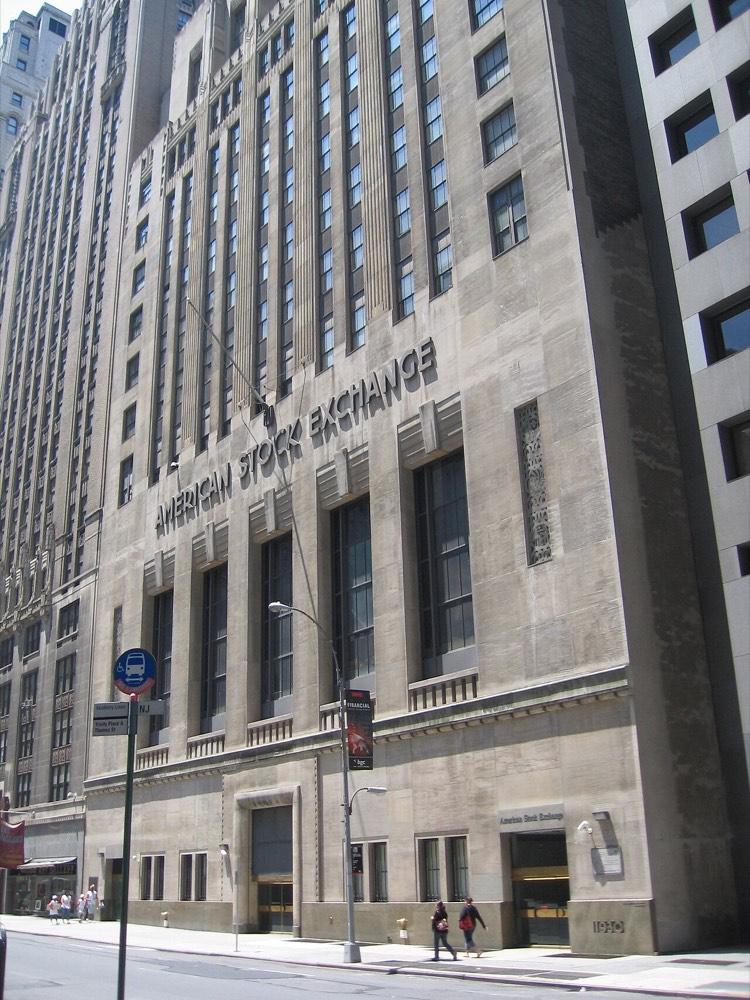
The American Stock Exchange building makes that combination visible. A product representing hundreds of companies entered the market through the same floor infrastructure used for individual securities, turning portfolio construction itself into something that could be quoted and traded continuously.
The accompanying photograph shows the former American Stock Exchange at 86 Trinity Place; it was dedicated to the public domain by Noroton via Wikimedia Commons.





_thumbnail.jpg)







 expand_more