Finance History | Oost-Indisch Huis, 1606 — VOC Shares Became Transferable Ledger Claims
volume_up
Listen
directions
Directions
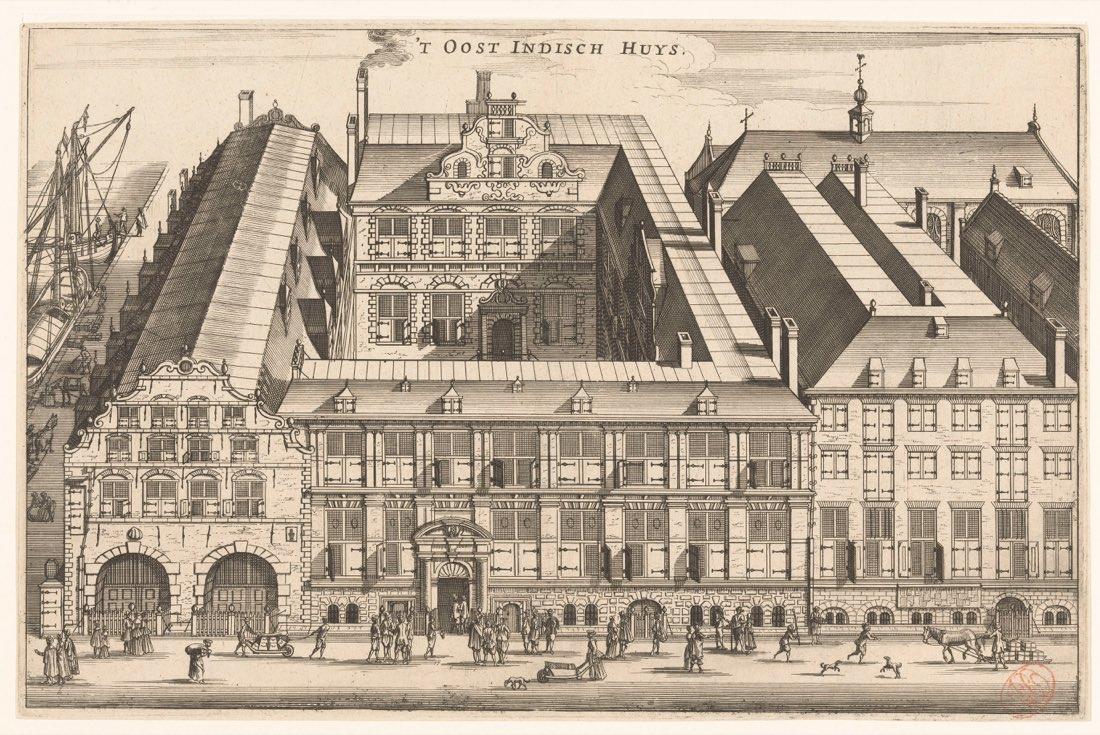
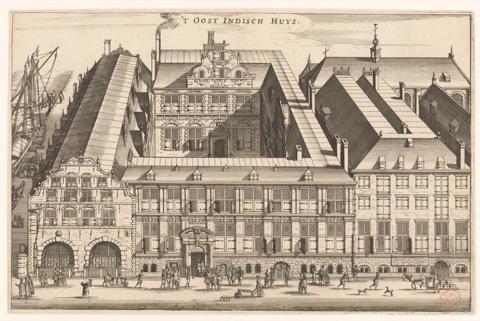
In 1606, Amsterdam completed the Oost-Indisch Huis as the headquarters of the Amsterdam Chamber of the Dutch East India Company, concentrating company governance and capital records in one complex.
The VOC had been chartered by the States General on 20 March 1602, combining regional ventures into a single monopoly company with six chambers.
Investors subscribed capital that was committed for an extended period rather than being returned after one voyage, giving the enterprise a continuing financial base for fleets, forts, warehouses, and administration.
An investor who wanted liquidity did not have to wait for the company to wind up because a participation could be sold to another buyer.
The transfer became effective through the company’s records, where its bookkeeper checked the seller’s holding and entered the change in ownership.
At the Oost-Indisch Huis, the share register therefore connected a durable pool of corporate capital with a secondary market among investors.
This arrangement built on older partnership interests and transferable claims while making trade in a large permanent-capital company more systematic and visible.
Buyers could acquire an existing claim on future distributions without supplying new cash to the VOC, while sellers could turn a long-term investment into current funds.
The ledger also defined who the company recognized as an owner, making accurate registration essential to property rights, distributions, and settlement.
Directors meeting in the house coordinated the Amsterdam Chamber’s ships and accounts, and representatives of the chambers jointly governed the wider company through the Heeren XVII.
The financial structure mobilized private capital on an exceptional scale, but it financed an armed colonial monopoly rather than a neutral trading network.
VOC returns depended on coercive power, warfare, forced cultivation, dispossession, and systems of slavery and exploitation across Asia and southern Africa.
The same records that made claims transferable thus linked Amsterdam investors to distant commercial revenues and to the violence used to obtain them.
The present complex contains later additions and restoration, while the period image shows the Oost-Indisch Huis in the seventeenth century.
The pin identifies the surviving headquarters where company administration and the ownership ledger gave permanent corporate capital a physical address.
Image: possibly Jacob van Meurs or his workshop/Rijksmuseum, CC0, via Wikimedia Commons.





_thumbnail.jpg)





 expand_more