Finance History | Kansas City Board of Trade, 24 February 1982 — One Contract Put the Stock Market into a Futures Pit
volume_up
Listen
directions
Directions
On 24 February 1982, traders at the Kansas City Board of Trade began dealing in futures on the Value Line stock index. It was the first futures contract based on a stock-market index to reach trading.
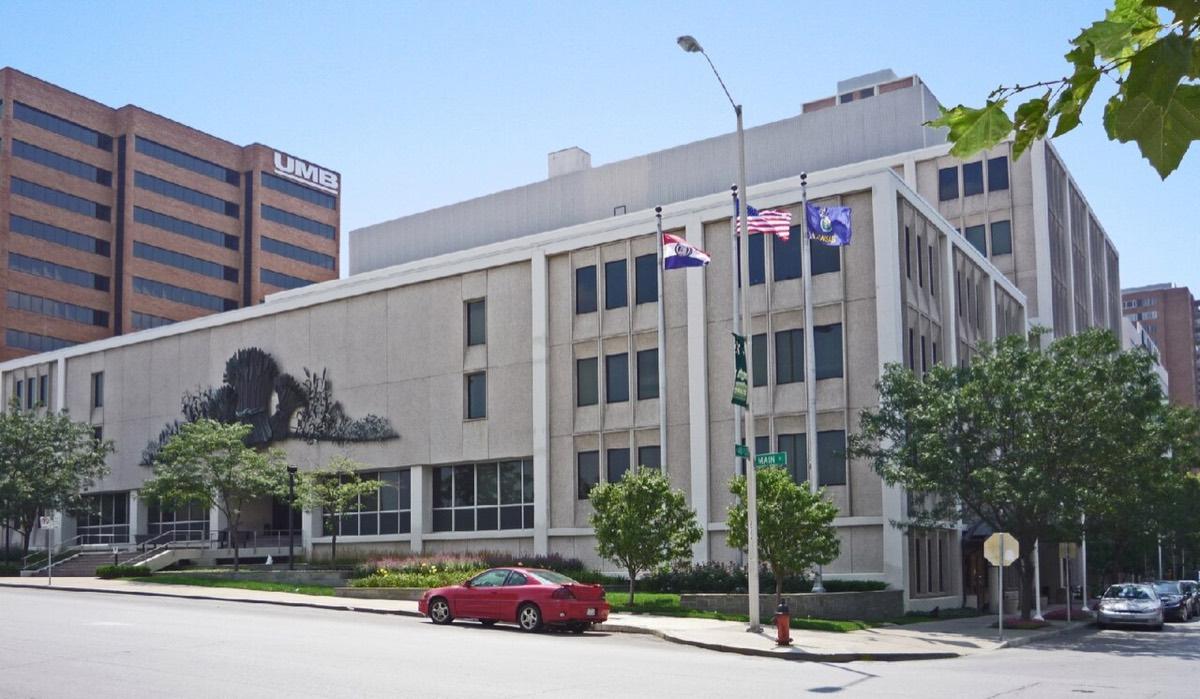
The exchange at 4800 Main Street was better known for hard red winter wheat. Its new contract applied a technique developed for physical commodities to a number calculated from share prices, creating a standardized promise whose value rose and fell with a broad group of companies.
The Commodity Futures Trading Commission had approved the contract eight days earlier. Because a numerical index could not be loaded into a warehouse or delivered like grain, the contract used cash settlement, turning the difference between the agreed level and the final index value into the amount exchanged.
That design separated market exposure from ownership of the underlying shares. A portfolio manager could offset some risk from a falling market, while another trader could take a view on the direction of equities without buying every company represented by the index.
Futures also concentrated leverage and liquidity. Participants posted margin rather than paying the full notional value of the stock basket, so relatively small price movements could create much larger gains or losses on the capital committed.
The launch came after regulators divided responsibility for financial derivatives through the Shad-Johnson framework. Broad stock-index futures fell under the CFTC, while futures on individual stocks and narrow indexes remained prohibited until later reforms.
More than 2,000 contracts traded on opening day, according to a contemporary report. The Value Line contract did not ultimately become the dominant equity-index future, but Kansas City proved that an exchange could transform a securities benchmark into a tradable risk-transfer instrument.
The Main Street building therefore marks an important crossing between commodity and securities markets. Once an index could support a futures contract, investors gained a new way to hedge, speculate, discover prices, and connect decisions made in a trading pit with the value of an entire equity portfolio.
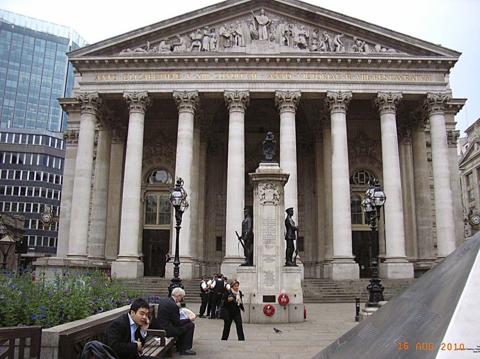
The accompanying photograph shows the former Kansas City Board of Trade's Main Street entrance; Charvex released it into the public domain via Wikimedia Commons.
**Sources:**
- U.S. Commodity Futures Trading Commission, agency history and approval of the first stock-index futures contract: https://www.cftc.gov/sites/default/files/idc/groups/public/%40aboutcftc/documents/file/2015afr.pdf
- U.S. Commodity Futures Trading Commission, designated-contract record showing approval on 16 February and trading on 24 February 1982: https://www.cftc.gov/sites/default/files/anr/anrcontractsdesig98.htm
- State Historical Society of Missouri, history of the Kansas City Board of Trade: https://shsmo.org/sites/default/files/pdfs/kansas-city/kimball/Borchardt-04-19-2006.pdf
- The Washington Post, contemporary opening-day report: https://www.washingtonpost.com/archive/business/1982/02/25/stock-futures-popular-on-first-day-of-trading/396b9bdc-8811-4b59-b780-9c5db25c425a/
**Image:** Kansas City Board of Trade, Main Street entrance, by Charvex; public domain. https://commons.wikimedia.org/wiki/File:KCBOT_2_Kansas_City_Board_of_Trade.jpg










 expand_more