Finance History | New York Stock Exchange, 1 May 1975 — Brokerage Commissions Became Negotiable
volume_up
Listen
directions
Directions
On 1 May 1975, brokers on the New York Stock Exchange entered a competitive commission system. For public orders, member firms could negotiate what they charged instead of following an exchange schedule of fixed minimum rates.
The old arrangement reached back to the Buttonwood Agreement of 1792, when New York brokers promised a minimum commission and preference for one another. Fixed schedules later became part of exchange organization: firms competed for customers through service, relationships, research, and the redistribution of commission income, but not by quoting a lower execution fee.
Institutional investors made that structure increasingly difficult to sustain. Large orders could produce commissions far above the marginal cost of execution. Customers sought volume discounts, routed business through regional exchanges or the over-the-counter market, and used “give-ups” and research arrangements to recover some of the fixed charge.
The Securities and Exchange Commission pressed for a staged transition. Competitive rates first applied to very large trades in 1971, and the threshold was reduced in later steps. In January 1975, the SEC adopted Rule 19b-3, prohibiting exchanges from requiring fixed public commission rates after 1 May. Floor brokerage rates received a separate transition until 1976.
“May Day” changed the economics of brokerage rather than the mechanics of matching a stock trade. Firms now had to price execution, research, advice, and account service in a competitive environment. Institutional customers obtained the largest early discounts; the SEC later estimated that NYSE member firms received $335.7 million less in commissions through March 1976 than the prior schedule would have produced at equivalent activity.
The change also exposed a problem hidden inside the old bundle. Investment managers used client commissions to obtain brokerage and research together. Congress added Section 28(e) in 1975, creating a conditional safe harbor for paying more than the lowest available commission when a manager judged the brokerage and research services reasonable.
Negotiated commissions did not immediately create modern discount brokerage, electronic routing, or zero-commission retail trading. It removed a price floor that had sheltered the exchange membership and allowed later business models to compete on cost.
At 11 Wall Street, a rule older than the exchange building gave way. The trading floor remained, but the price of reaching it became a matter for buyer and broker to negotiate.
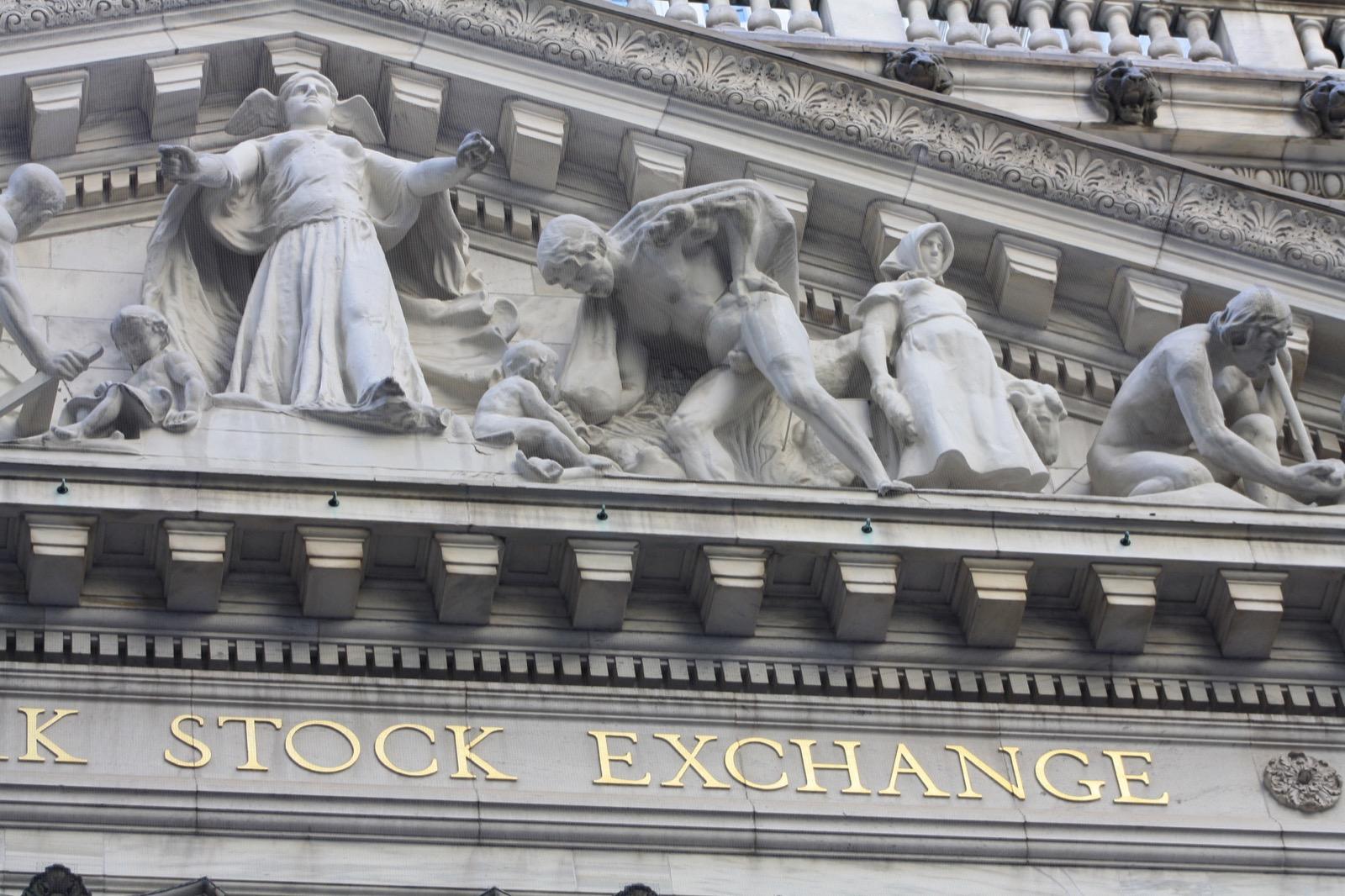
Image: “NYSE facade” by Ryan Schwark, dedicated to the public domain under CC0, via Wikimedia Commons.














 expand_more