Finance History | The White House, 6 June 1934 — A Federal Regulator Entered the Stock Market
volume_up
Listen
directions
Directions
On 6 June 1934, President Franklin D. Roosevelt signed the Securities Exchange Act at the White House. The law created the Securities and Exchange Commission and gave the federal government continuing authority over securities trading after shares had been issued.
The distinction from the Securities Act of 1933 mattered. The earlier law concentrated on disclosures when securities were first offered, while the 1934 act reached exchanges, brokers, dealers, and the secondary market where investors traded with one another.
Congress acted after the market crash and the Senate Banking Committee investigation led by Ferdinand Pecora. Testimony about conflicts, pools, misleading sales practices, and the use of borrowed money weakened the argument that exchanges could police every abuse without federal supervision.
The new commission could require exchanges and market intermediaries to register, oversee exchange rules, demand periodic reports from public companies, and pursue manipulation and fraud. The act also placed margin regulation within a federal framework rather than leaving the amount of credit behind stock purchases entirely to private custom.
This was not a replacement of exchanges by a government marketplace. The United States instead developed a layered model in which exchanges retained rulemaking and disciplinary roles as self-regulatory organizations, but operated under federal law and SEC oversight.
Nor did the statute promise that listed securities were good investments or that prices could not fall. Its central bargain was disclosure, enforceable conduct rules, and a regulator with the power to investigate, write rules, and bring cases when market behavior crossed legal boundaries.
Roosevelt appointed Joseph P. Kennedy as the SEC's first chairman later that summer. The choice signaled that the agency would need practical knowledge of Wall Street as well as distance from the practices it was created to supervise.
The White House pin marks the instant when American securities markets acquired a permanent federal referee. From this address, the legal meaning of a national exchange changed from a largely private club with public importance into a supervised institution carrying explicit obligations to investors and the wider economy.
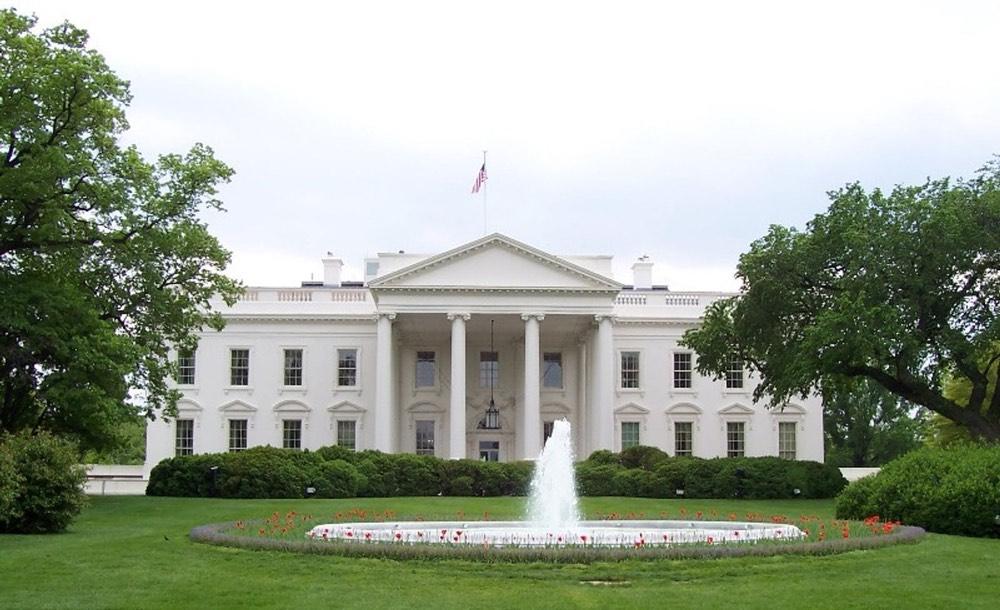
The accompanying photograph shows the White House's north façade; it was released into the public domain by Edbrown05 via Wikimedia Commons.
















 expand_more