Finance History | Binnenhof, The Hague, 27 February 1610 — The Short-Selling Ban Written Against One Syndicate
volume_up
Listen
directions
Directions
The first regulation of a share market anywhere, as it is generally described, was written to stop nine men, and the largest of them held four fifteenths of the syndicate.
On 11 February 1609 Isaac Le Maire and eight other Amsterdam merchants signed an agreement to trade Dutch East India Company shares on joint account.
They met two or three times a week and kept a book, and the arrangement was known as the Groote Compagnie.
What they traded was mostly paper. Moving an actual VOC share meant the seller appearing in person at the company's transfer office with two directors signing the book, so traders preferred to sell forward and settle the difference in cash.
That made it easy to sell in blanco, meaning shares the seller did not own, for delivery one to three years out.
The syndicate sold heavily and worked the price down, circulating unfavourable reports about the company's losses at sea.
The VOC directors petitioned the States General. Their complaint leaned on the harm being done to shareholders, and to widows and orphans in particular, though the number of widows and orphans actually living off a VOC holding was small.
Share merchants petitioned back. The price was falling because the company was losing ships and stockpiling unsellable spice, they argued, and selling forward was ordinary commerce, since herring was routinely sold before it was caught and grain before it was grown.
The States of Holland took advice from the Court of Holland, and on 27 February 1610 an ordinance was promulgated banning the blank sale of shares outright.
Transfer now had to be entered in the company's books within a month of the sale. Term sales themselves stayed legal, and the directors did not get the retroactive clause they had asked for.
The interesting part is what happened next. On 28 March 1610, a month after the proclamation, the syndicate resolved to stop selling and instead to settle its open positions against each other, which is netting, and one of the earliest recorded instances of it.
VOC shares then rose rather than fell, and several members of the group went bankrupt that April and May.
The ban itself did almost nothing. It was reissued in 1621, 1630 and 1636, nobody was prosecuted under it, and its lasting effect was procedural: a forward contract in shares had no standing at law, so a trader facing a loss could decline to settle.
Twenty-seven years later the tulip trade fell into exactly that hole, and the Court of Holland sent the resulting disputes back to the city councils rather than enforce anything.
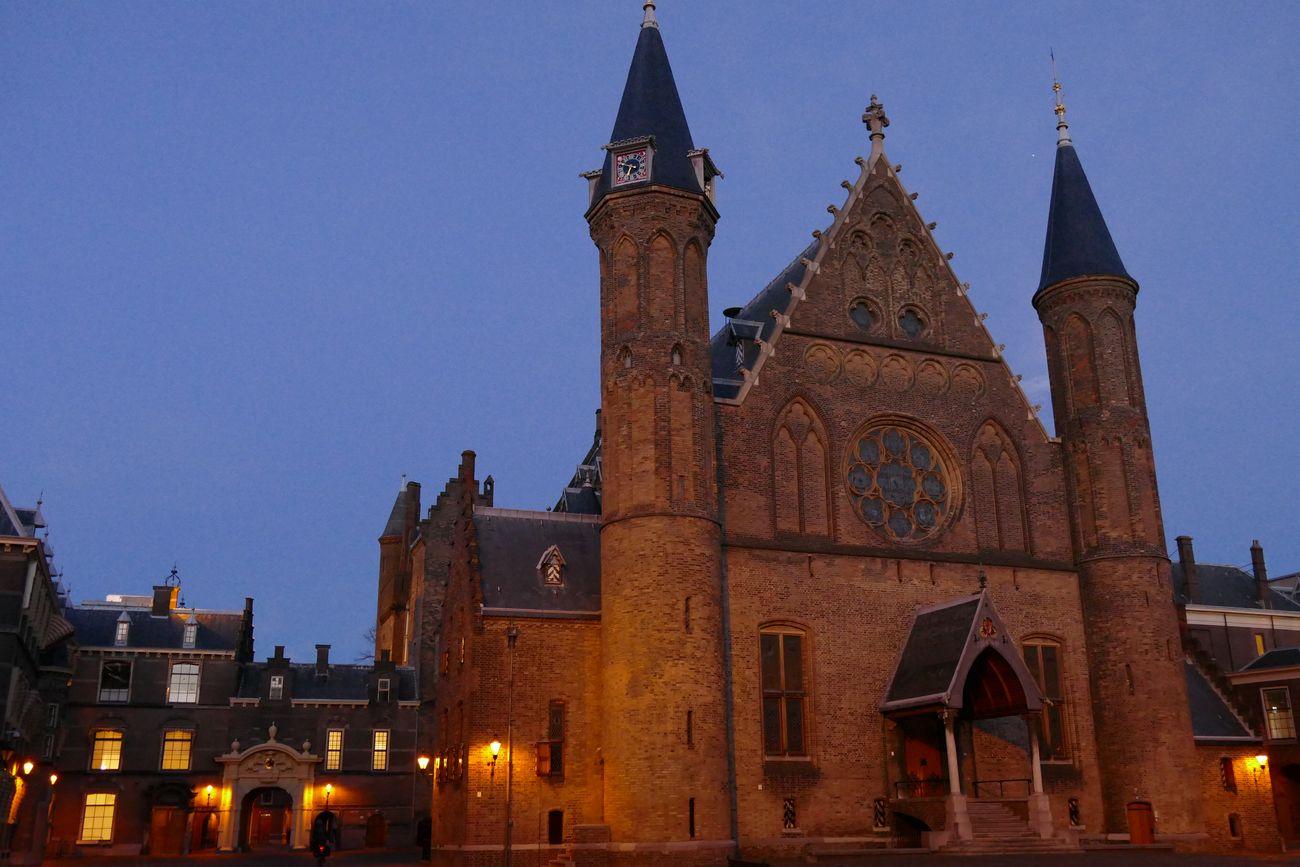
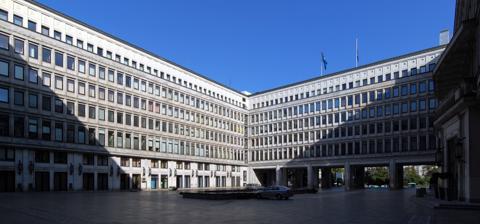
The States General, the States of Holland and the Court of Holland all sat inside this courtyard, and the Ridderzaal in the photograph is its oldest building.
The complex is closed for a renovation that the Dutch government's November 2025 estimate does not expect to finish until the summer of 2031. For now this is a pin to look at across the Hofvijver rather than walk into.
Photo: Hermann Luyken, CC0, via Wikimedia Commons.















 expand_more