


Architecture History|Muzibu-Azaala-Mpanga — Fire and the Architecture of Renewal at Kasubi
· 2010-3
Personal memoryBy kevin · · Report an issue








































Find memories left by people near you.
Distribute Bounty
This will distribute the bounty equally among all qualifying memories. This action cannot be undone.
Cancel Bounty
Are you sure you want to cancel this bounty? The remaining amount will be refunded to your account.
Success!
Operation completed successfully.
Error
Something went wrong.
Architecture History|Muzibu-Azaala-Mpanga — Fire and the Architecture of Renewal at Kasubi
kevin
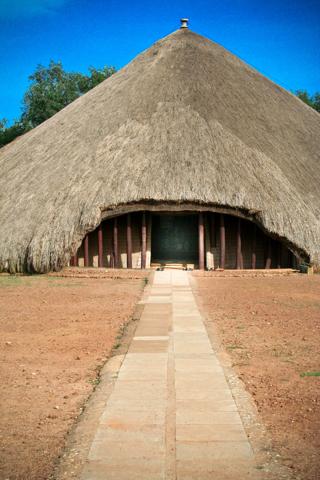
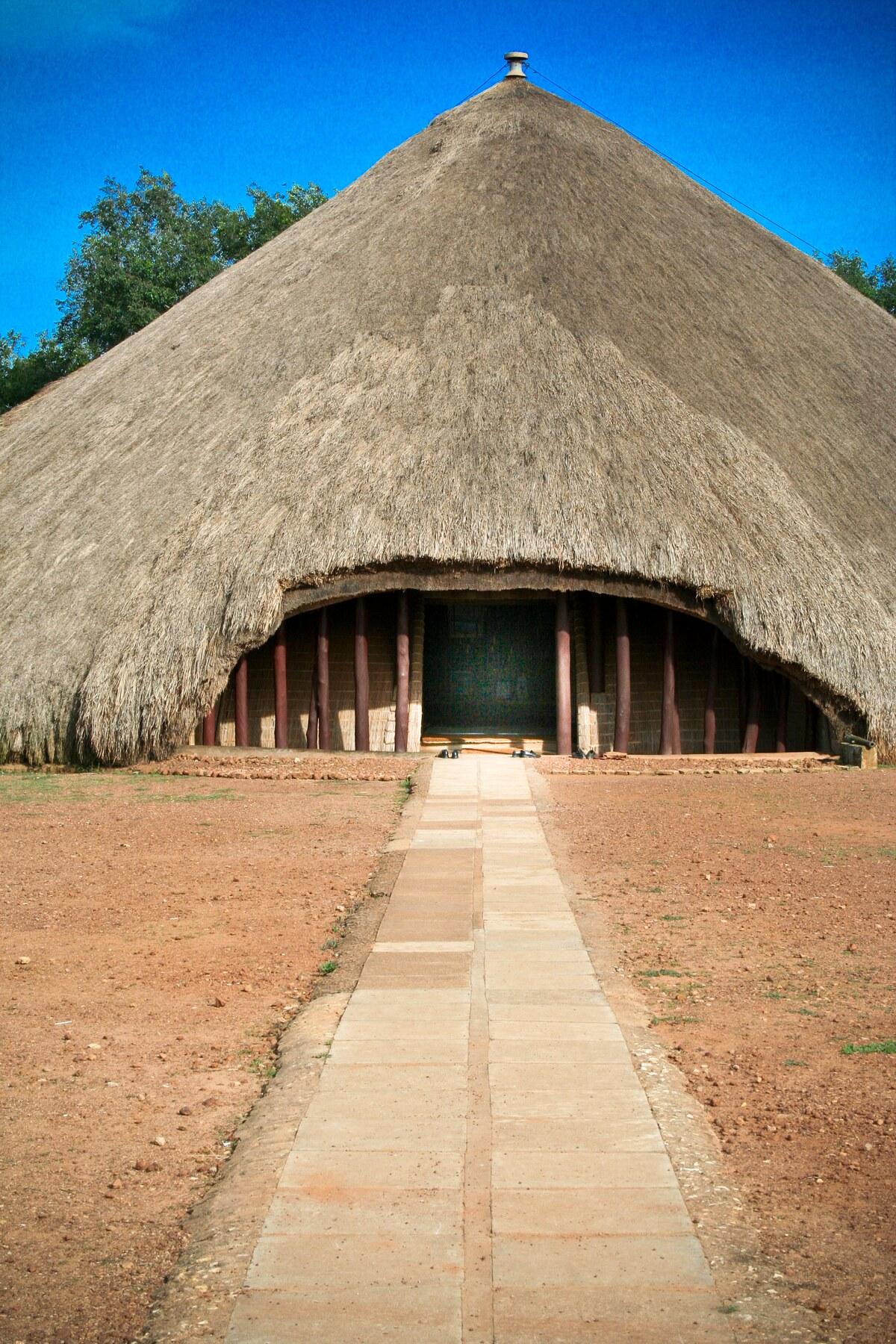
On the night of 16 March 2010, fire ran through the dry thatch and timber of Muzibu-Azaala-Mpanga, the great domed building at the heart of the Tombs of Buganda Kings at Kasubi; the cause remained undetermined, but by morning the principal tomb house had been devastated, exposing both the vulnerability of its materials and the depth of the living institution held within them.
The building had begun as a palace for Kabaka Mutesa I in 1882 and became his burial place in 1884, establishing Kasubi as the royal cemetery for four kabakas and changing Buganda funerary practice by gathering successive rulers at one site rather than burying each at a separate palace.
Its architecture was not the work of a single named designer: concentric rings of reeds formed the domed roof over a timber framework, thick bundles of spear grass made the weathering surface, and clan responsibilities organized construction and repair, including wooden structural work associated with the Ngo clan and thatching associated with the Ngeye clan, while the site's custodians maintained ritual spaces whose meanings cannot be reduced to visible fabric.
Kasubi was also never materially frozen in 1884, because a major 1938 renovation introduced contemporary materials alongside older techniques, so the 2010 loss raised a difficult architectural question—not how to reproduce an untouched original, but how to renew a sacred building whose authenticity depended on transmitted knowledge, clan duties, ritual authority, and successive repair.
The fire destroyed the main tomb building rather than the entire 26.8-hectare ensemble, and an April 2010 assessment found weakened walls and framing while also confirming that suitable materials and skilled knowledge remained locally available; temporary ritual shelter came first, followed by a reconstruction process involving the Buganda Kingdom, Uganda, community custodians and artisans, UNESCO, and support from Japan, with cleansing rites preceding major work and fire-protection systems added without treating the site as an ordinary museum.
UNESCO removed Kasubi from the List of World Heritage in Danger on 12 September 2023 after the main reconstruction and risk-management work, and later works, including the entrance building, were reported complete on 19 August 2026, although reopening arrangements remained under the authority of the Buganda Kingdom; the official Buganda heritage portal lists guided access, and visitors should confirm current arrangements, stay in authorized public areas, and follow custodians' rules at this living sacred place.
What stands at Kasubi today is therefore neither untouched nineteenth-century fabric nor a free reconstruction detached from tradition, but the latest material phase of an architecture repeatedly renewed through collective knowledge, a distinction that is essential to understanding what the 2010 fire damaged and what rebuilding could restore.
Research: UNESCO World Heritage Centre documentation on the site, the 2010 fire and reconstruction, and the 2023 danger-list decision; David M. Kigongo and Andrew Reid, “Local communities, politics and the management of the Kasubi tombs, Uganda,” World Archaeology 39:3 (2007); and current Buganda heritage and Ugandan reporting on access and completion.
Photo: Andrew Moore, CC BY-SA 2.0, via Wikimedia Commons; photographed 12 February 2009. The image shows the pre-fire exterior of Muzibu-Azaala-Mpanga. Metablox stores a processed copy of the original.
changes?
delete this memory?
We detected that you have a Blox in your crypto wallet! We will import the Blox into your account.
Click on done below to complete the import.
Welcome Back!
Sign in to preserve cherished moments
Don't have an account?
Welcome!!
Sign up and start preserving cherished moments
?
?

Choose your payment method
Buy with Metablox Credit
Do you want to mint Blox with Metablox Credit?
Which Crypto would you like to use?
Purchase Confirmed!
Your Blox is being minted on-chain and will appear in your profile shortly.
Log in or sign up to claim your Blox.
How many credits do you want to buy?
$100 USD = 1 Metablox Credit = 1 Blox.
Use Metablox Credit to mint any Blox you want on the map.
 expand_more