The Fourth Rocket Was the One That Worked
volume_up
Listen
directions
Directions
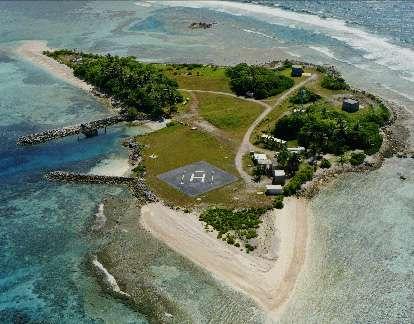
Omelek Island is a few hectares of coral in Kwajalein Atoll, part of the Ronald Reagan Ballistic Missile Defense Test Site, about 4,000 kilometres southwest of Hawaii.
SpaceX chose it because the range was available and the latitude was good, and because nobody else wanted it.
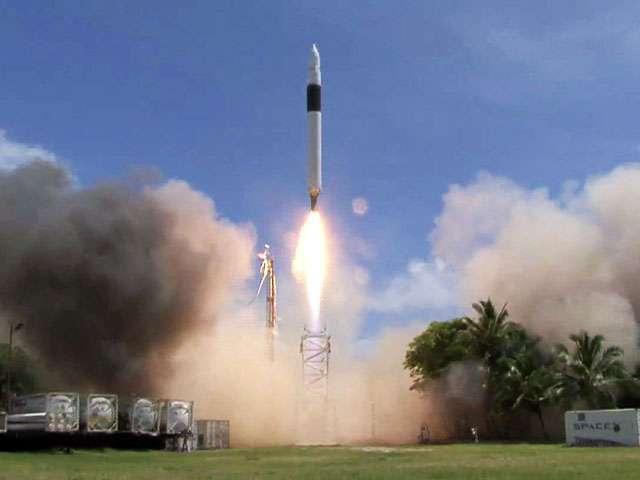
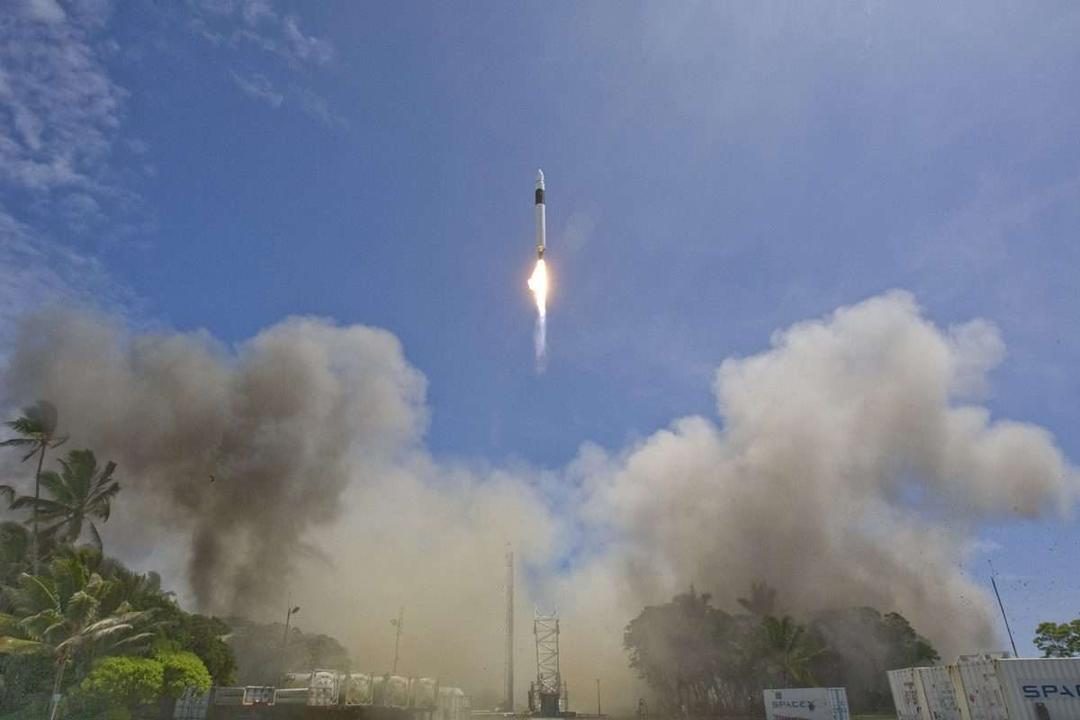
On 28 September 2008 at 23:15 UTC — already the 29th in Marshall Islands local time — a Falcon 1 lifted off from the island carrying RatSat, an aluminium mass simulator standing in for a payload, and reached orbit.
It was the company's fourth attempt and, by most accounts of its finances that year, close to its last affordable one.
The three flights before it had all failed, each for a different reason.
Flight 1, in March 2006, caught fire twenty-five seconds after liftoff; a DARPA-sponsored review board traced it to an aluminium B-nut that had corroded in Omelek's salt air, overturning SpaceX's own initial explanation that a technician had left a fitting loose.
Flight 2, in March 2007, reached space but not orbit after propellant slosh coupled with the roll control and shut the second stage down early.
Flight 3, in August 2008, failed when residual thrust from the newly introduced Merlin 1C engine pushed the spent first stage back into the second during separation.
What Flight 4 achieved is frequently overstated, and the overstatement is worth correcting precisely because the real achievement does not need it.
It is often described as the first private rocket to reach orbit, or the first private spacecraft in space. Neither is accurate.
Space Services Inc. flew Conestoga I from Matagorda Island, Texas, in September 1982 — the first privately funded rocket to reach space, though suborbital and built around government-surplus solid motors.
Orbital Sciences' Pegasus reached orbit in April 1990 and is described as the first entirely privately developed orbital launch system.
The claim that survives scrutiny is narrower, and every qualifier in it is load-bearing: Falcon 1 was the first privately developed, fully liquid-fuelled launch vehicle to reach Earth orbit.
Liquid-fuelled is the part that carries the weight. Solid motors are, in engineering terms, a different and older problem.
Designing, building and flying a liquid-fuelled orbital rocket with engines of your own design, as a company with no prior orbital success, remains rare.
Three months later, on 23 December 2008, NASA awarded SpaceX a Commercial Resupply Services contract for twelve cargo flights worth $1.6 billion firm.
That award is often described as the rescue that arrived with the company down to its last dollars. The company's peril in 2008 is well attested, largely on Musk's own testimony, but the tidy version leaves two things out.
SpaceX had held a Commercial Orbital Transportation Services agreement worth roughly $278 million since August 2006, so it was not operating with no government revenue.
And the famous financing that closed in the final hours of Christmas Eve 2008 was Tesla's, not SpaceX's — a separate company, a separate crisis, one day later.
Sources: Wikipedia, Falcon 1 — https://en.wikipedia.org/wiki/Falcon_1 · SpaceNews, "SpaceX successfully launches Falcon 1 to orbit" — https://spacenews.com/spacex-successfully-launches-falcon-1-to-orbit/ · SpaceNews on the Flight 1 corrosion finding — https://spacenews.com/board-traces-falcon-1-failure-broken-nut/ · Spaceflight Now on Flight 3 — https://spaceflightnow.com/falcon/003/update.html · Wikipedia, Conestoga (rocket) — https://en.wikipedia.org/wiki/Conestoga_(rocket) · Wikipedia, Omelek Island — https://en.wikipedia.org/wiki/Omelek_Island · NASASpaceflight on the December 2008 CRS award — https://www.nasaspaceflight.com/2008/12/spacex-and-orbital-win-huge-crs-contract-from-nasa/ · Wikipedia, Commercial Resupply Services — https://en.wikipedia.org/wiki/Commercial_Resupply_Services

















































 expand_more