
- Home
- Semiconductor History | The UMC Family and Taiwan IC Design | Hsinchu, Zhubei, Shenzhen and Wilmington
- Semiconductor History | 篤行一路1號, 新竹 — The Division Its Parent Did Not Want, and the Disc Drive It Took
Semiconductor History | 篤行一路1號, 新竹 — The Division Its Parent Did Not Want, and the Disc Drive It Took
· 1997-5
Personal memoryBy kevin · · Report an issue

Find memories left by people near you.

Distribute Bounty
This will distribute the bounty equally among all qualifying memories. This action cannot be undone.
Cancel Bounty
Are you sure you want to cancel this bounty? The remaining amount will be refunded to your account.
Success!
Operation completed successfully.
Error
Something went wrong.
Semiconductor History | 篤行一路1號, 新竹 — The Division Its Parent Did Not Want, and the Disc Drive It Took
kevin
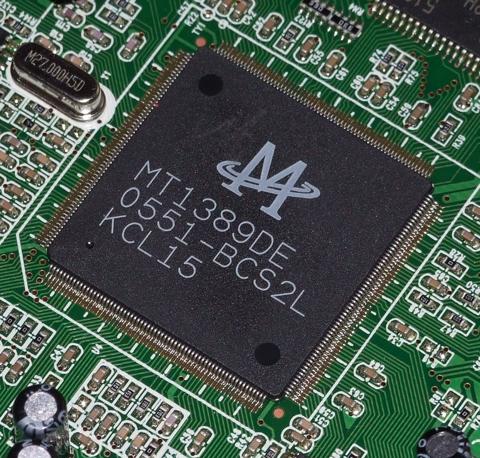
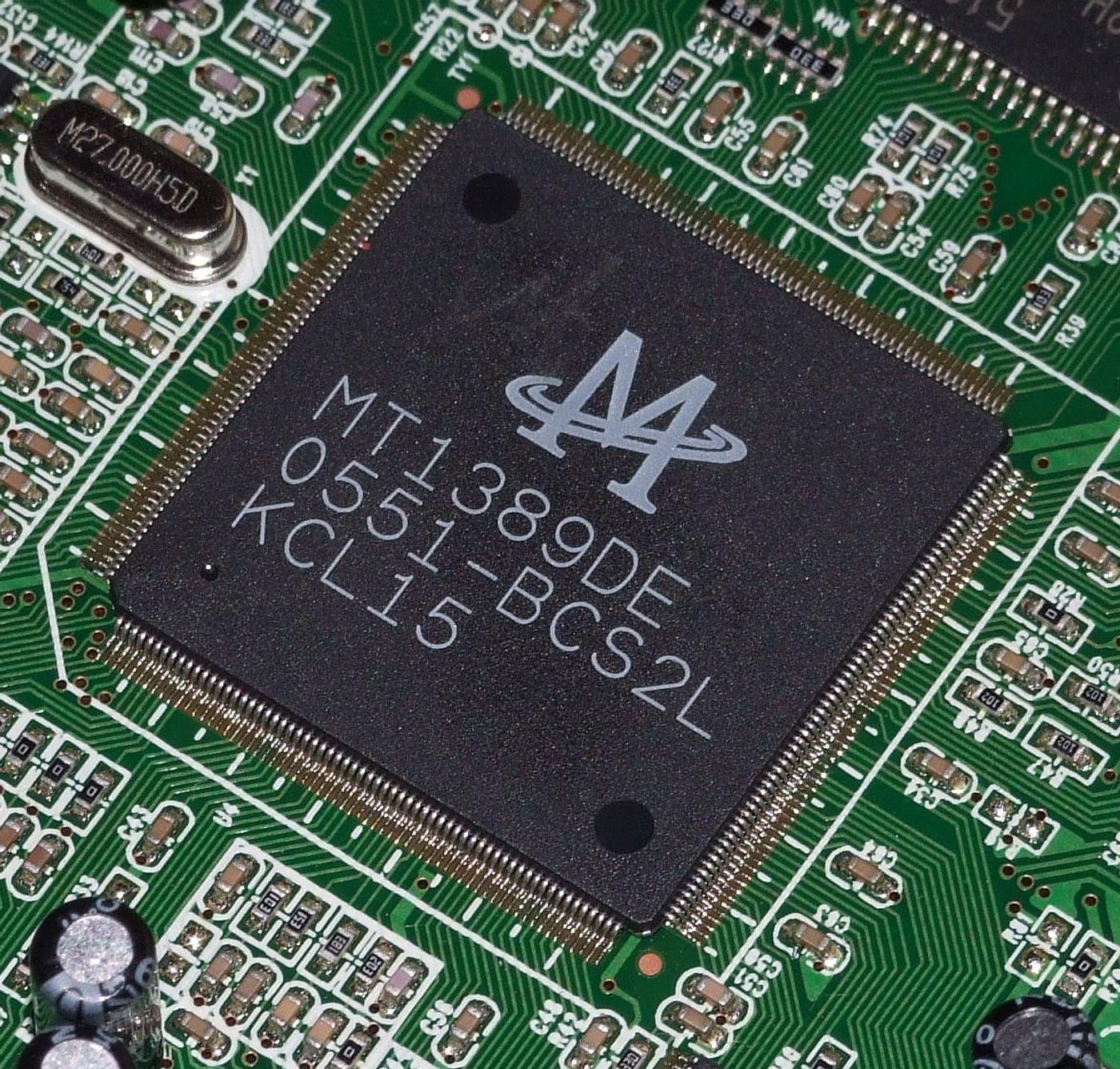
The chip in the photograph is stamped MT1389DE, and it is most of the electronics of a DVD player on one package.
聯發科技 (MediaTek) was incorporated on 28 May 1997 and registered at this address, with 蔡明介 (Ming-Kai Tsai) at its head.
Its engineers came out of 聯華電子's multimedia division, which UMC had decided it no longer wanted once it committed to pure foundry work.
Tsai had made the trip that produced Taiwan's chip industry. In 1976 he flew to New York to interview for 工研院's technology-transfer programme with RCA, trained in the United States, returned to design ICs at the government lab, and moved to UMC in 1983.
The company that came out of that division sold one thing at first: the controller chipset inside an optical disc drive.
Taiwan was assembling those drives by the million, which put the customers within an afternoon's drive of the designers.
In 1998 MediaTek shipped a 48-speed CD-ROM chipset and took the business from Oak Technology, the American supplier that had held most of it.
Trade accounts of the period describe MediaTek's application engineers stationed inside the drive makers' plants, fixing problems on the factory floor rather than by correspondence.
Recordable discs came next, then DVD, where the MT1389 line reduced a player's electronics to a single chip that a manufacturer could buy and drop onto a board.
By the early 2000s the American and Japanese incumbents in optical drive chipsets had been displaced by a company that had existed for five years.
MediaTek listed on the Taiwan Stock Exchange on 23 July 2001 under the code 2454.
In November 2023 the IEEE announced Tsai as the 2024 recipient of its Robert N. Noyce Medal, presented in Boston the following May.
The medal is named for the man who co-founded Intel and shares the credit for the monolithic integrated circuit, and who died in 1990, ten years before the Nobel committee honoured that invention.
The headquarters is a working office and closed to visitors. From 篤行一路 you can see the gate, the name, and the ordinary shape of a building where a great deal of the world's phone silicon is drawn.
Photo: Appaloosa, CC BY-SA 3.0, via Wikimedia Commons (a MediaTek MT1389DE on a DVD player board).
changes?
delete this memory?
We detected that you have a Blox in your crypto wallet! We will import the Blox into your account.
Click on done below to complete the import.
Welcome Back!
Sign in to preserve cherished moments
Don't have an account?
Welcome!!
Sign up and start preserving cherished moments
?
?

Choose your payment method
Buy with Metablox Credit
Do you want to mint Blox with Metablox Credit?
Which Crypto would you like to use?
Purchase Confirmed!
Your Blox is being minted on-chain and will appear in your profile shortly.
Log in or sign up to claim your Blox.
How many credits do you want to buy?
$100 USD = 1 Metablox Credit = 1 Blox.
Use Metablox Credit to mint any Blox you want on the map.
expand_more