Finance History | Konserthuset Stockholm, 10 December 1997 — Two Partners of a Hedge Fund Collected the Prize Nine Months Before It Broke
volume_up
Listen
directions
Directions
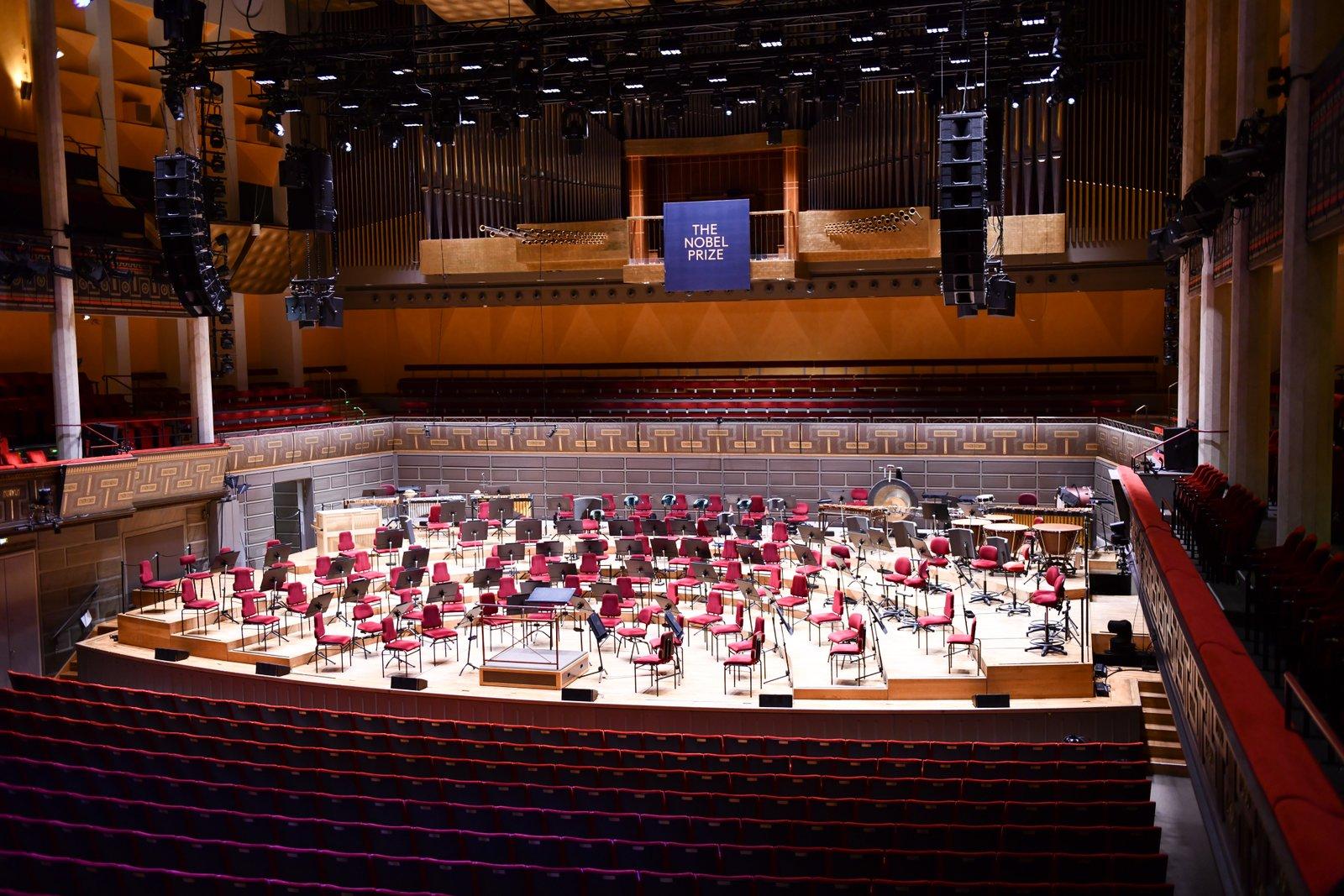
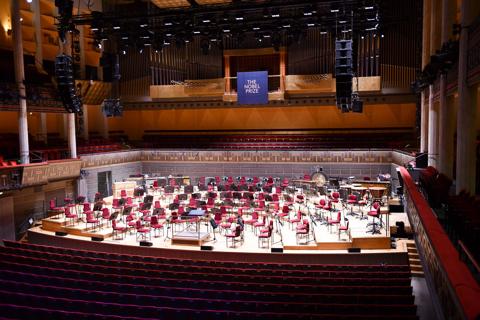
On this stage on 10 December 1997, King Carl XVI Gustaf handed the year's prize in economic sciences to Robert C. Merton and Myron S. Scholes. Both men were partners in a hedge fund in Greenwich, Connecticut, that would open the coming year with $4.8 billion of capital and be down to $2.3 billion by the end of August.
Worth naming first: this is not one of the prizes Alfred Nobel endowed. It is the Sveriges Riksbank Prize in Economic Sciences in Memory of Alfred Nobel, created by Sweden's central bank in 1968 for its 300th anniversary, first awarded in 1969, and presented at the Nobel ceremony ever since.
The citation was "for a new method to determine the value of derivatives."
That method matters more than the formula it produced, and the Academy said so. An option's payoff can be reproduced by holding a continuously adjusted mix of the underlying stock and cash, so the option has to cost whatever that replicating mix costs, or someone can take the difference for nothing.
One consequence made the whole thing usable: the stock's expected return drops out of the answer. Two investors who disagree completely about where a share is heading will still price its option identically.
Fischer Black worked out the argument with Scholes and published it with him in 1973. He died in August 1995, and the prize is not awarded posthumously, so the Academy named him in its citation material and could do nothing further.
What happened next is the reason this date is worth standing on.
The fund's strategy was a bet that liquidity, credit and volatility spreads would narrow from unusually wide levels, and its balance sheet was roughly 80 percent government bonds of the G-7 countries. After Russia's default in August 1998, those spreads widened together, across markets assumed to move independently.
August cost it $1.8 billion, and its positions had grown too large to sell into a market with no buyers.
Reviewing the episode afterwards, the President's Working Group on Financial Markets located the failure in the assumptions rather than the mathematics. The models had underestimated how far spreads could move, how tightly markets would correlate under stress, and how completely liquidity could vanish.
Replication requires being able to trade. That is the sentence the autumn of 1998 added to the paper of 1973.
Konserthuset has held the ceremony on 10 December almost every year since 1926. It is a working concert hall with a public programme and guided tours, so the room is genuinely visitable.
The photograph shows the Main Hall prepared for a recent Nobel ceremony, not the 1997 one.
Photo: Karen Zhou, CC BY-SA 4.0, via Wikimedia Commons.








 expand_more