


Dynastic History | Khöshöö Tsaidam — The Khaganate Wrote Its Own Account, and Signed It
· 732
Unreviewed contributionBy kevin · · Report an issue

































Find memories left by people near you.
Distribute Bounty
This will distribute the bounty equally among all qualifying memories. This action cannot be undone.
Cancel Bounty
Are you sure you want to cancel this bounty? The remaining amount will be refunded to your account.
Success!
Operation completed successfully.
Error
Something went wrong.
Dynastic History | Khöshöö Tsaidam — The Khaganate Wrote Its Own Account, and Signed It
kevin
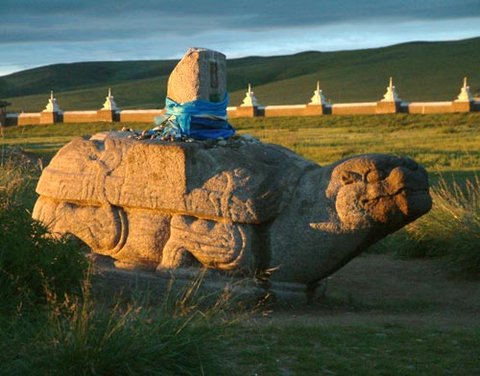
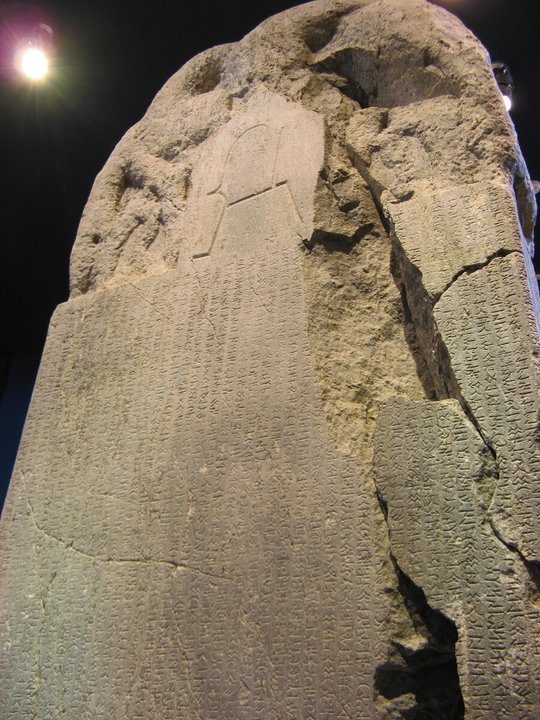
Kül Tegin died on 27 February 731 — the date comes from the memorial texts and the Chinese records that agree with them — and was buried that November. The stone raised over his memorial the following year is the reason the Second Turkic Khaganate can be read in its own words rather than only in someone else's.
Two texts share the monument. One is in Chinese. The other is in Old Turkic, cut in the runiform script, and the inscription names its author: Yollıg Tegin, of the ruling house, who states that he wrote it. It is the earliest extended text known in any Turkic language, and it is not a record kept for posterity. It is an argument addressed to a named audience. The Türk people are told, in the second person, what went wrong: that the Tang court "give in abundance gold, silver, millet, and silk", that it deals in "ingratiating words" and holds "enervating riches", and that Türk nobles who accepted Chinese titles helped bring destruction on their own kagans. The Chinese-language face of the same stone was composed by a different court, for different readers.
Bilge Khagan, Kül Tegin's brother, died on 25 November 734; his memorial stone went up in 735. Nikolai Yadrintsev's expedition recorded both in 1889, and the Danish philologist Vilhelm Thomsen worked out the script in 1893.
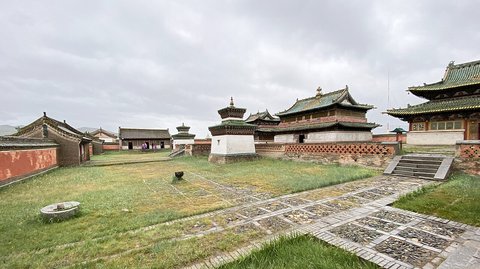
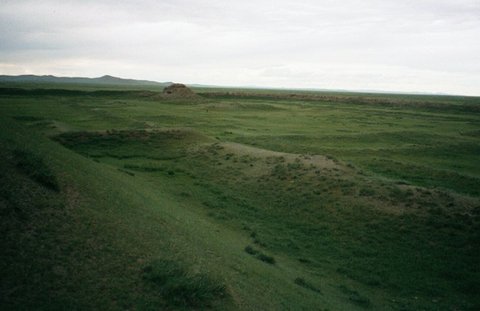
The complexes stand at Khashaat in Arkhangai, inside the Orkhon Valley Cultural Landscape that UNESCO inscribed in 2004. The stelae are now roofed, in the Göktürk Museum built beside them; the excavated foundations and the line of balbal stones remain outside on the grass.
📸 Cover: The Kül Tegin stele in the on-site museum, Betta27, public domain via Wikimedia Commons

changes?
delete this memory?
We detected that you have a Blox in your crypto wallet! We will import the Blox into your account.
Click on done below to complete the import.
Welcome Back!
Sign in to preserve cherished moments
Don't have an account?
Welcome!!
Sign up and start preserving cherished moments
?
?
Choose your payment method
Buy with Metablox Credit
Do you want to mint Blox with Metablox Credit?
Which Crypto would you like to use?
Purchase Confirmed!
Your Blox is being minted on-chain and will appear in your profile shortly.
Log in or sign up to claim your Blox.
How many credits do you want to buy?
$100 USD = 1 Metablox Credit = 1 Blox.
Use Metablox Credit to mint any Blox you want on the map.
 expand_more