


Dynastic History | Khar Balgas, Ordu-Baliq — Three Languages for One Announcement
· 821
Unreviewed contributionBy kevin · · Report an issue
















































Find memories left by people near you.
Distribute Bounty
This will distribute the bounty equally among all qualifying memories. This action cannot be undone.
Cancel Bounty
Are you sure you want to cancel this bounty? The remaining amount will be refunded to your account.
Success!
Operation completed successfully.
Error
Something went wrong.
Dynastic History | Khar Balgas, Ordu-Baliq — Three Languages for One Announcement
kevin
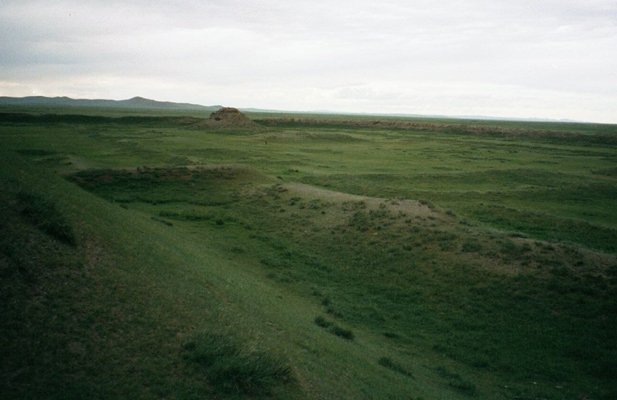
In 744 an alliance of Uyghurs, Karluks and Basmyls broke the last Göktürk kagan, and the Uyghur khaganate put its capital on the Orkhon, some forty kilometres southeast of the memorial stones of the house it had just replaced. The German Archaeological Institute dates the city here to 745–840. Ordu-Baliq spread across at least thirty-two square kilometres: a citadel in the southeast, a temple and palace precinct of roughly 360 by 404 metres, a craftsmen's quarter and a Manichaean temple along a main street eighty metres wide, a stupa about thirteen metres high, a well sunk thirteen metres down.
The written sources describe a walled city. The Institute's survey of the layout reports no encircling city wall, and says so plainly. The gap between what the texts assert and what the ground holds is the most useful thing the site teaches.
The monument that carries the state's own announcement is a stele in three scripts — Old Uyghur, Sogdian and Chinese — set up during or shortly after the reign of the eighth kagan, Baoyi (808–821). It records military successes and, at length, the khaganate's adoption and official promotion of Manichaeism: a steppe state declaring a religious allegiance in the three languages of the people it needed to reach.
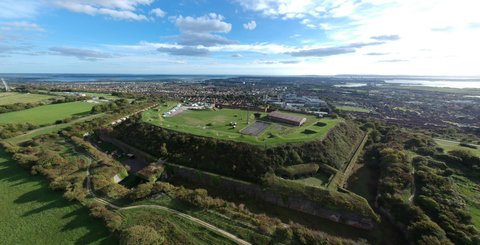
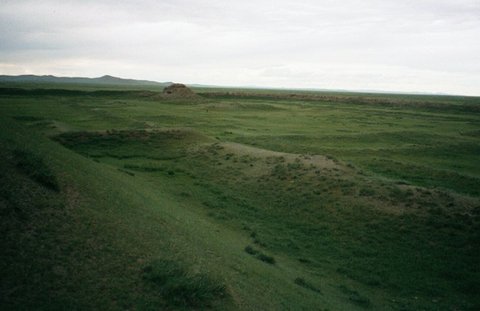
The Yenisei Kyrgyz took the city in 840 and it was not rebuilt. Nikolai Yadrintsev found the inscription's fragments in 1889. What is there now is earth — ramparts, the citadel mound, the stub of the tower — under the Mongolian name Khar Balgas, the black ruins, inside the Orkhon Valley Cultural Landscape.
📸 Cover: Ordu-Baliq, area view of the earthworks, James A. Glazier, CC BY-SA 3.0 via Wikimedia Commons

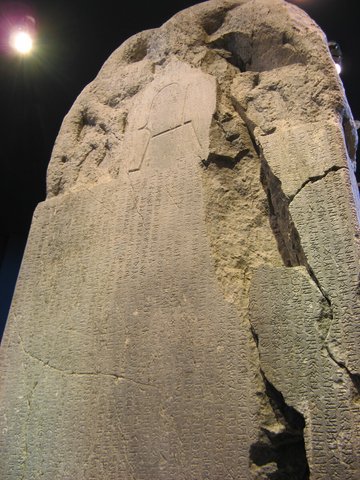
changes?
delete this memory?
We detected that you have a Blox in your crypto wallet! We will import the Blox into your account.
Click on done below to complete the import.
Welcome Back!
Sign in to preserve cherished moments
Don't have an account?
Welcome!!
Sign up and start preserving cherished moments
?
?




Choose your payment method
Buy with Metablox Credit
Do you want to mint Blox with Metablox Credit?
Which Crypto would you like to use?
Purchase Confirmed!
Your Blox is being minted on-chain and will appear in your profile shortly.
Log in or sign up to claim your Blox.
How many credits do you want to buy?
$100 USD = 1 Metablox Credit = 1 Blox.
Use Metablox Credit to mint any Blox you want on the map.
 expand_more