Finance History | Kiewit Plaza, Omaha, 2024 — Four Tax Payments Closed the Loop From the Mill
volume_up
Listen
directions
Directions
Berkshire Hathaway made four payments to the United States Treasury during 2024 that totaled US$26.8 billion in 2024 dollars.
The company's annual letter described the sum as larger than any annual corporate income-tax payment previously made by an American company. It represented about 5 percent of all United States corporate income tax collected for 2024, according to Berkshire's comparison.
The contrast with the textile company was deliberate. Present management had taken control 60 years earlier, and Berkshire paid no federal income tax for 1965 because the mill carried losses accumulated in prior years.
During the nine fiscal years after the 1955 merger, the company paid only US$337,359 of federal income tax in 1955–1964 dollars. Weak operations and plant closures kept shrinking the base from which any taxable profit could emerge.
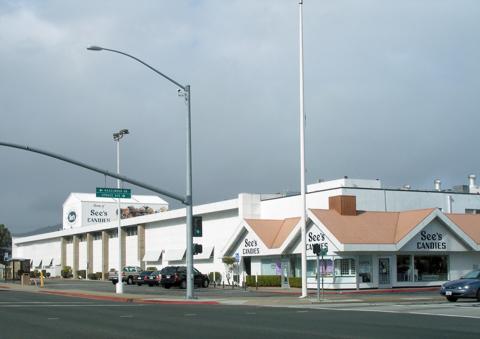
Insurance changed the source of investable funds, while See's demonstrated how a business with modest capital needs could distribute cash to its owner. Berkshire then retained much of its earnings, reinvested across operating subsidiaries and securities, and allowed gains to compound inside the corporation.
Corporate taxation enters that system at more than one point. Operating businesses pay tax as they earn profits, while gains in marketable securities generally create a United States corporate tax liability when Berkshire realizes them rather than while quoted prices merely rise.
The US$26.8 billion paid in 2024 therefore recorded decades of accumulated earning power meeting a specific tax year. It also showed why deferred tax is a timing advantage rather than an exemption: postponement can leave more capital compounding, but realization eventually sends cash to the Treasury.
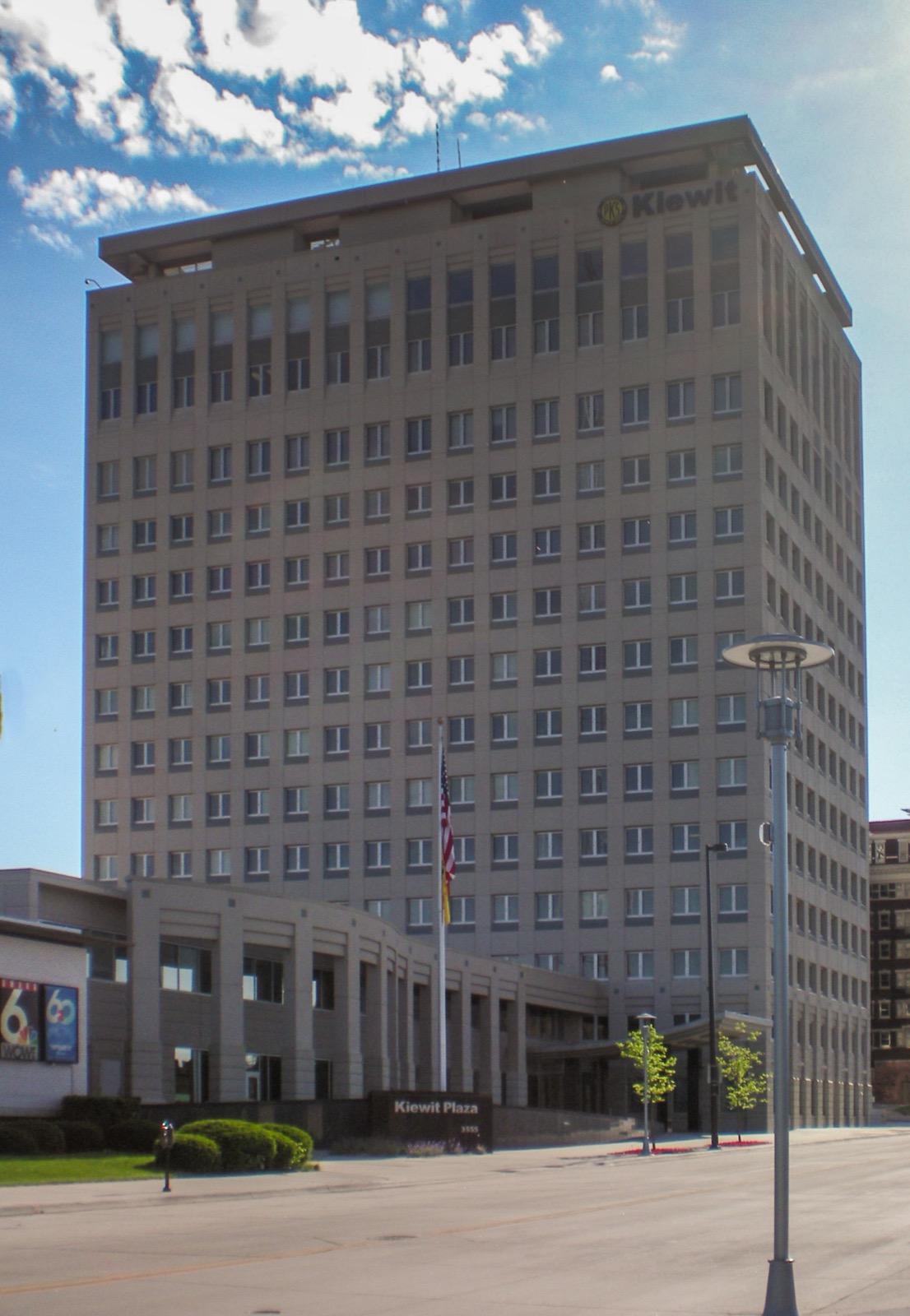
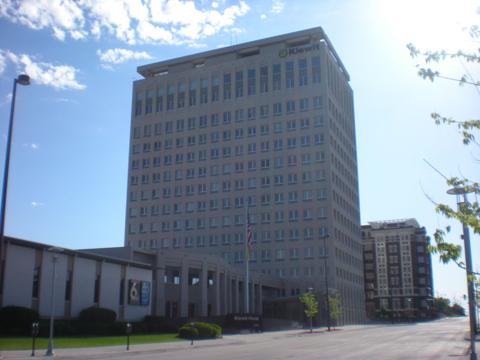
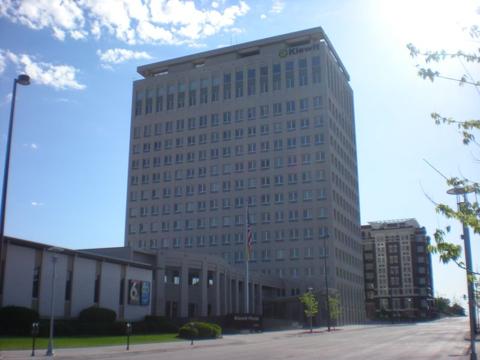
Kiewit Plaza at 3555 Farnam Street is the modest physical address attached to that scale. Berkshire's 2024 Form 10-K still listed the Omaha building as its principal executive office, the place from which the mill's surviving corporate shell had become an allocator of capital across many industries.
The building's exterior supplies a fitting endpoint to the collection. The Berkshire name traveled from 700 looms in Adams to four federal tax payments, while the financial mechanism changed from repeatedly funding machinery to compounding cash generated elsewhere.
Photo: JonClee86, CC BY-SA 3.0, via Wikimedia Commons.










 expand_more