Finance History | Royal Exchange, 30 September 1982 — London Opened a Market for Financial Futures
volume_up
Listen
directions
Directions
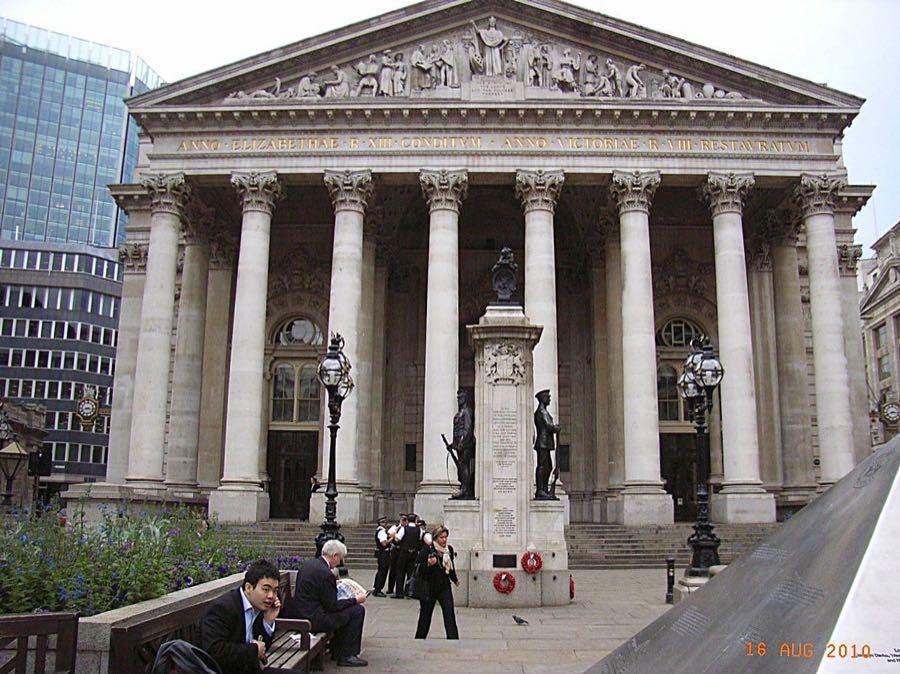
On 30 September 1982, the London International Financial Futures Exchange opened for trading inside the Royal Exchange. London gained a domestic market in standardized contracts whose value depended on currencies and interest rates rather than shipments of grain, metals, or other physical goods.
Financial futures had developed in Chicago during the 1970s as fixed exchange rates broke down and interest rates became more volatile. Britain removed exchange controls in 1979, widening the opportunity for London institutions to manage international currency and funding risks on an organized exchange.
LIFFE began with open-outcry trading and a small set of contracts. Bank of England records describe four currency futures and three interest-rate futures at the opening, including instruments tied to sterling, foreign currencies, government debt, and Eurodollar deposits.
The contract transformed an uncertain future price into something that could be traded today. A bank, company, or investor exposed to exchange-rate or interest-rate movements could take an offsetting futures position, post margin, and settle gains or losses through a clearing system rather than negotiate every hedge privately.
Standardization created liquidity but demanded precise design. A successful contract needed a reference asset, delivery or cash-settlement terms, a maturity cycle, and market users whose hedging needs attracted speculators willing to take the other side. Contracts that did not match commercial practice could fail even when the underlying risk was real.
The trading floor also changed the geography of London finance. Dealers in coloured jackets called prices across pits, while brokers and telephone clerks connected the floor to institutions beyond the building. The Royal Exchange, long associated with merchants and insurance, became a venue for risks measured in basis points and forward dates.
LIFFE expanded into options and additional bond, money-market, and equity-index products, then moved from the Royal Exchange as volume grew. Electronic trading ultimately displaced its pits, and a succession of mergers placed the market within today’s ICE Futures Europe.
The opening mattered less because every first contract endured than because London acquired an exchange mechanism for pricing financial uncertainty. At the Royal Exchange, future interest rates and currency values became present-day market prices.
Photo: Matthias Nonnenmacher, CC BY-SA 4.0, via Wikimedia Commons.













 expand_more