Finance History | 堂島米会所 Dojima Rice Exchange, Osaka, 1730 — Futures Trading Legalised, and Left Unenforceable
volume_up
Listen
directions
Directions
A futures market with margin, standard grades, delivery months and a clearing house was running here in 1730, and the shogunate legalised it by promising not to enforce its contracts.
Osaka was where the country's tax rice arrived. Domains shipped their rice to warehouses in the city, and against it they issued 米切手, rice bills, which were claims on grain sitting in a warehouse rather than the grain itself.
Those bills traded. The market had begun in the street at Kitahama, moved to newly reclaimed land at Dojima around 1697, and by the 1720s people were dealing not only in bills but in rice they did not have.
The government's first instinct was to stop it, and forward dealing was banned. Then it was permitted again in limited size, then permitted without any requirement that the seller hold actual rice.
On 13 August of Kyōhō 15, which is 24 September 1730, the shogunate authorised 帳合米取引, book-entry rice dealing, at Dojima and nowhere else. The permission was issued under the name of Ōoka Tadasuke, the magistrate.
What was organised around that permission is the part worth walking here for.
Traders posted 敷銀, a margin deposit, rather than the full value. Contracts settled by paying the difference rather than delivering rice. The year was divided into three terms with a fixed settlement day, and each term traded a standard grade, so that a contract referred to a defined quality rather than a particular sack.
Fifty Dojima money-changers acted as designated clearing houses, handling the settlement of differences and holding the margin. From 1731 the brokers were a closed membership, licensed by share.
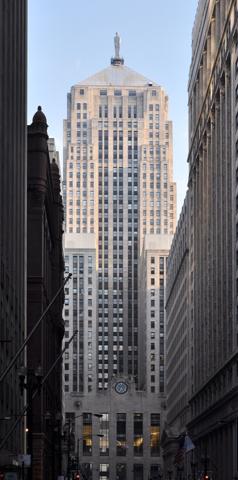
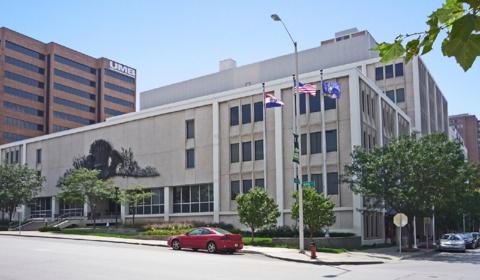
Margin, cash settlement, standardised grades, delivery months and a clearing house. That is a modern futures exchange, and it is the reason the Osaka Dojima Exchange today calls this the birthplace of futures trading and claims the Chicago Board of Trade as a descendant.
Treat the descent claim carefully. It is the exchange's own account of its lineage rather than a documented transmission, and Chicago's own institutional history does not depend on it.
The last piece is the strangest. The shogunate declared that it would not hear lawsuits arising from these contracts.
A market was therefore permitted and simultaneously denied the courts, so the brokers had to enforce their own bargains through the membership and the clearing houses. Dojima worked because default meant expulsion from the only place the trade existed, not because a magistrate would make you pay.
For the domains this was funding: rice sold forward turned next year's tax into this year's money. For the brokers it was a hedge against the price moving.
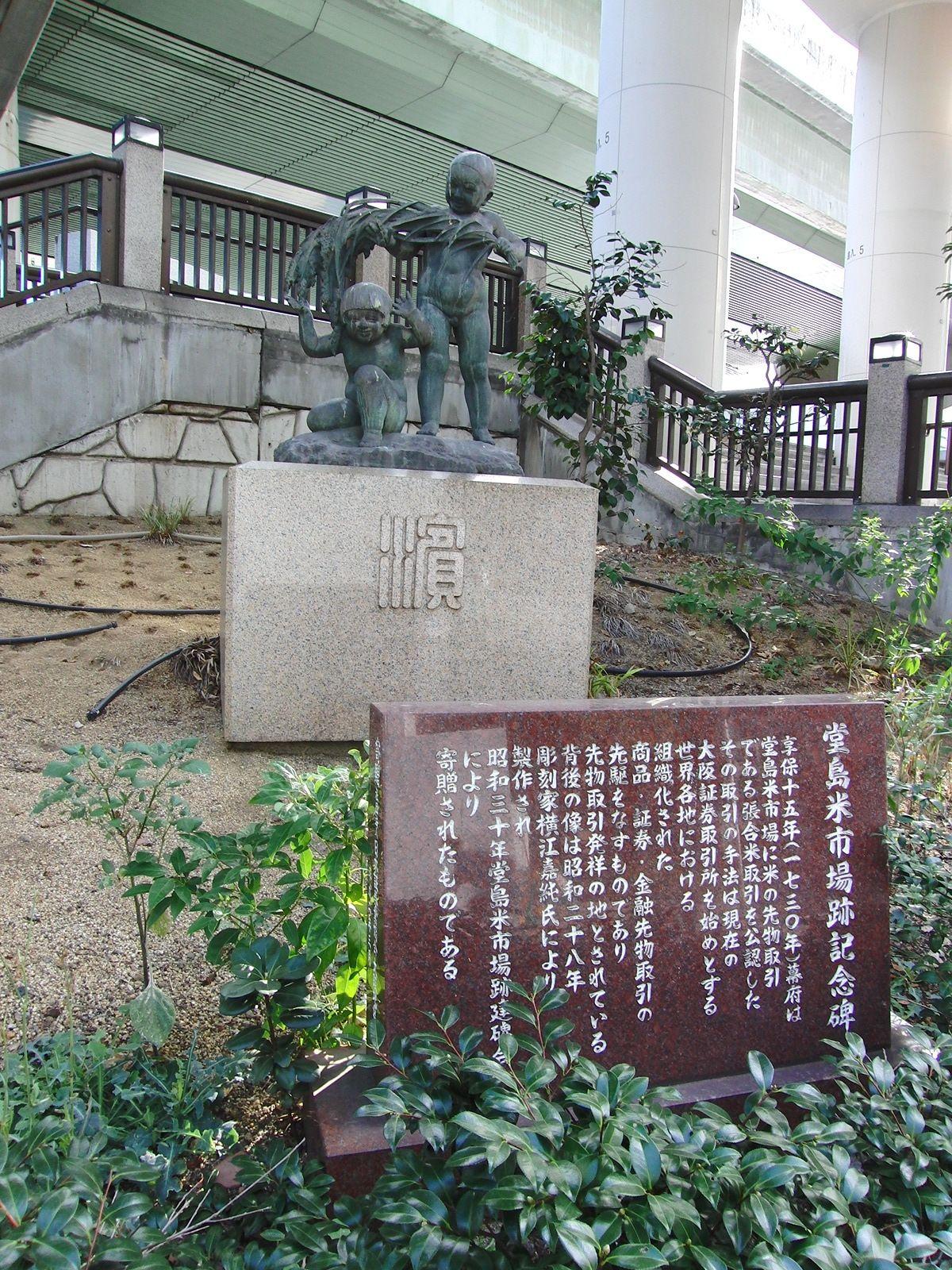
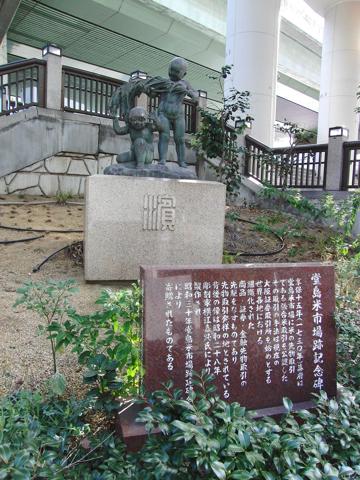
Nothing is left. The market stood where Dojimahama 1-chōme is now, and the site is marked by a stone erected in 1955 with a bronze group by the sculptor Yokoe Yoshizumi made the year before, under an elevated expressway a short walk from Nakanoshima.
The inscription on that stone is where the claim about futures trading's birthplace is made, and the cover photograph shows it.
Cover photo: Tonatsu, CC0, via Wikimedia Commons.
Coordinates 34.695200, 135.498670, from the Commons geotag on the monument, corroborated by the Nominatim centroid for Dojimahama 1-chōme about 16 m away. Accurate to about 25 m.





 expand_more