Finance History | 彰化銀行總行 Changhua Bank, Taichung, 1938 — Founded on the Compensation for Abolished Land Rights
volume_up
Listen
directions
Directions
This bank exists because a property right was abolished and the compensation turned out to be awkward to hold.
Under Qing rule much of central Taiwan operated a system called 一田二主, two owners to one field. A superior holder owned the 大租權, the right to a rent from the land, while a second party held the cultivating right beneath it and did the farming.
The Japanese colonial administration abolished the superior right in the early 1900s and compensated the holders in government bonds.
That created a problem nobody had planned for. The bondholders were landed gentry with no experience of paper claims, they doubted the bonds would be redeemed on time, and they began dumping them below face value, which was embarrassing for a government whose credit was the thing being sold.
The administration bought bonds back to steady the price, and at the same time pressed the Taiwanese gentry to pledge them as collateral for bank loans and start businesses with the proceeds.
Some of them did something more direct. Led by 吳汝祥 of Changhua, a group of central Taiwanese notables pooled 220,000 yen of that compensation as share capital and founded 株式會社彰化銀行 on 5 June 1905. It opened for business that October.
This was the first bank in Taiwan raised on Taiwanese capital, and the money in it was the price the Taiwanese landed class had been paid for losing its own property rights.
Official support was never far away. The bank borrowed government offices as its first premises, and colonial regulations required the Bank of Taiwan's Taichung branch manager to join the board. 辜顯榮 and 陳質芬 of Lugang were among its supervisors.
The head office is not in Changhua. The bank bought a school building in Taichung in 1909, the shareholders voted to move in 1910, and it has been a Changhua bank with a Taichung head office ever since.
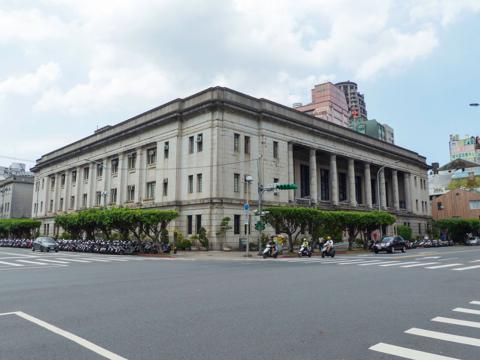
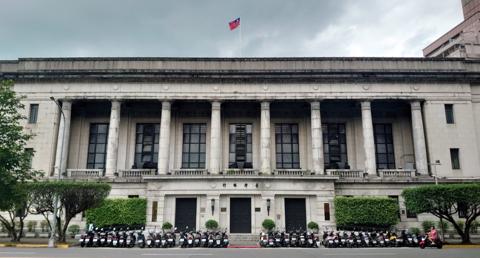
For its thirtieth anniversary the shareholders voted a building to match. Ground was broken on 19 November 1936 and the work finished on 22 September 1938, to a design by 白倉好夫 of the Governor-General's works office and 畠山喜三郎 of the Taichung prefectural public works section, in reinforced concrete and brick faced to look like stone.
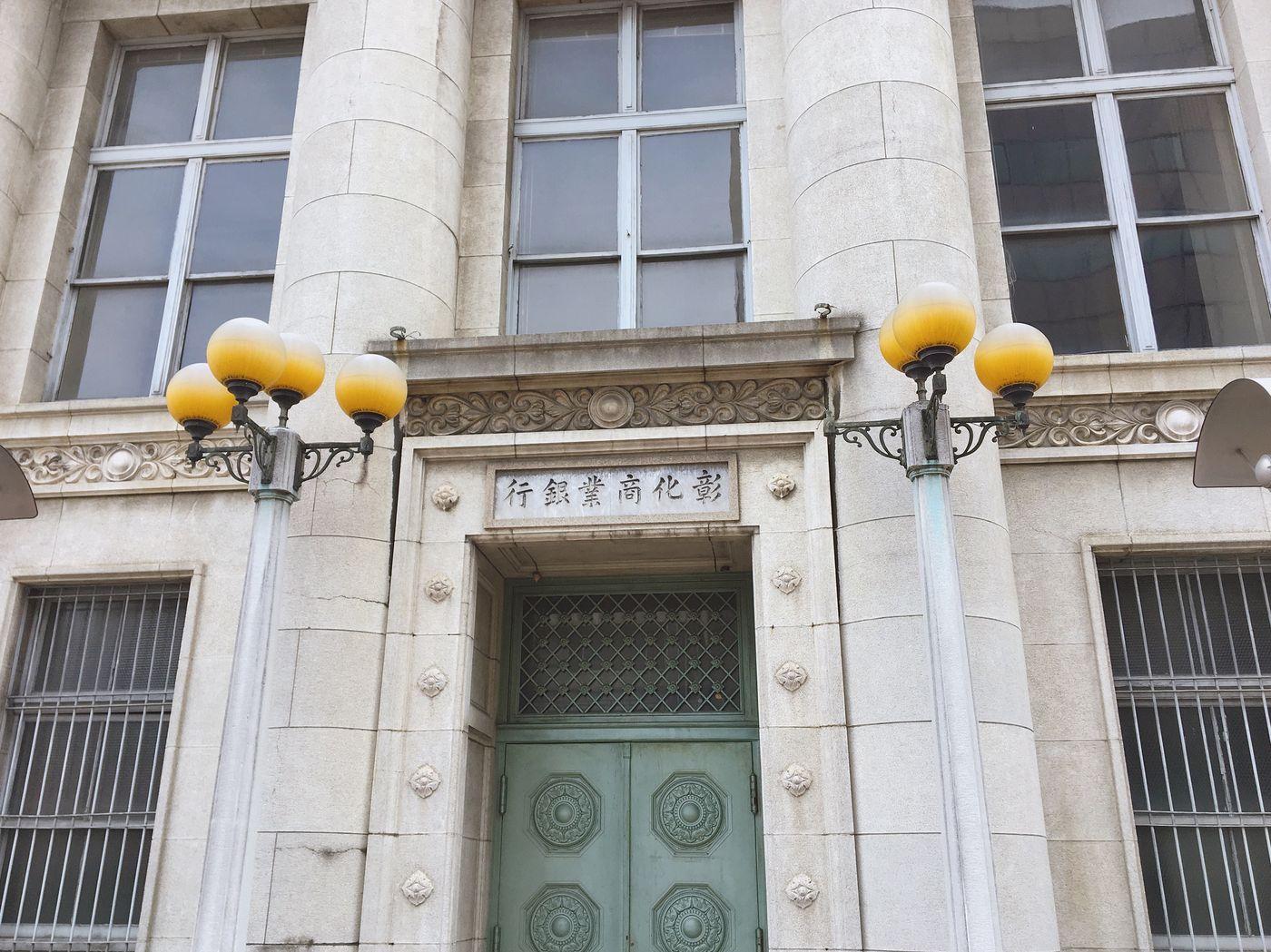
The giant colonnade you photograph from the corner of 自由路 and 台灣大道 is that building, now a Taichung municipal monument, with a bank history room upstairs open by appointment.
After the war 林獻堂 of the Wufeng Lin family led the reorganisation, becoming chairman when the firm became 彰化商業銀行 on 1 March 1947 with capital of fifteen million old Taiwan dollars. Note the unit: three years later the figure was restated as 2.4 million new Taiwan dollars, after the 40,000 to 1 conversion issued from the Bank of Taiwan in Taipei.
In February 1962 it became the first bank listed on Taiwan's new stock exchange.
One caution for anyone extending this entry. Some accounts list 林獻堂 among the 1905 founders; he was twenty-four that year and the well-documented role is the postwar one, so the founding list is best left to 吳汝祥 and the names the bank's own history gives.
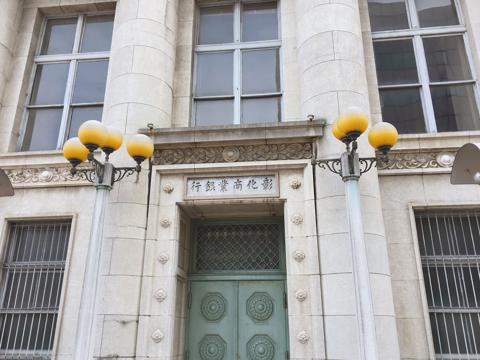
Cover photo: Yuszu, CC BY-SA 4.0, via Wikimedia Commons, the entrance under the 彰化商業銀行 lintel.
Coordinates 24.139751, 120.682001, from a Commons geotag on the building, corroborated by a second geotagged photograph and by two Nominatim nodes named for the bank standing either side of it. Accurate to about 30 m.







 expand_more