


Dynastic History | Al-Khazneh, Petra — The Monument the Kingdom Never Signed
· 2024-10
Personal memoryBy kevin · · Report an issue










































Find memories left by people near you.
Distribute Bounty
This will distribute the bounty equally among all qualifying memories. This action cannot be undone.
Cancel Bounty
Are you sure you want to cancel this bounty? The remaining amount will be refunded to your account.
Success!
Operation completed successfully.
Error
Something went wrong.
Dynastic History | Al-Khazneh, Petra — The Monument the Kingdom Never Signed
kevin
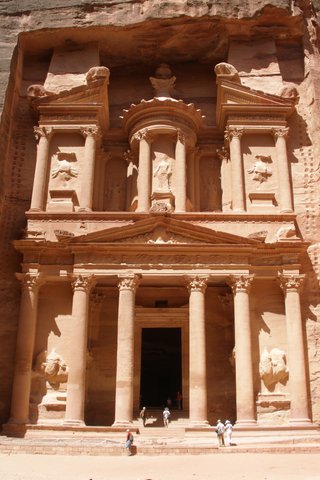
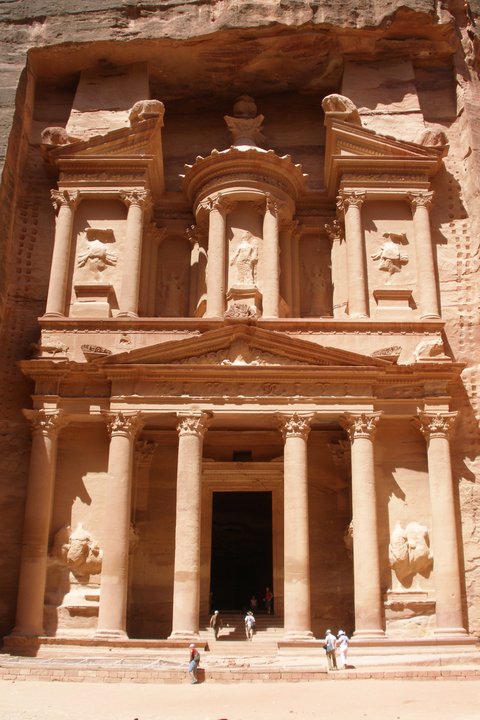
The façade at the end of the Siq carries no inscription. Nothing on it names an owner, a builder or a date, which is why for two centuries it has gone by a story instead of a name: al-Khazneh, the Treasury, from a local tradition that a pharaoh's gold was sealed inside the stone urn on the upper order. Jordan's antiquities authorities attribute the bullet damage on that urn to people who believed the story and tested it.
Archaeologists date the carving to the reign of Aretas IV (9 BCE–40 CE) from the style of its orders, not from any text. That is how the Nabataean kingdom argues with us. It left monumental architecture in quantity and almost no state record of itself: what is known of its rulers comes largely from coins, from short dedications, and from Greek and Roman writers describing the kingdom from outside it. No document records who cut this rock face, over how long, or on what terms.
So the question of who was buried here gets pursued with trowels. On 15 October 2024 the University of St Andrews announced that a team from Jordan's Department of Antiquities and the American Center of Research, working with the Petra Development and Tourism Region Authority, had excavated a tomb beneath the forecourt holding twelve burials and grave goods, among them the upper part of a jug the excavators placed in the first century BCE. Dating of the tomb's walls returned a range from the mid-first century BCE to the early second century CE. The team's reading, that the complex was built as a mausoleum for Aretas IV, is an inference rather than a signature.
Visitors reach the forecourt where the Siq opens; the chambers beneath it are not part of the route.
📸 Cover: Al-Khazneh, Vyacheslav Argenberg, CC BY 4.0 via Wikimedia Commons


changes?
delete this memory?
We detected that you have a Blox in your crypto wallet! We will import the Blox into your account.
Click on done below to complete the import.
Welcome Back!
Sign in to preserve cherished moments
Don't have an account?
Welcome!!
Sign up and start preserving cherished moments
?
?


Choose your payment method
Buy with Metablox Credit
Do you want to mint Blox with Metablox Credit?
Which Crypto would you like to use?
Purchase Confirmed!
Your Blox is being minted on-chain and will appear in your profile shortly.
Log in or sign up to claim your Blox.
How many credits do you want to buy?
$100 USD = 1 Metablox Credit = 1 Blox.
Use Metablox Credit to mint any Blox you want on the map.
 expand_more