
Computing History | NIST Gaithersburg — Rijndael Became the Proposed AES
· 2000-10
Personal memoryBy kevin · · Report an issue































































Find memories left by people near you.
Distribute Bounty
This will distribute the bounty equally among all qualifying memories. This action cannot be undone.
Cancel Bounty
Are you sure you want to cancel this bounty? The remaining amount will be refunded to your account.
Success!
Operation completed successfully.
Error
Something went wrong.
Computing History | NIST Gaithersburg — Rijndael Became the Proposed AES
kevin
At the National Institute of Standards and Technology’s Gaithersburg campus, a cross-disciplinary security team spent the closing months of a public cryptographic competition comparing five finalists for a standard meant to protect sensitive, unclassified federal information.
On 2 October 2000, the U.S. Department of Commerce announced that NIST had selected Rijndael—the cipher designed by Belgian cryptographers Joan Daemen and Vincent Rijmen—as the proposed Advanced Encryption Standard, or AES, after a three-year competition that had drawn candidate algorithms and scrutiny from researchers around the world.
[NIST’s AES development archive](https://csrc.nist.gov/projects/cryptographic-standards-and-guidelines/archived-crypto-projects/aes-development) distinguishes that selection from later milestones: the agency began the effort in 1997, accepted fifteen candidates in 1998, reduced them to five finalists in 1999, proposed Rijndael in October 2000, and published AES as FIPS 197 on 26 November 2001.
The [selection team’s technical report](https://doi.org/10.6028/jres.106.023), authored by NIST staff in Gaithersburg, explains that security came first, while performance, implementation cost, flexibility, and suitability for both hardware and software also mattered; the team chose one algorithm rather than several to reduce interoperability and implementation complexity.
AES is a symmetric block cipher, meaning the same secret key is used to encrypt and decrypt data, and the federal standard fixes a 128-bit block size with permitted key lengths of 128, 192, or 256 bits.
The process mattered beyond the winning mathematics because NIST published specifications and implementations, convened open conferences, solicited analysis, and invited the cryptographic community to test the candidates; in a [contemporary assessment](https://www.schneier.com/crypto-gram/archives/2000/1015.html), losing Twofish co-designer Bruce Schneier praised the process as open and fair while still noting that Rijndael had not been his first choice.
The [Commerce announcement](https://www.nist.gov/news-events/news/2000/10/commerce-department-announces-winner-global-information-security) called Rijndael the proposed standard rather than the finished FIPS, an important chronological distinction because public review and formal approval still followed.
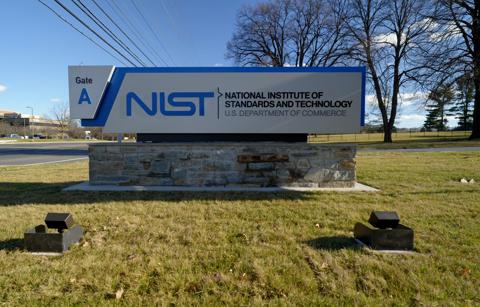
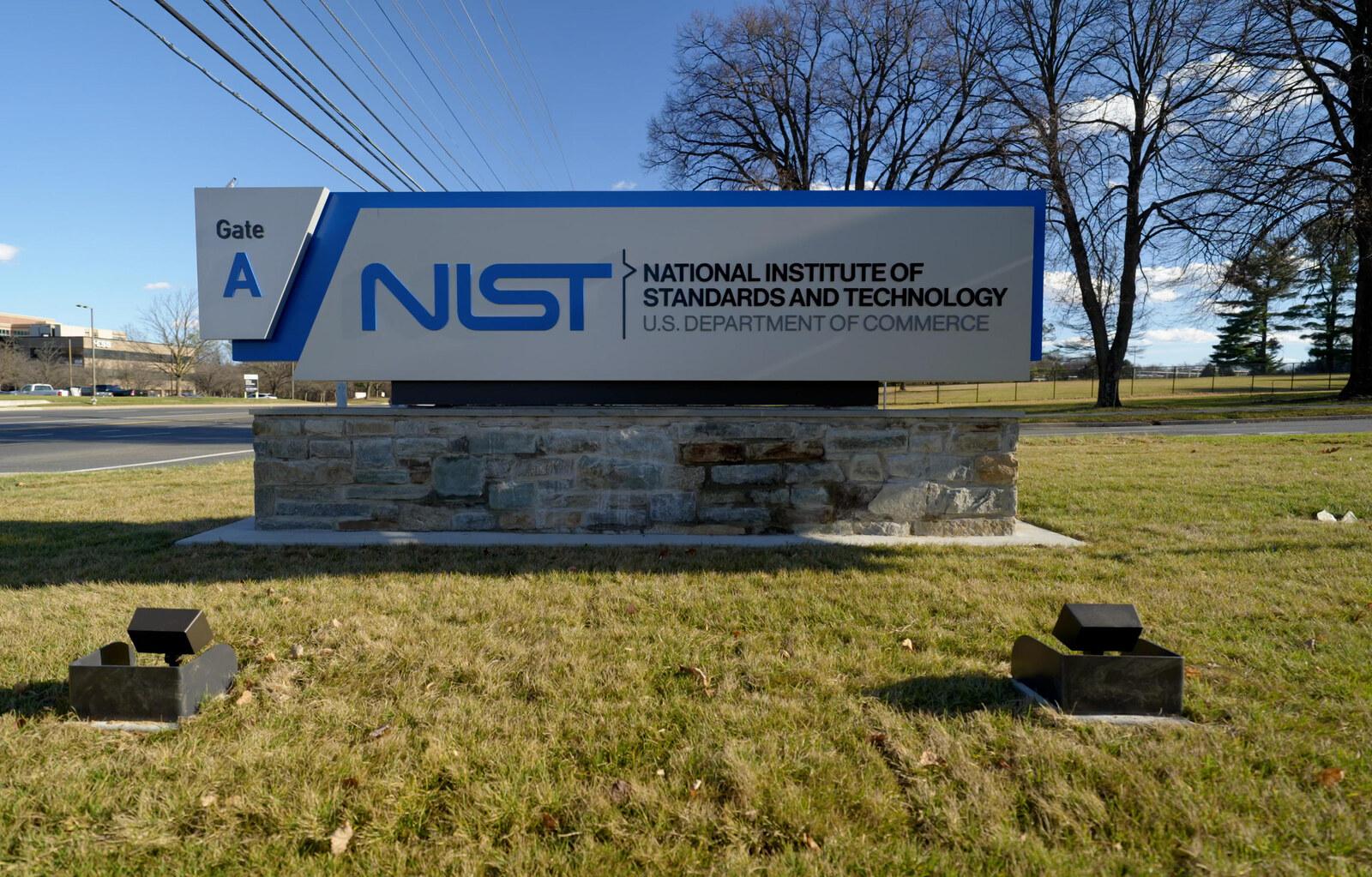
Public records do not identify the room where the NIST selection team reached consensus, so this pin marks Gate A at the documented 100 Bureau Drive campus—the public entrance to the Gaithersburg institution whose staff organized, evaluated, and reported the AES process—not a claim that the announcement ceremony occurred at this sign.
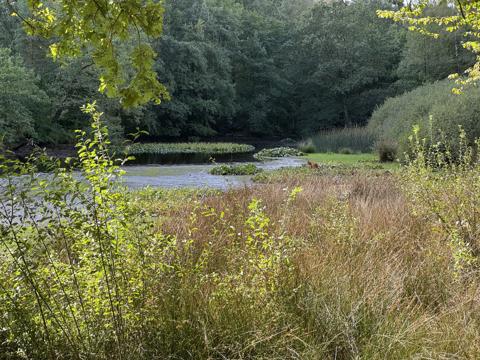
Photo: R. Eskalis/NIST, public information, via the National Institute of Standards and Technology.
changes?
delete this memory?
We detected that you have a Blox in your crypto wallet! We will import the Blox into your account.
Click on done below to complete the import.
Welcome Back!
Sign in to preserve cherished moments
Don't have an account?
Welcome!!
Sign up and start preserving cherished moments
?
?




Choose your payment method
Buy with Metablox Credit
Do you want to mint Blox with Metablox Credit?
Which Crypto would you like to use?
Purchase Confirmed!
Your Blox is being minted on-chain and will appear in your profile shortly.
Log in or sign up to claim your Blox.
How many credits do you want to buy?
$100 USD = 1 Metablox Credit = 1 Blox.
Use Metablox Credit to mint any Blox you want on the map.
 expand_more