Finance History | Lombard Street, London, 10 May 1866 — The Bank Refused the Bust Firm and Rescued Everyone Else
volume_up
Listen
directions
Directions
On 9 May 1866 the largest discount house in London asked the Bank of England for help. The Bank looked at the books, decided the firm was insolvent, and said no.
Overend, Gurney and Company suspended payments at half past three the following afternoon.
The firm had been the dominant bill broker in the City, the place where commercial paper was turned into cash. From about 1860 it had moved into direct lending, done it badly, and lost roughly £500,000 a year while its broking business still earned some £200,000. It converted to a limited company in 1865, which spread the eventual damage across new shareholders.
When the accounts were finally examined it was short by something between £4 million and £5 million on a balance sheet of around £20 million.
The next day was a Friday, and The Times gave it the name that stuck. Crowds filled Lombard Street, where Overend Gurney's offices stood at number 65 and most of the City's other finance houses stood nearby. Runs spread to Liverpool, Manchester, Norwich, Derby and Bristol.
What the Bank of England did next is the reason this street matters more than the firm does.
It refused the insolvent house and then lent to everyone else, extending the largest market-wide support it had ever provided and running its own reserves down to do it. Over ten days it raised Bank Rate four times, to 10 per cent.
That combination is the whole doctrine in one week: refuse the institution that is bust, lend freely to the ones that are merely short of cash, and charge enough that nobody borrows for fun.
The Bank also asked the Chancellor, William Gladstone, to suspend the Bank Charter Act of 1844, which tied its note issue to its gold. He granted the indemnity. It had been done twice before, in 1847 and 1857, and each time it revealed something the Bank preferred not to say aloud, which is that a supposedly private company was operating with the government behind it.
Walter Bagehot, then editing The Economist, watched all of this and spent the next seven years arguing about it in print. He thought the Bank had made errors, particularly in lending against merchant bills while refusing to lend against government stock, which frightened country banks badly.
His account came out as a book in 1873 and he named it after this street: Lombard Street, A Description of the Money Market. Central bankers have been quoting it during crises ever since.
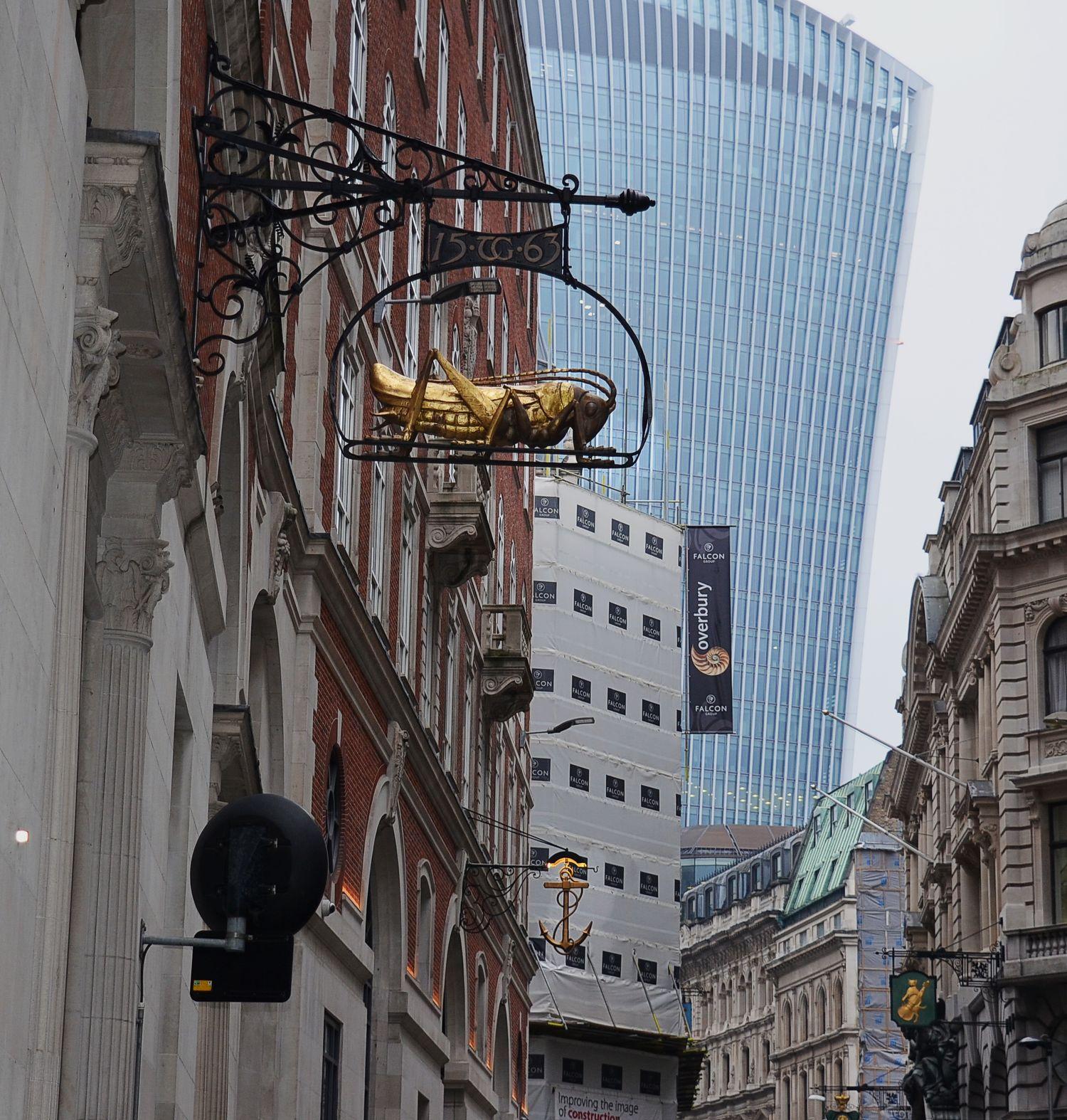
Cover photo: It's No Game, CC BY 2.0, via Wikimedia Commons. The gilded grasshopper is the Gresham crest, the same emblem that sat on the Royal Exchange bell-tower, and the sign carries the date 1563.
Coordinates 51.512788, -0.087579, a verified geotagged point on Lombard Street rather than the doorway of number 65. The exact site of the Overend Gurney offices needs a period street-numbering check, so the pin is honest about being the street and not the building.








 expand_more