


Dynastic History | Persepolis, the Apadana — The Payroll Found Inside the Wall
· 1933
Unreviewed contributionBy kevin · · updated · Report an issue































































Find memories left by people near you.
Distribute Bounty
This will distribute the bounty equally among all qualifying memories. This action cannot be undone.
Cancel Bounty
Are you sure you want to cancel this bounty? The remaining amount will be refunded to your account.
Success!
Operation completed successfully.
Error
Something went wrong.
Dynastic History | Persepolis, the Apadana — The Payroll Found Inside the Wall
kevin
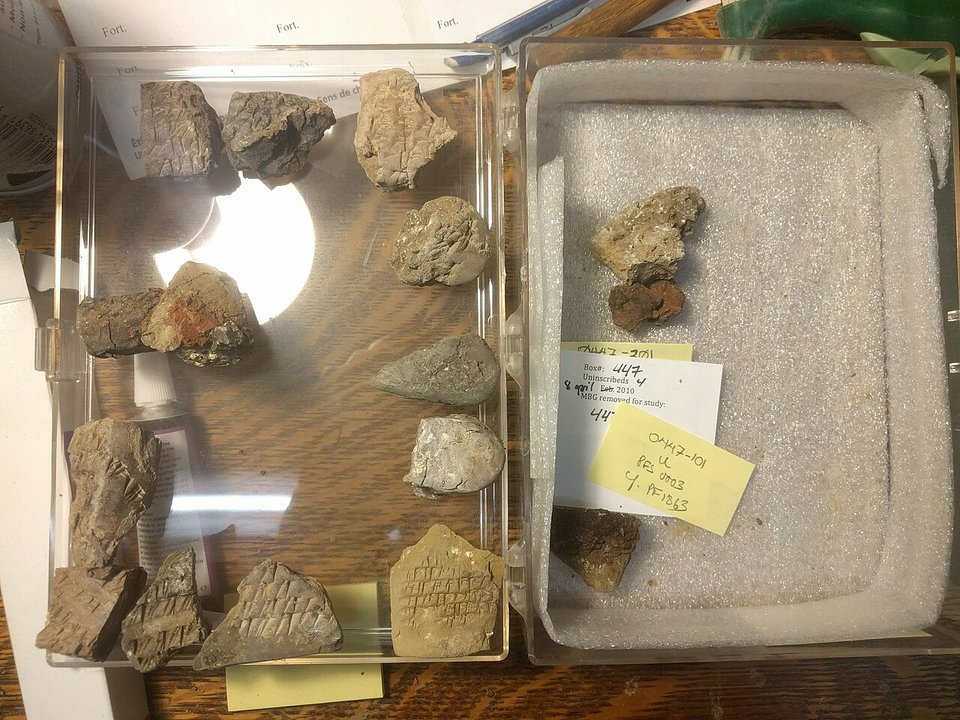
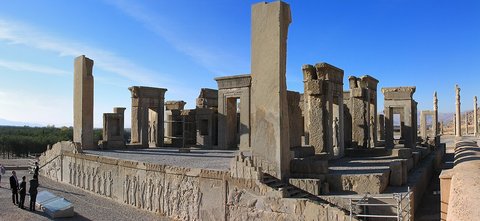
In 1933 an Oriental Institute team clearing the northeastern corner of the Persepolis terrace opened two rooms inside the fortification wall and found them packed with unbaked clay tablets, most of them broken. Ernst Herzfeld put the count at roughly 30,000 inscribed and sealed pieces. They are administrative records in Elamite cuneiform, drafted in Darius I's thirteenth to twenty-eighth regnal years — published chronologies give 509 to 494 BCE, with some readings closing a year earlier.
They praise nobody. They record grain, wine, beer and livestock leaving state stores: fodder for post horses, travel rations issued at way stations set a day's journey apart, and above all rations for the kurtaš, the workforce that quarried, hauled and carved the terrace the Apadana stands on. Men and women both. For unskilled work the scales show women drawing about a third less than men; at a given skill grade the rates are the same. Women recorded as heads of work gangs drew the highest rations in the labour force. Mothers of newborns received a supplement, set at twice as much for the mother of a son as for the mother of a daughter. What the kurtaš were in law — free, dependent, deported, captive — the tablets do not say, and specialists still disagree.
This is the empire's own bookkeeping about the people who built the hall, and it is the largest body of Achaemenid evidence that was neither carved by a king nor written by a Greek.
The archive went to Chicago on loan in 1936 and has been returned to Iran in batches since. An American lawsuit seeking to seize it against a judgment owed by Iran was rejected by the Supreme Court, 8–0, on 21 February 2018.
📸 Cover: Fortification tablet fragments in study boxes at the Oriental Institute in Chicago, where the archive went on loan in 1936; Pfa16, CC BY-SA 4.0 via Wikimedia Commons
changes?
delete this memory?
We detected that you have a Blox in your crypto wallet! We will import the Blox into your account.
Click on done below to complete the import.
Welcome Back!
Sign in to preserve cherished moments
Don't have an account?
Welcome!!
Sign up and start preserving cherished moments
?
?





Choose your payment method
Buy with Metablox Credit
Do you want to mint Blox with Metablox Credit?
Which Crypto would you like to use?
Purchase Confirmed!
Your Blox is being minted on-chain and will appear in your profile shortly.
Log in or sign up to claim your Blox.
How many credits do you want to buy?
$100 USD = 1 Metablox Credit = 1 Blox.
Use Metablox Credit to mint any Blox you want on the map.
 expand_more