NFL History | 1676 Main Street, Springfield — Where the Play Was Invented
volume_up
Listen
directions
Directions
On 23 November 1876 delegates met in this building, then the Massasoit House, a railway hotel standing beside Springfield's depot, and settled that American college football would be built on rugby's model rather than association football's. Harvard's own record of the day has Princeton convening the meeting, and the Intercollegiate Football Association emerging from it with three members: Princeton, Harvard and Columbia. Yale sent representatives, declined to join over how many players a side should field, and shaped the rules anyway. The standard account puts four colleges in the room; one published account adds Rutgers.
What makes the hotel matter is that they kept coming back. The conventions became an annual fixture, and so did Walter Camp of Yale. At the first he attended, in 1878, he proposed cutting the side from fifteen players to eleven and was voted down; the change carried in 1880. At that same 1880 convention came the change that split the two games apart: the contested rugby scrum was replaced by a line of scrimmage, one side taking uncontested possession and putting the ball into play with a snap.
Possession by itself made the game slower rather than faster. A side under no obligation to do anything with the ball could simply keep it, which is what happened in the scoreless Princeton–Yale match remembered as the block game. Sources place that game in 1881 and in 1882 and the discrepancy is left standing here; the response to it is not in doubt. At the 1882 rules meeting Camp carried a requirement that a side gain five yards in three attempts or give up the ball, a vote one account dates to 12 October. In 1912 the terms became ten yards in four.
Here is the mechanism, and it is the reason a professional history begins in a hotel. Those two rules together invented the play: a discrete unit of football with a start, a finish and a measurable result. Rugby's ball is contested continuously. After Springfield the American game stopped, reset and demanded an accounting every time it moved. Almost everything this collection records afterwards depends on a game that stops — specialised positions and substitution, coaching from the sideline, a statistical record of who did what, and eventually a broadcast built around intervals that can be sold to advertisers. The commercial history of the sport rests on a possession rule written by undergraduates.
The professional game never wrote its own rulebook; it took this one. When William Heffelfinger was paid to play in Allegheny in 1892 (memory 6645) he was a Yale man playing under rules adopted by a private association of colleges in a hotel dining room, a body with no charter, no jurisdiction beyond its own members and no professional representation of any kind. The habit outlived the association: for decades the professional league took the college code and amended it afterwards.
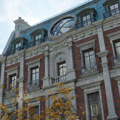
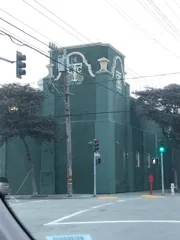
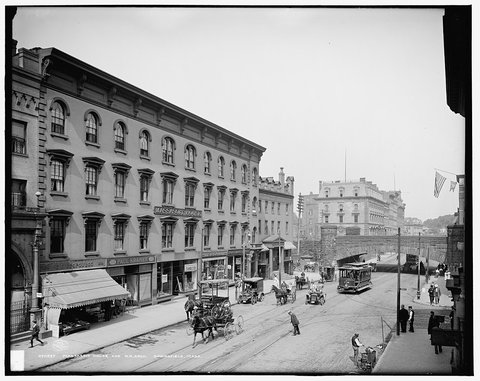
The building is still standing, which is unusual for this vertical. It opened in June 1843, run by the Chapin family, sited by the depot because trains carried no dining cars and stopped for meals. The Springfield Preservation Trust gives the address as 1676 Main Street and records what happened to it: a 1912 Main Street façade that conceals the 1857 addition, the 3,200-seat Paramount Theatre opened inside it in 1929, the Hippodrome nightclub from 1999 to 2008, ownership by the New England Farm Workers Council since 2011, and long vacancy. Portions of the nineteenth-century hotel survive behind the newer front.
One further piece of the building's history, given as it is given in the source. A Springfield Technical Community College project records that the Chapin family are believed to have sheltered and fed people escaping slavery in a crawl space beneath the hotel's main stairway, Springfield having been a station on the Underground Railroad by the 1830s; the same account offers an alternative version in which people escaping blended in with the hotel staff. It is set down there as belief rather than as established record, and is repeated on the same terms.
The street at the corner, once Rail Road Street, is today Gridiron Street. Whether it was renamed for what was decided upstairs is not established by anything consulted here. The name is a fact; the reason for it is not.
Coordinate: 42.104572, -72.594696, the Census TIGER address point for 1676 Main Street. OpenStreetMap's entry for the Paramount Theatre in the same building gives 42.104331, -72.595132, about 48 m away, and carries the street numbers 1700 to 1708 — a building of this age and this many additions has several. The two sources are independently maintained. Precision ±60 m.
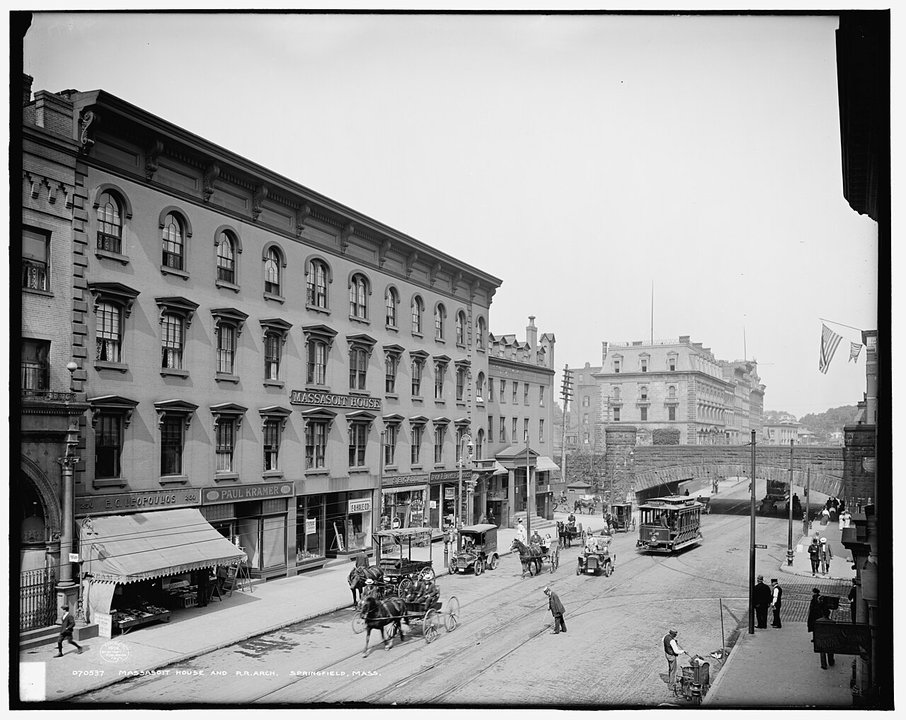
Cover: the Massasoit House and the railroad arch, Main Street, Springfield, photographed by the Detroit Publishing Company around 1908, public domain via the Library of Congress and Wikimedia Commons. The hotel name is on the façade at the centre left and the printed caption runs along the bottom edge of the plate. The photograph is thirty-two years later than the convention, but this is the 1857 section of the building, and it is the front the delegates walked through.


































 expand_more