Biography | Wilfred Owen — Where "Dead" Was Crossed Out and "Doomed" Written Above It
volume_up
Listen
directions
Directions
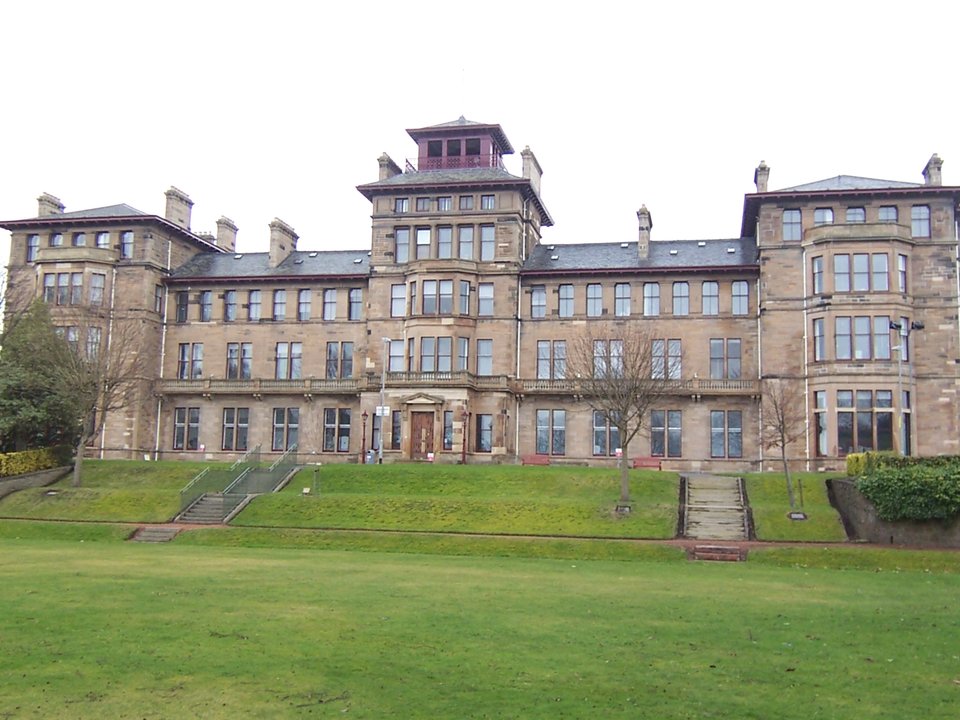
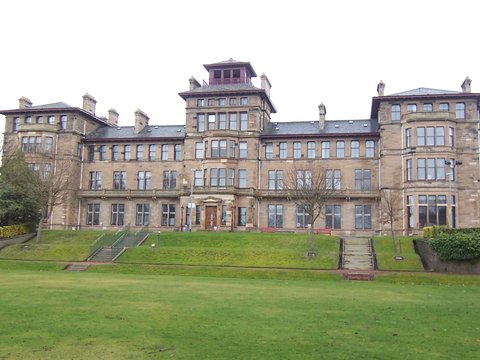
Craiglockhart was built between 1877 and 1880 as a hydropathic establishment, an Italianate block by the architects Peddie and Kinnear, for visitors coming to Edinburgh to take the water cure.
The army requisitioned it in 1916 and it became Craiglockhart War Hospital, for officers with what was then called shell shock.
Imperial War Museums records 1,801 officers admitted before it closed in 1919, sixty-five of them German prisoners of war.
Second Lieutenant Wilfred Owen of the Manchester Regiment arrived on 26 June 1917.
His doctor was Captain Arthur Brock, who treated idleness as the enemy and prescribed work instead; Edinburgh Napier's library records that Owen edited six issues of the hospital magazine, The Hydra.
Siegfried Sassoon was sent to Craiglockhart that summer, after publishing a statement refusing to go on with the war, and was put under W. H. R. Rivers.
The Imperial War Museum dates Sassoon's arrival to 23 July and their first meeting to 16 August 1917. By Sassoon's own later account, Owen had spent a fortnight working up the nerve to knock on his door, and turned up carrying copies of The Old Huntsman to be signed.
Owen wrote to his cousin Leslie Gunston on 23 August that he had been reading it.
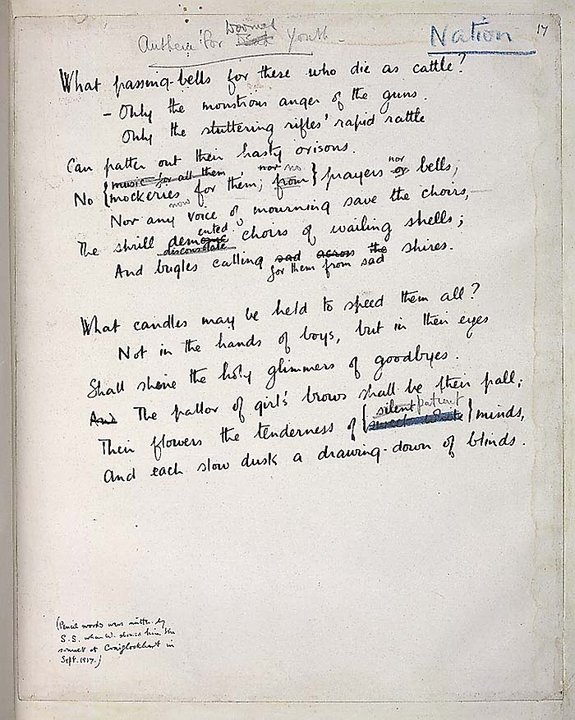
In September he brought Sassoon a sonnet, and that manuscript survives.
Across the top, Dead is struck through and Doomed written above it. Pencil runs down the middle of the page, trying prayers against one line and silent and patient against another.
A note at the foot of the sheet records that the pencilled words are Sassoon's, added when Owen showed him the sonnet at Craiglockhart in September 1917.
The poem is Anthem for Doomed Youth. The Wilfred Owen Association dates nearly all the poems Owen is now read for to the thirteen months beginning that August.
He went back to France and was killed on 4 November 1918 crossing the Sambre-Oise canal at Ors, a week before the armistice.
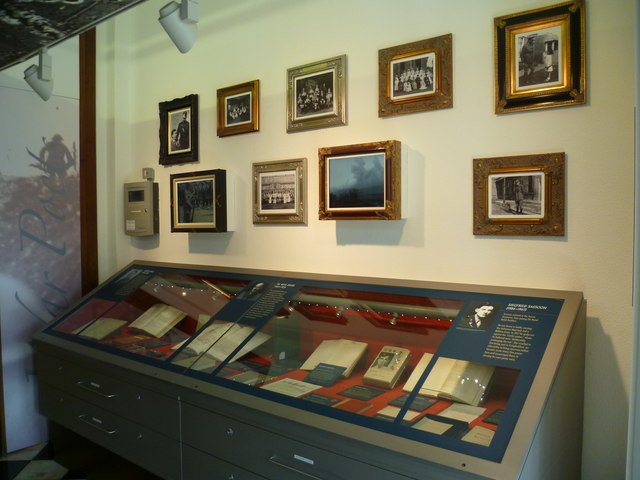
The building is Edinburgh Napier University's Craiglockhart campus now. The War Poets Collection sits on the ground floor of the original block, free and self-guided during campus opening hours, with no tours; the rest of the site is a working university and other people's classrooms.
Outside the old main entrance, a Caithness flagstone carries the line from the preface Owen drafted for a book he did not live to publish: "My subject is War, and the pity of War. The Poetry is in the pity."
📸 Cover: the front of the former Craiglockhart Hydropathic, now Edinburgh Napier University's Craiglockhart campus, photographed by Brideshead in 2008, public domain; also shown, Owen's marked-up draft of the sonnet, public domain, and the War Poets Collection display, by kim traynor, CC BY-SA 2.0.







 expand_more