Biography | Rudyard Kipling — From This House He Chose the Words Cut on the War Graves
volume_up
Listen
directions
Directions
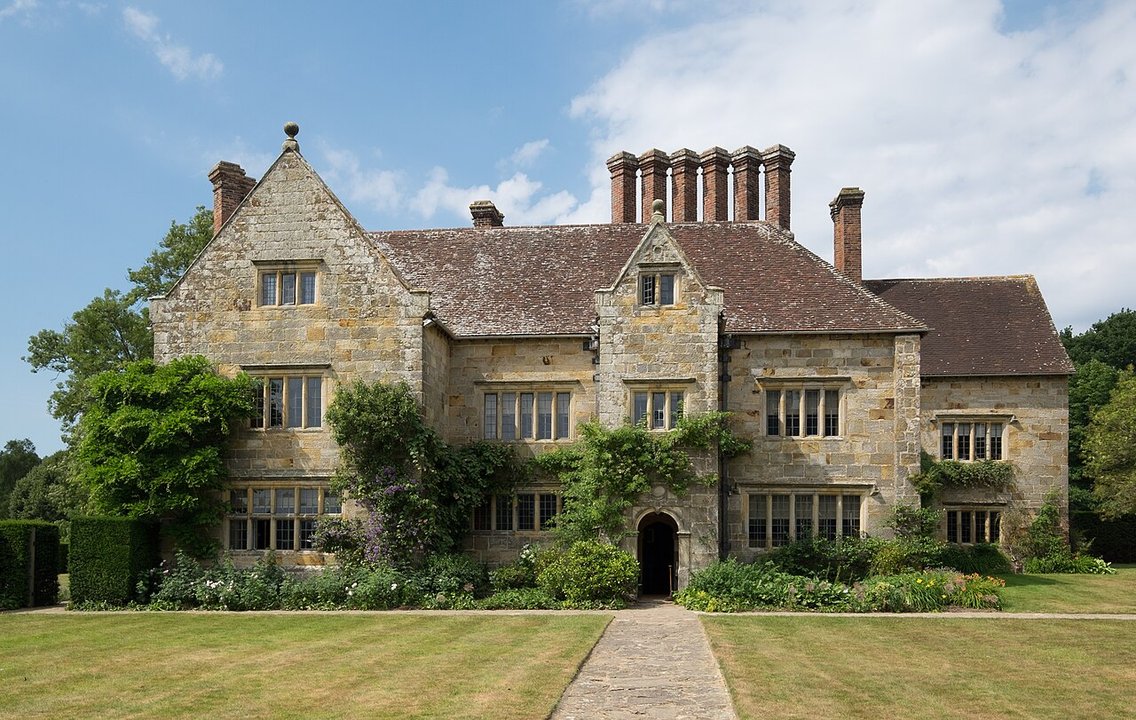
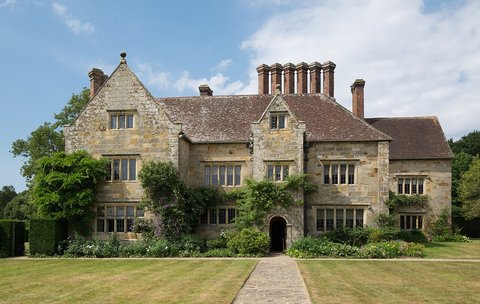
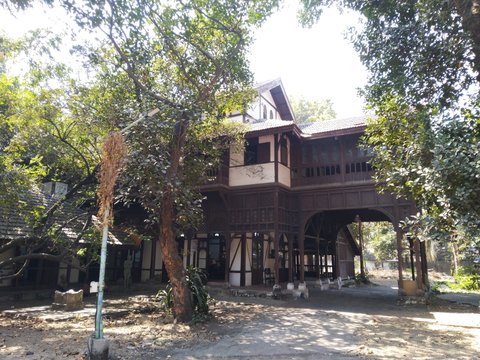
Rudyard Kipling bought Bateman's in 1902 — a Jacobean house of 1634 in a Sussex valley — for £9,300 with thirty-three acres.
He lived there for the rest of his life, until 18 January 1936. Puck of Pook's Hill was written here, and "If—".
His son John was short-sighted enough that the Royal Navy turned him down, and so did the Army.
His father's friendship with Lord Roberts, a former commander-in-chief and colonel of the Irish Guards, got him a commission in that regiment instead, within weeks of the war starting.
John went missing at the Battle of Loos on 27 September 1915, aged eighteen. One account gives the date as 29 September.
In 1917 Kipling joined the Imperial War Graves Commission as its first literary adviser, working beside the architect Edwin Lutyens and the gardener Gertrude Jekyll.
The job was to settle what the stones would say, and a great deal of what they say is his.
"Their Name Liveth For Evermore", taken from Ecclesiasticus, is cut into the Stone of Remembrance in every large Commonwealth cemetery.
"Known unto God" is the line on the headstone of every man who could not be named, under "A Soldier of the Great War". There are tens of thousands of them.
At Tyne Cot, where a German blockhouse was left standing inside the Cross of Sacrifice, Herbert Baker's memoir credits Kipling with the wording of the stone beneath it.
He also redrafted the King's letter of condolence to bereaved families, and pressed for offices where relatives could ask what had happened to their sons.
He never learned what happened to his own. In 1992 the Commission marked a grave at St Mary's Advanced Dressing Station Cemetery, Haisnes, as John's.
Tonie and Valmai Holt disputed it in 2002: the uniform fragments indicated a full lieutenant, and John had died a second lieutenant.
Later work, including a 2016 study by Graham Parker and Joanna Legg, found that the map reference used against the identification was itself wrong, and the Commission has kept the headstone. Researchers still name at least one other officer who fits. The argument has now run longer than John Kipling lived.
Bateman's belongs to the National Trust. Carrie Kipling left it to them when she died in 1939, the house is Grade I listed, and the study is kept as he had it.
📸 Cover: Bateman's, Burwash, East Sussex, by DeFacto, CC BY-SA 4.0, via Wikimedia Commons.






 expand_more