Biography | Petro Poroshenko — The Brussels Signing That Completed Ukraine's EU Association Pact
volume_up
Listen
directions
Directions
On June 27, 2014, Petro Poroshenko joined European Union leaders at the Justus Lipsius building in Brussels to sign the remaining provisions of the EU-Ukraine Association Agreement.
The European Council's own media notice places that day's summit at 175 Rue de la Loi, while contemporary Reuters reporting confirms that Ukraine completed the political and trade accord there on June 27.
Ukraine had already signed the agreement's political provisions on March 21, when interim prime minister Arseniy Yatsenyuk represented the country before the presidential election.
Poroshenko therefore did not begin the treaty from an empty page, and this moment is best understood as the signature that completed its economic, trade, justice, financial, and sector-cooperation portions.
The agreement included a Deep and Comprehensive Free Trade Area designed to reduce tariffs and bring Ukrainian commercial rules progressively closer to European Union standards.
It also required reforms involving democratic institutions, human rights, the rule of law, public administration, and competition rather than offering a simple tariff bargain.
The treaty created association with the European Union but did not itself grant Ukraine membership or provide a membership timetable.
That distinction mattered because Poroshenko treated closer European integration as a strategic national direction while the legal document established a framework that still required ratification and implementation.
Moldova and Georgia signed their own association agreements at the same summit, placing Ukraine's act within a broader European policy toward its eastern neighbours.
For Ukraine, the signature followed months of upheaval that began when President Viktor Yanukovych abandoned the planned agreement in November 2013.
It also came after the Revolution of Dignity, Russia's annexation of Crimea, and the opening phase of armed conflict in eastern Ukraine.
The Brussels table consequently joined economic policy to a much larger question of sovereignty and foreign alignment, without resolving the conflict or guaranteeing future accession.
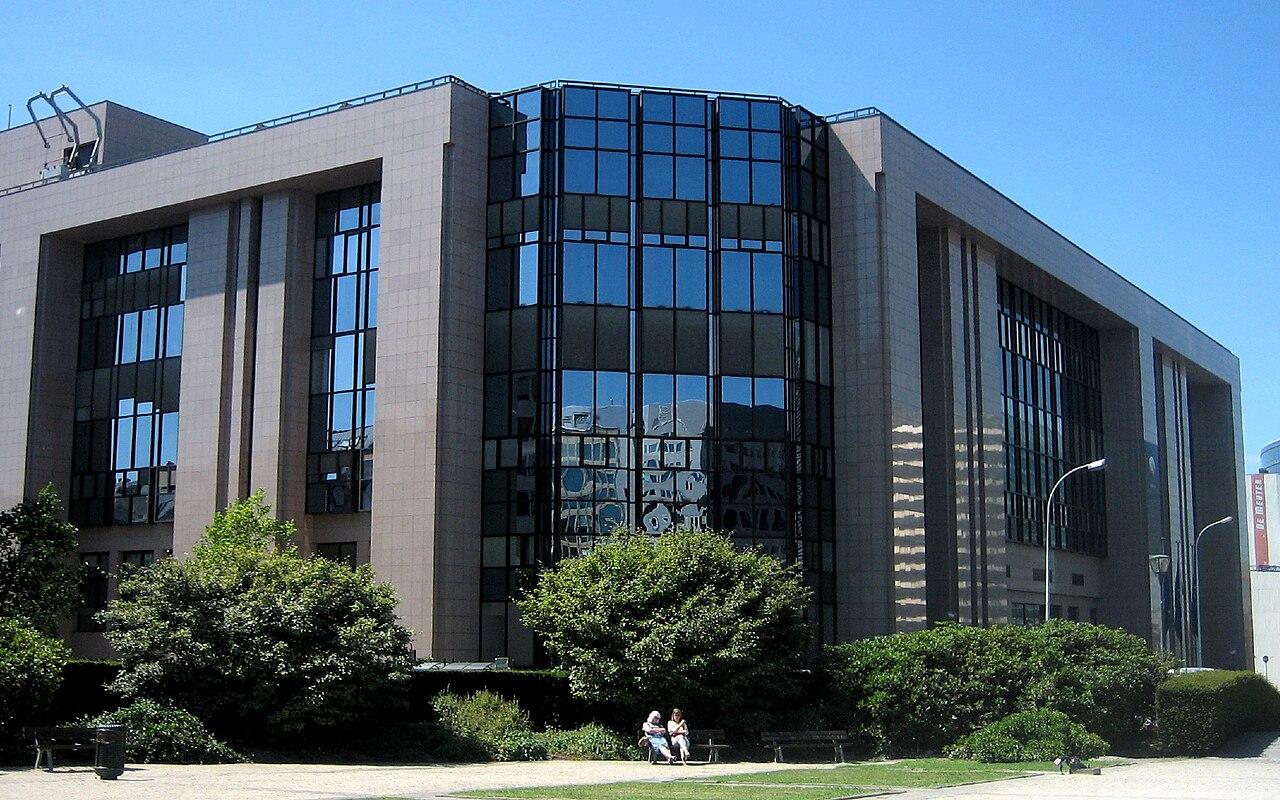
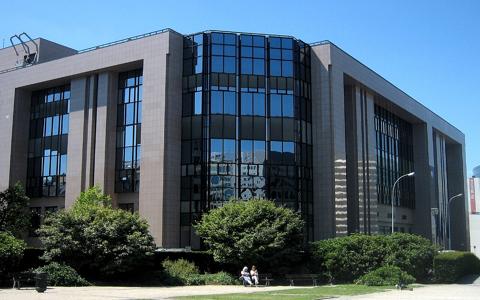
The Justus Lipsius setting is historically precise because the building hosted European Council meetings before those summits moved to the neighbouring Europa building in 2017.
This pin marks the public building where the June 27 summit met, not Poroshenko's exact seat inside a secured conference room, and it records no private route, residence, or present-day movement.
The cover photograph shows the Justus Lipsius exterior in 2009 as architectural context, not the signing ceremony itself.
Photo: JLogan, CC BY-SA 3.0, via Wikimedia Commons




 expand_more