Biography | Muhammad Yunus — The Sheraton Summit That Turned Microcredit into a Global Campaign
volume_up
Listen
directions
Directions
On 2 February 1997, at the Sheraton Washington Hotel in Washington, D.C., Muhammad Yunus delivered an opening plenary that helped turn microcredit from a group of local experiments into the subject of a coordinated international campaign.
The three-day Microcredit Summit assembled about 2,900 participants, including practitioners, public officials, development agencies, and financial institutions, around a shared plan for expanding access to very small loans.
Yunus had served on the twelve-member organizing committee with Sam Daley-Harris, John Hatch, and representatives from institutions including the World Bank, Carter Center, and Citicorp.
That committee spent roughly two years negotiating a declaration and plan of action before delegates arrived, making the meeting the public culmination of sustained institution-building rather than a ceremonial appearance.
Its central measure called for reaching 100 million of the world’s poorest families, especially women, with credit for self-employment and related financial and business services by 2005.
In his opening address, Yunus connected the target to the experience of millions of borrowers and asked the gathering to build the will and capacity needed to widen economic opportunity.
Delegates adopted the declaration and plan as the summit’s first formal action, giving the new campaign a common text against which later progress could be tracked.
Fifteen councils then divided participants by role, from practitioners and educators to United Nations agencies and advocates, so the global target could be translated into specific operating questions.
Hillary Rodham Clinton addressed the gathering the following day, and the archived White House record identifies the venue by its 1997 name, Sheraton Washington Hotel.
A contemporary independent account called it the first privately organized development summit and emphasized both its political reach and its close association with Grameen Bank and Yunus.
For Yunus, the moment extended the work of Grameen beyond Bangladesh by placing borrowers, institutions, donors, and governments inside one measurable public commitment.
The summit’s scale did not prove that microcredit could solve poverty by itself, and contemporary reporting cautioned that its high-profile advocacy sometimes simplified a much more complicated development debate.
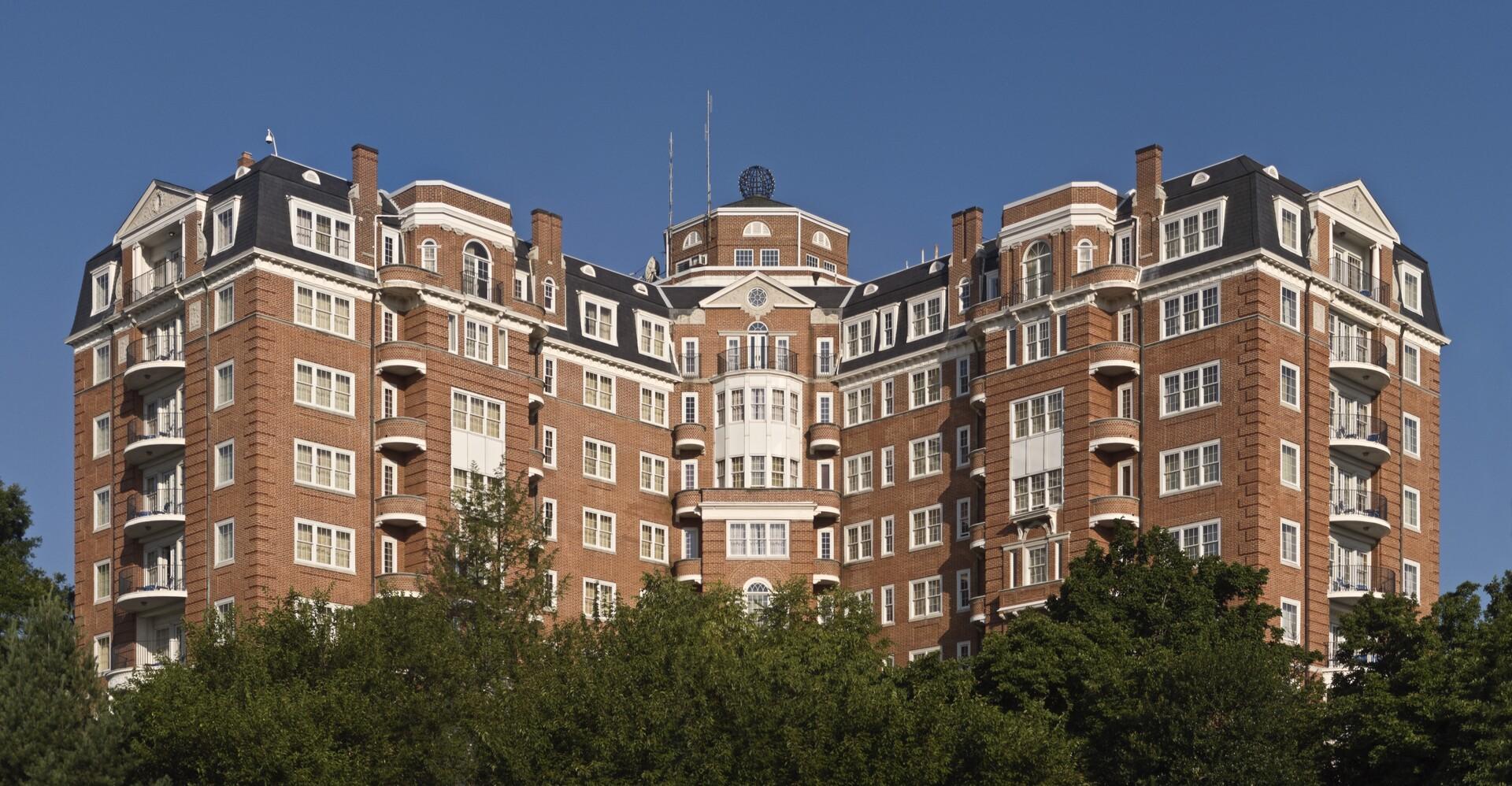
The hotel was later renamed Marriott Wardman Park, and the cover photograph shows its surviving 1928 Wardman Tower in 2009 rather than the summit room or the main convention wing that was demolished decades after the event.
The map pin marks the documented former hotel site, not a ballroom position, entrance route, residence, current workplace, or present-day movement connected to Yunus.
Photo: Jürgen Matern, CC BY-SA 3.0, via Wikimedia Commons.










 expand_more