Biography | Andrew Carnegie — The Dunfermline Stone That Began a Library Network
volume_up
Listen
directions
Directions
On July 27, 1881, Andrew Carnegie returned to Dunfermline for the laying of the memorial stone of the first Carnegie Free Library.
The ceremony gave a physical address to an idea that would become the most recognizable part of his philanthropy: free access to books supported by a local community.
Carnegie arrived with his mother, Margaret, during a British coaching journey that brought the family back to the Scottish town they had left for the United States in 1848.
Dunfermline marked the visit with closed businesses, decorated streets, marching bands, and a procession of working men accompanying Carnegie's carriage along the High Street.
At the library site, Margaret Carnegie laid the stone for her son's gift, making the day a shared homecoming rather than a ceremony centered on the industrialist alone.
The celebration also exposed a practical condition behind the gift because the town, not Carnegie, would have to fund the library's continuing upkeep through local revenue.
That requirement became central to the later Carnegie library model, which paired construction money with a community commitment to operate a free public institution.
The Dunfermline building opened in August 1883 and became the first public library created through Carnegie's giving.
Its success helped turn one hometown benefaction into a systematic program that ultimately financed more than 2,500 library buildings around the world.
Carnegie and the foundation he later established directed about $56 million to 2,509 public libraries, including 1,681 in the United States.
Those numbers can obscure the local beginning, but the stone ceremony shows the global program taking shape through one building, one municipal obligation, and one return to his birthplace.
Carnegie later commissioned a large painting of the Dunfermline procession, preserving the crowds, banners, carriages, and working people who had framed the day.
This memory is distinct from the nearby cottage where Carnegie was born because it records the moment his association with Dunfermline shifted from personal origin to public philanthropy.
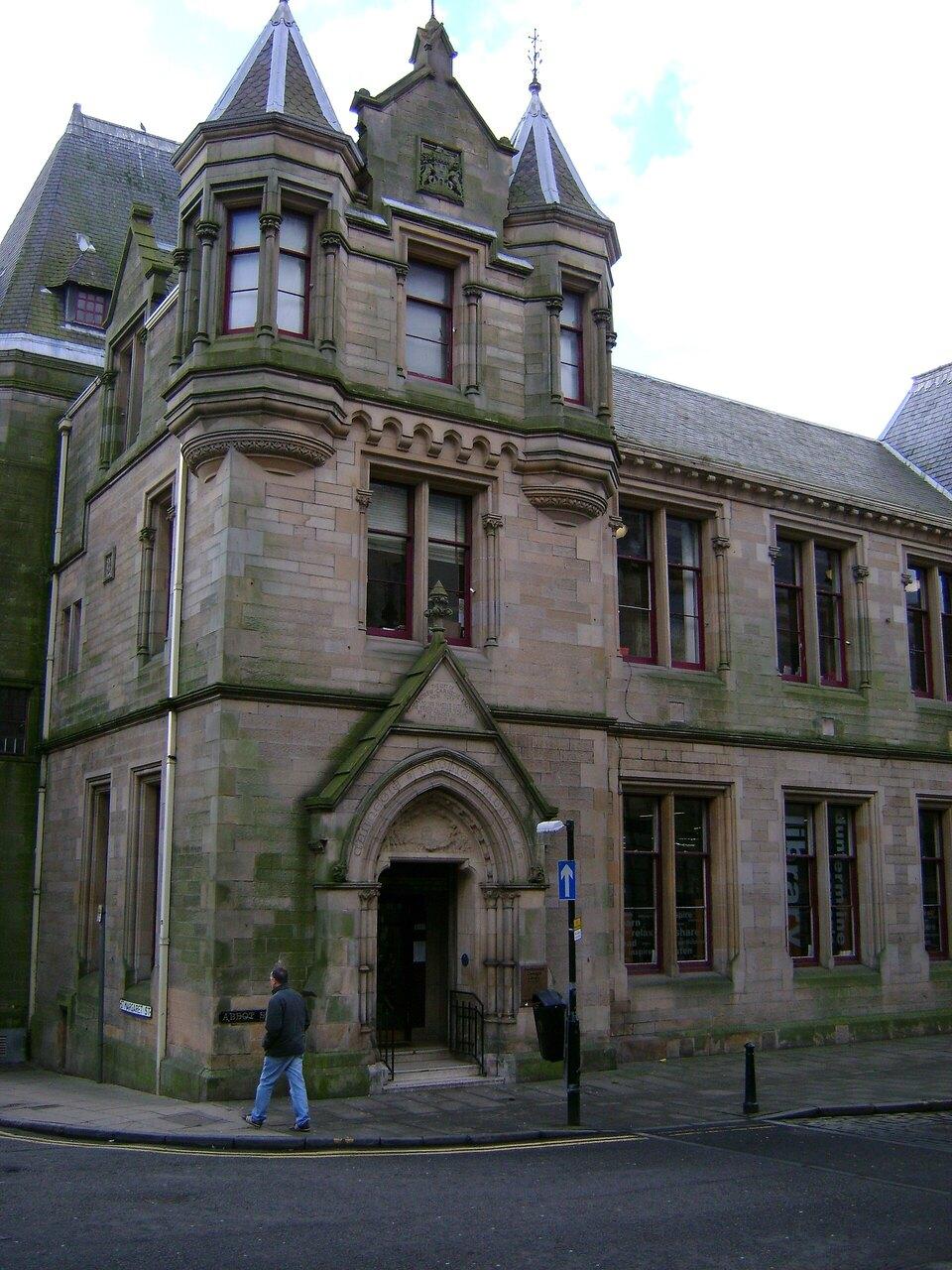
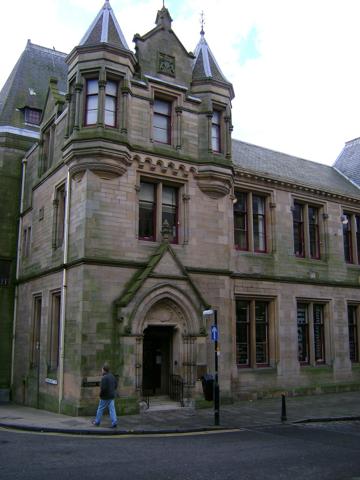
The attached photograph shows the Carnegie Library on Abbot Street in 2009, not the 1881 ceremony, and documents the historic building that grew from the gift.
The pin marks the public library building rather than an entrance, internal room, or access route.
Here, before the steel sale that made Carnegie's fortune legendary, a memorial stone in his hometown began the library network that made his name familiar far beyond industry.
Photo: Kilnburn, attribution-only licence, via Wikimedia Commons; photographed on February 19, 2009.










 expand_more