Biography | Alfred Nobel — The Club Rooms Where He Signed the Will Behind the Prizes
volume_up
Listen
directions
Directions
Alfred Nobel’s prizes are often introduced as the result of one dramatic final gesture.
The actual document was a four-page handwritten will signed in a small Scandinavian clubroom in Paris — not at the Swedish club’s present address beside the Tuileries.
On 27 November 1895, Nobel signed at the Swedish-Norwegian Club, then occupying rooms at 58 Rue de la Chaussée-d’Antin in the ninth arrondissement.
A 2025 City of Paris heritage decision identifies this address as the place where he prepared the testament. Le Point separately traced the club’s move from number 51 to number 58 and reported that Nobel signed the document there soon after the move.
Four witnesses added their signatures: Sigurd Ehrenborg, R. W. Strehlenert, Thomas Nordenfelt and Leonard Hwass.
Their names and Paris addresses still appear beneath Nobel’s signature on the surviving document, turning an intensely private decision into a legally witnessed act.
The will first made individual bequests to relatives, employees and acquaintances.
It then directed that Nobel’s remaining realizable property be converted into secure investments, with the annual income divided into five equal parts for work in physics, chemistry, physiology or medicine, literature and peace.
Nobel also named the institutions that would select the recipients.
The Royal Swedish Academy of Sciences would decide the physics and chemistry awards; Karolinska Institutet would decide medicine; the Swedish Academy would choose literature; and a five-person committee elected by the Norwegian parliament would award peace.
He instructed the selectors to disregard nationality.
That provision gave the scheme an international reach before any prize had been presented.
The address is easy to misplace because the Swedish club later occupied 242 Rue de Rivoli, where Nobel’s desk and a copy of the testament have been displayed.
The Norwegian Club’s own history confirms that the Rue de Rivoli rooms are later shared premises. Pinning the 1895 event there would move the signing away from the room identified by Paris records.
The club no longer occupies 58 Rue de la Chaussée-d’Antin, and the historical interior is not presented as preserved.
The map point therefore marks the cadastral address node for number 58, not a modern club entrance or a general Paris coordinate.
This moment completes the path from Nobel’s experimental workplaces to the institution that outlived him.
One signed document in these rooms converted an industrial fortune into a set of recurring decisions about whose work benefits humanity.
Sources: City of Paris Council record 2025 DAC 309; NobelPrize.org’s full text of Alfred Nobel’s will; Le Point; Cercle Norvégien de Paris.
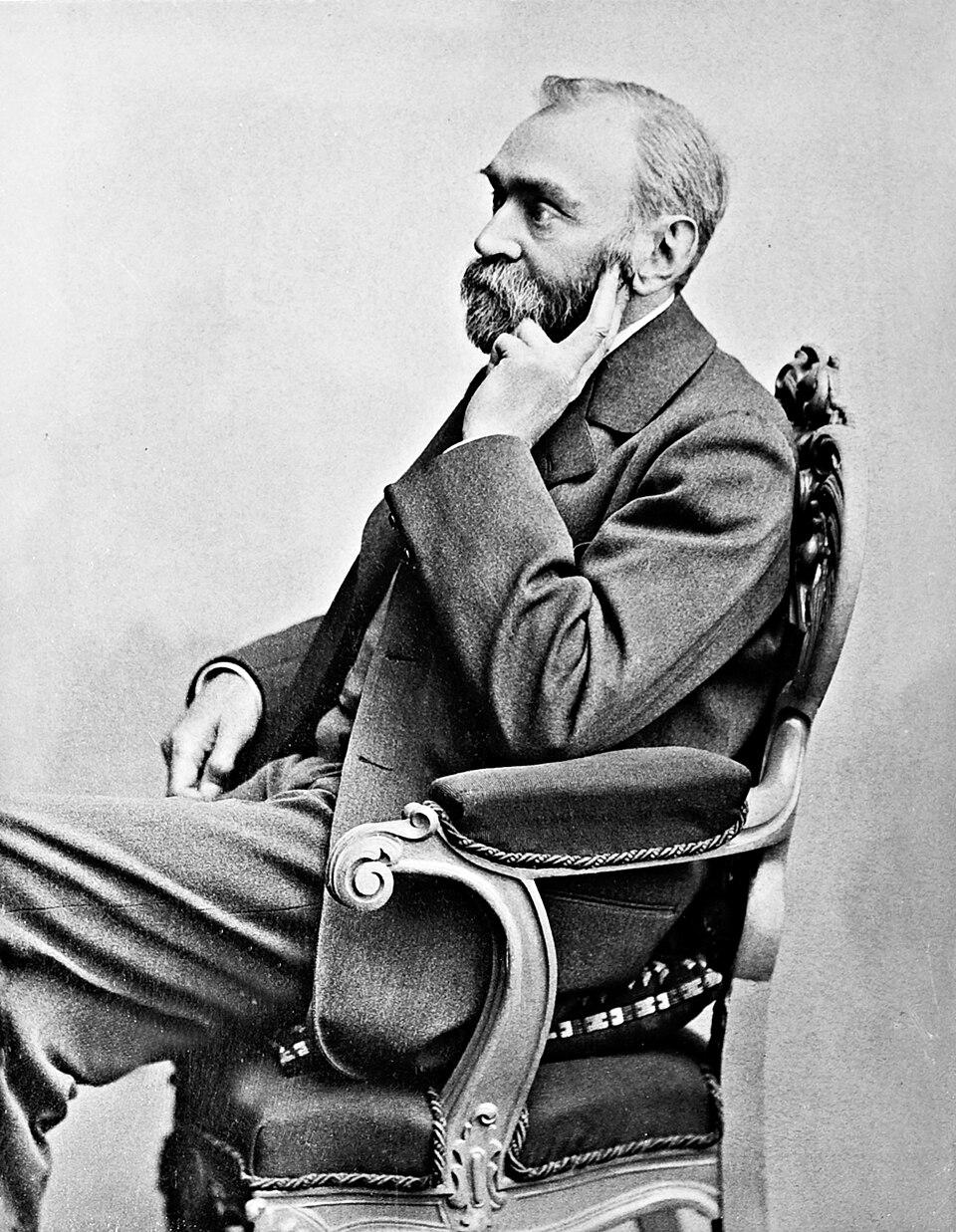
Photo: Gösta Florman / The Royal Library, public domain, via Wikimedia Commons





 expand_more