


Biography | 吉星文 — The Night His Regiment Refused to Open 宛平城
· 1937-7
Personal memoryBy kevin · · Report an issue

Find memories left by people near you.
Distribute Bounty
This will distribute the bounty equally among all qualifying memories. This action cannot be undone.
Cancel Bounty
Are you sure you want to cancel this bounty? The remaining amount will be refunded to your account.
Success!
Operation completed successfully.
Error
Something went wrong.
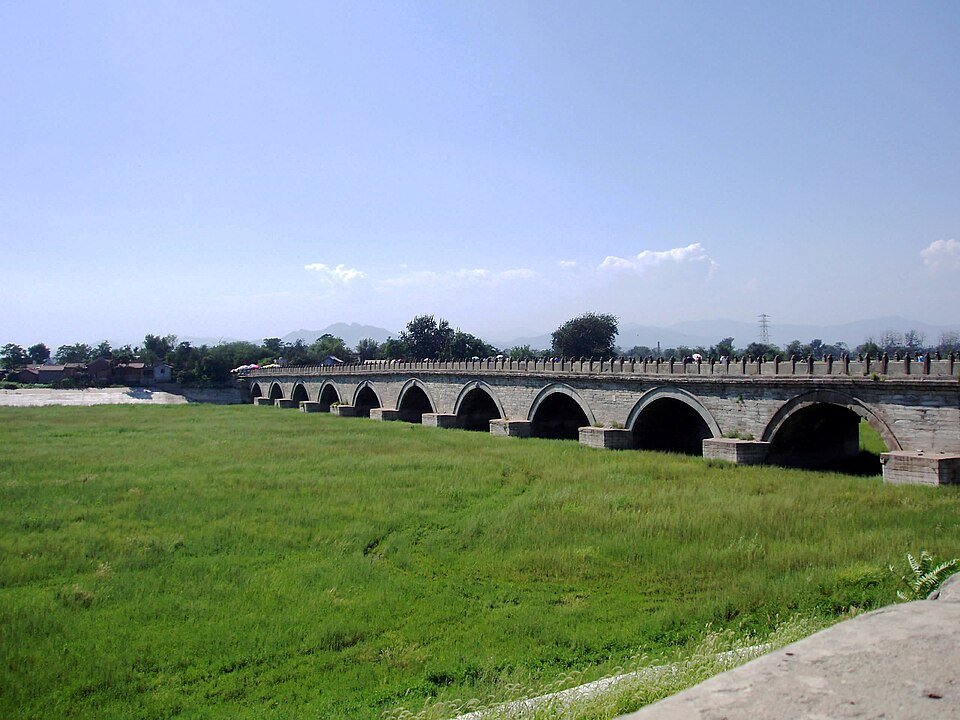
Biography | 吉星文 — The Night His Regiment Refused to Open 宛平城
kevin
On the night of 7 July 1937 a Japanese unit exercising near 盧溝橋 reported a soldier missing and demanded entry to 宛平城, the walled county town at the bridge's eastern end, to search for him.
The officer who refused was 吉星文, born in 1908 in 扶溝, 河南, and by then commanding the 219th Regiment of the 37th Division, 29th Army.
He had fought the Japanese army before, in the 1933 Great Wall campaign, where the 29th Army's broadsword companies acquired the reputation that followed them.
His orders that night, as ROC accounts record them, authorised armed self-defence rather than any further concession of ground.
Shooting began, and the regiment held the bridge and the town.
Later Chinese-language accounts credit him with raising a volunteer assault detachment within hours — more than five hundred men, carrying the heavy 大刀 and grenades for night attacks across the 永定河.
Who fired first at 盧溝橋 is still argued over, and the argument has never been only about ballistics.
What is not argued is what followed. The fighting did not stop here, it widened, and 7 July is the date from which the full war between China and Japan is counted.
吉星文 rose to divisional command and moved to Taiwan in 1949. By 1958 he was one of the three deputy commanders of 金門防衛司令部.
On 23 August that year he was in the headquarters valley at 翠谷 with the visiting Minister of National Defence 俞大維 when the opening PLA barrage of 八二三砲戰 came down on it. The other two deputy commanders, 趙家驤 and 章傑, were killed outright.
吉星文 died of his wounds within days. The published record splits between one day and three, between blood loss, peritonitis and infection, and between Kinmen and a hospital in Taipei.
The bridge is still there and still walkable, eleven arches of stone over the 永定河 with carved lions the length of both parapets. The 中國人民抗日戰爭紀念館 stands a few hundred metres east, inside the walls of 宛平城.
The war counted from this bridge ran another eight years. The one that killed him ran twenty-one.
📸 Cover: 盧溝橋 from the north bank of the 永定河, 2005. Photo by Fanghong, CC BY-SA 3.0, via Wikimedia Commons.
changes?
delete this memory?
We detected that you have a Blox in your crypto wallet! We will import the Blox into your account.
Click on done below to complete the import.
Welcome Back!
Sign in to preserve cherished moments
Don't have an account?
Welcome!!
Sign up and start preserving cherished moments
?
?

Choose your payment method
Buy with Metablox Credit
Do you want to mint Blox with Metablox Credit?
Which Crypto would you like to use?
Purchase Confirmed!
Your Blox is being minted on-chain and will appear in your profile shortly.
Log in or sign up to claim your Blox.
How many credits do you want to buy?
$100 USD = 1 Metablox Credit = 1 Blox.
Use Metablox Credit to mint any Blox you want on the map.
 expand_more