

Bashian Caves: The Oldest Human Address in Taiwan
Global, Earth · 1968
Personal memoryBy kevin · · updated · Report an issue

delete this memory?
Distribute Bounty
This will distribute the bounty equally among all qualifying memories. This action cannot be undone.
Cancel Bounty
Are you sure you want to cancel this bounty? The remaining amount will be refunded to your account.
Success!
Operation completed successfully.
Error
Something went wrong.
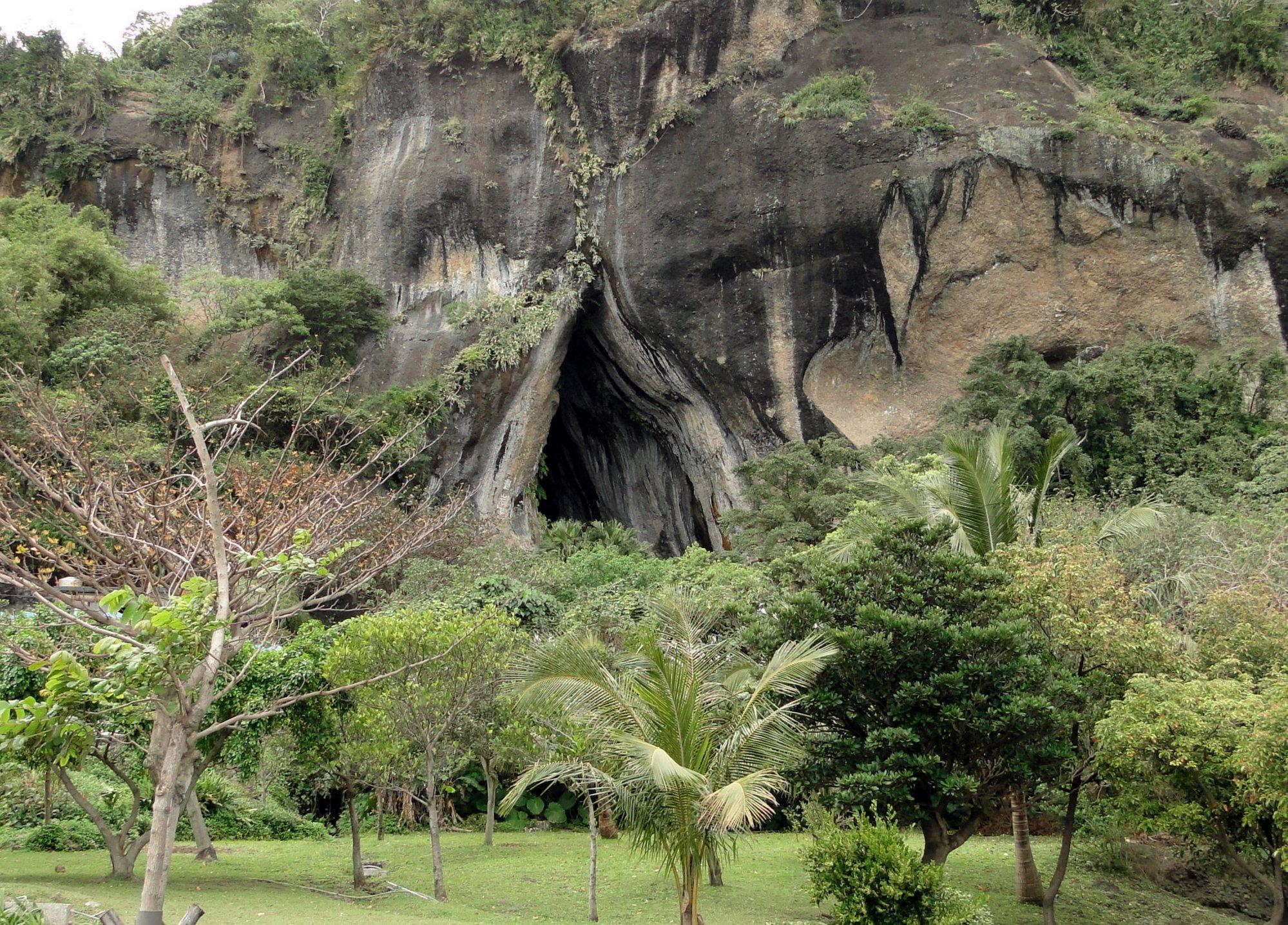
Bashian Caves: The Oldest Human Address in Taiwan
kevin
The caves are wrong. They were cut by waves, and they now sit between twenty and a hundred and thirty metres up a cliff face on the Pacific side of the Coastal Range, dry and full of air. The east coast of Taiwan has been rising out of the sea for millions of years, and it took the caves with it. That is the reason anything survived inside them.
In 1968 an NTU team under the anthropologist Sung Wen-hsun 宋文薰 and the geologist Lin Chao-chi 林朝棨 dug here and found Taiwan's first Palaeolithic culture: flaked pebble tools, bone needles, bone fish hooks, hearths, fish bones. Li Chi named it Changbin culture 長濱文化 after the township. Radiocarbon put the earliest layers at around 30,000 years before present. It is still the oldest evidence of people on this island.
These were not farmers and they made no pottery. They lived in small mobile bands off what the sea and the forest gave them, in caves that were then at or near the waterline. The dating from Chaoyin Cave records the coast moving underneath them: an early occupation, then a layer of sea sand where the cave went back under water, then a later occupation once it drained again.
Then, around five thousand years ago, Changbin culture stops. Not gradually — it stops, and nothing that came afterwards on Taiwan can be traced back to it. The Neolithic cultures that spread across the island, the ones that lead to today's indigenous peoples, arrive from somewhere else with pottery and agriculture already in hand. Whoever lived in these caves for twenty-five thousand years left no descendants anyone has been able to identify. Where they came from is still argued over; the Australian archaeologist Hsiao-chun Hung has proposed a southern, Australo-Melanesian origin against the conventional mainland account.
The site had a second life as a temple complex. Monks and squatters occupied the caves for decades, gave them religious names — Lingyan, Kunlun, Chaoyin — poured concrete floors and in one case bulldozed the topsoil out of the richest deposit on the site. The shrines have been cleared out since. Walk the boardwalk up to Lingyan Cave, the largest of them, and put your hand on the wall. The rock is volcanic breccia thrown up from a seafloor eruption, and the hollow you are standing in was carved by surf that is now a hundred metres below your feet.
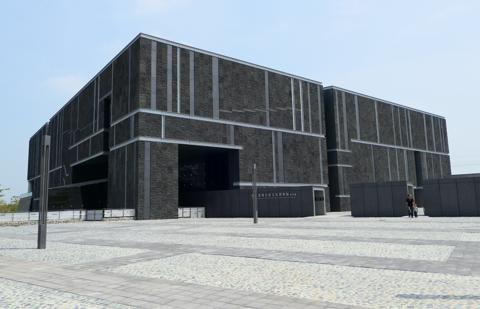
Where: Bashian Caves 八仙洞遺址, Sanjian Village, Changbin Township, Taitung County, on Provincial Highway 11 at roughly the 78 km mark. National archaeological site since 2006. Visitor centre with an interpretation hall at the foot of the boardwalk. Note that some sources place the caves in Hualien County — they are in Taitung, just south of the county line.
Cover photo: Bashian Caves by Bernard Gagnon, CC BY-SA 3.0, via Wikimedia Commons.

changes?
delete this memory?
We detected that you have a Blox in your crypto wallet! We will import the Blox into your account.
Click on done below to complete the import.
Welcome Back!
Sign in to preserve cherished moments
Don't have an account?
Welcome!!
Sign up and start preserving cherished moments
?
?
Choose your payment method
Buy with Metablox Credit
Do you want to mint Blox with Metablox Credit?
Which Crypto would you like to use?
Purchase Confirmed!
Your Blox is being minted on-chain and will appear in your profile shortly.
Log in or sign up to claim your Blox.
How many credits do you want to buy?
$100 USD = 1 Metablox Credit = 1 Blox.
Use Metablox Credit to mint any Blox you want on the map.
 expand_more